
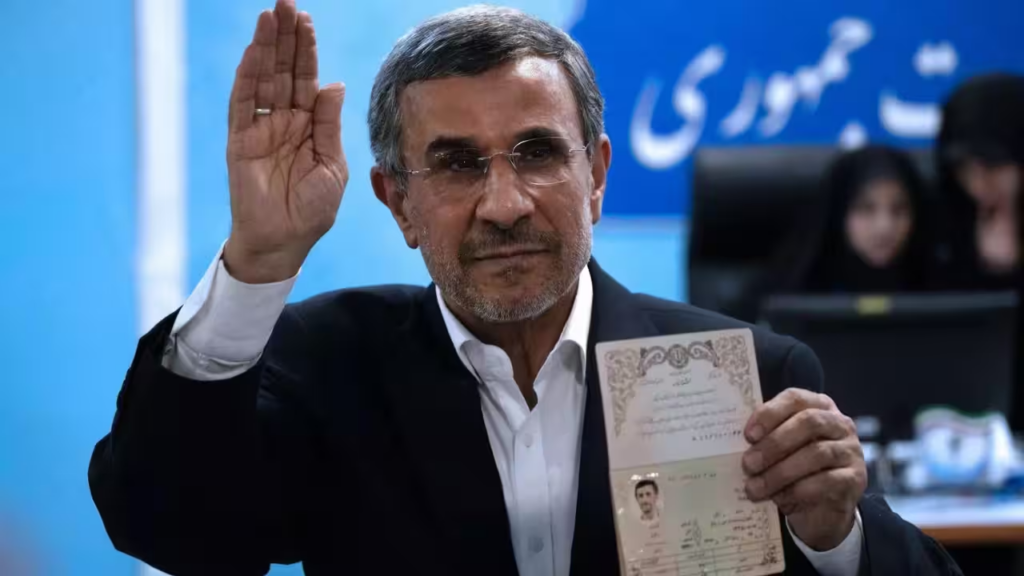
Former Iranian President Mahmoud Ahmadinejad has reportedly been placed under house arrest by Iran’s powerful Islamic Revolutionary Guard Corps (IRGC) intelligence organization after authorities concluded that he maintained extensive contacts with Israel, according to a report by The New York Times, citing four senior Iranian officials.
If confirmed, the allegations would represent one of the most extraordinary intelligence stories in modern Iranian politics. The report claims Israel spent years attempting to recruit Ahmadinejad as an intelligence asset and even discussed installing him as Iran’s leader if the Islamic Republic’s government collapsed.
While the claims have generated intense international attention, it is important to note that they are based on unnamed officials cited by The New York Times. Iranian authorities have not publicly confirmed the report, and no independent evidence has been released to substantiate the allegations.
TL;DR
- The New York Times reports that former Iranian President Mahmoud Ahmadinejad has been placed under house arrest by the IRGC.
- The report alleges Iranian officials uncovered extensive contacts between Ahmadinejad and Israel.
- Israel allegedly spent years trying to recruit Ahmadinejad as an intelligence source.
- A climate conference in Hungary reportedly served as cover for a planned secret meeting in 2024.
- Neither Iran nor Israel has publicly confirmed the allegations.
- If verified, the case would represent one of the most significant intelligence scandals in Iran’s modern history.
Why Is Mahmoud Ahmadinejad Reportedly Under House Arrest?
According to The New York Times, Iran’s Islamic Revolutionary Guard Corps (IRGC) intelligence branch concluded that Ahmadinejad had maintained extensive communications with Israeli intelligence.
The report says the investigation ultimately led Iranian authorities to place the former president under house arrest rather than pursue public criminal proceedings.
Iran has not officially announced the alleged detention, and there has been no public statement from Ahmadinejad addressing the report.
Because the allegations involve intelligence activities, much of the reported evidence remains classified or unavailable for independent verification.
What Does the Report Claim About Israel’s Alleged Operation?
The newspaper describes what it characterizes as a long-running Israeli intelligence effort targeting one of Iran’s most recognizable political figures.
According to the report, Israel allegedly:
- Conducted a covert operation over several years.
- Attempted to recruit Ahmadinejad as an intelligence asset.
- Explored scenarios in which Ahmadinejad could return as Iran’s leader if the current political system collapsed.
These claims, if accurate, would suggest Israeli intelligence viewed Ahmadinejad as someone who could potentially influence Iran’s future political landscape despite no longer holding executive office.
However, the report does not publicly disclose documentary evidence supporting these assertions.
The Hungary Meeting: Why Is a Climate Conference at the Center of the Story?
One of the report’s most striking claims concerns an academic conference in Budapest.
An Unexpected Invitation
According to The New York Times, a senior Hungarian government official approached Gergely Deli, rector of Ludovika University of Public Service, asking him to invite Ahmadinejad to a climate change conference in early 2024.
Alleged Secret Objective
Deli reportedly told the newspaper he was informed that the conference would serve another purpose beyond environmental discussions.
According to his account, the event was intended to provide cover for confidential talks between Ahmadinejad and Israeli intelligence officials.
If true, the episode illustrates a common intelligence practice of using international conferences, academic gatherings, or diplomatic events as discreet venues where meetings can occur without immediately attracting suspicion.
The report does not indicate whether the alleged meeting ultimately took place.
Why Would Israel Allegedly Target Ahmadinejad?
At first glance, the allegation appears surprising.
Ahmadinejad served as Iran’s president from 2005 to 2013 and became internationally known for his confrontational rhetoric toward Israel and the West, as well as his aggressive defense of Iran’s nuclear program.
Yet intelligence agencies often evaluate individuals differently from how they are perceived publicly.
Potential factors that may have made Ahmadinejad strategically interesting include:
- His deep understanding of Iran’s political system.
- His relationships within the country’s security establishment.
- His continued public visibility after leaving office.
- His increasingly independent political positions in recent years, which occasionally put him at odds with Iran’s ruling establishment.
That said, these factors should not be interpreted as evidence supporting the allegations. They merely explain why intelligence agencies might theoretically assess prominent political figures as valuable sources.
What Does House Arrest Mean in Iran?
House arrest is a tool Iranian authorities have used in politically sensitive cases.
Instead of formal imprisonment, an individual may face restrictions such as:
- Continuous surveillance.
- Limited communication with the outside world.
- Restrictions on travel.
- Controlled or prohibited media appearances.
- Limited access to visitors.
Because these measures often occur without public court proceedings, independent verification can be difficult.
Several prominent Iranian political figures have previously faced extended periods of house arrest following political disputes.
Why Would Iran Handle the Case Quietly?
If the report is accurate, publicly prosecuting a former president on allegations involving Israeli intelligence would create enormous political consequences.
Such a case could:
- Raise questions about internal security failures.
- Expose intelligence methods.
- Intensify divisions among Iran’s political elite.
- Damage public confidence in state institutions.
House arrest could therefore represent a method of containing the situation while avoiding an extended public legal process.
This interpretation remains speculative because Iranian authorities have not officially commented on the report.
What Could This Mean for Iranian Politics?
Even if only portions of the report prove accurate, the implications would be significant.
Increased Internal Security Scrutiny
Iran’s intelligence agencies could tighten surveillance of former officials and political insiders.
Greater Political Distrust
The allegations could deepen existing rivalries among conservative factions and security institutions.
International Ramifications
Any confirmed evidence of Israeli intelligence penetrating senior levels of Iranian politics would likely reshape assessments of the ongoing intelligence competition between the two countries.
Israel and Iran have long accused one another of conducting covert operations that include cyberattacks, espionage, sabotage, and targeted intelligence campaigns.
Why Independent Verification Matters
Reports involving intelligence operations are among the most difficult stories to verify independently.
In this case:
- The report relies on unnamed senior Iranian officials.
- No supporting documents have been released publicly.
- Iranian authorities have not confirmed the alleged house arrest.
- Israel has not publicly commented on the claims.
Readers should therefore distinguish between what has been reported and what has been independently established.
As additional reporting emerges, the picture may become clearer.
What Happens Next?
Several developments will be worth watching:
- Whether Iranian authorities officially acknowledge Ahmadinejad’s status.
- Any public appearance or statement by Ahmadinejad himself.
- Additional reporting from independent international news organizations.
- Responses from Israeli officials.
- Potential confirmation from European or regional diplomatic sources.
Until then, the report remains one of the most consequential—and closely watched—stories involving Iran’s political leadership this year.