A sprawling Saharan dust cloud is moving toward the U.S.
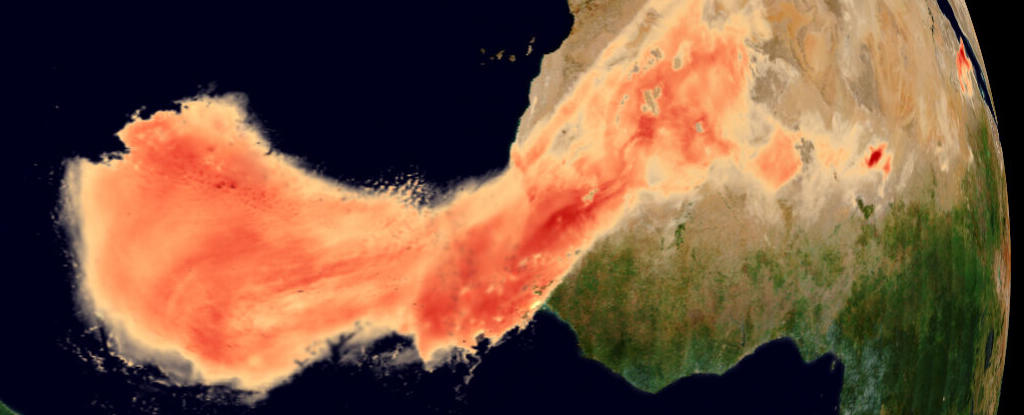
One of the largest Saharan dust plumes of the year is currently blanketing the Caribbean, drastically reducing air quality and visibility, and it’s now on a path toward the southeastern United States. According to CBS News, the massive dust cloud spans roughly 2,000 miles from Jamaica to Barbados and extends 750 miles from the Turks and Caicos to Trinidad and Tobago.
Where and when the Saharan dust will arrive
Satellite imagery and weather radar show the dust already affecting Cuba, Haiti, the Dominican Republic, and other Caribbean nations as of Tuesday. Forecast models indicate the plume will:
- Reach Florida by mid-week
- Spread into Georgia, the Carolinas, Texas, and Louisiana by Friday
- Linger over the Gulf Coast into the weekend
A smaller dust cloud had already reached Florida earlier this week, as reported by CBS Orlando affiliate WKMG, with haze lingering over the state on Monday. However, the larger plume expected in the coming days could lead to more significant air quality concerns.
NBC News cites hurricane experts warning that the densest concentrations of dust will likely settle over Florida, Louisiana, Alabama, and Mississippi in the coming days.
How the Saharan air layer influences weather
This phenomenon, known as the Saharan Air Layer (SAL), occurs when massive dust storms from Africa’s Sahara Desert are carried westward across the Atlantic Ocean. The SAL is most active between April and October, with peak dust activity typically in June and July.
Key effects of the Saharan dust plume:
- Suppresses tropical storm development—The dry, dusty air inhibits the formation of hurricanes and tropical waves.
- Impacts air quality—Fine particulate matter can aggravate respiratory conditions
- Creates vivid sunsets—Scattering sunlight produces dramatic red and orange hues.
The dust typically travels at altitudes between 5,000 and 20,000 feet, carried by trade winds. While these plumes are an annual occurrence, not all reach the U.S. with such intensity.
“This is one of the most significant Saharan dust events we’ve seen this year,” a meteorologist told NBC News. “It will likely bring hazy skies and reduced air quality to parts of the Southeast and Gulf Coast.”
Residents in affected areas, particularly those with asthma or other respiratory conditions, are advised to monitor local air quality reports in the coming days.