
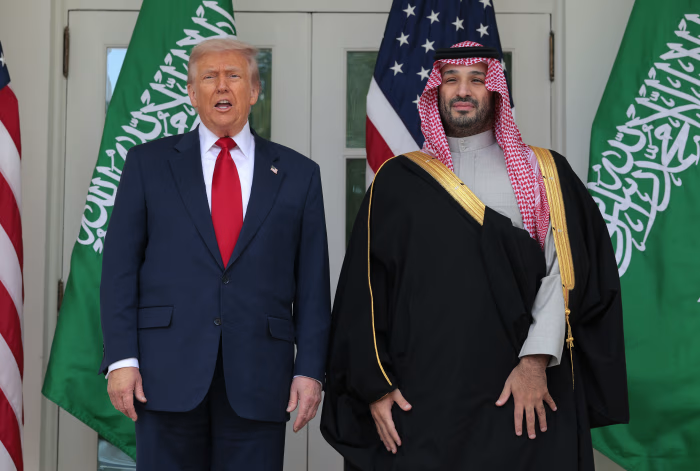
The United States has approved a landmark 30-year civil nuclear cooperation agreement with Saudi Arabia, marking one of the biggest shifts in U.S. nuclear policy in the Middle East in years.
While the agreement is designed to help Saudi Arabia develop a civilian nuclear energy programme, one provision has attracted global attention. According to reports, the framework could eventually allow uranium enrichment on Saudi soil under a U.S.-backed and closely monitored system.
That has raised an obvious question: Does this mean Saudi Arabia can now build a nuclear bomb?
The short answer is no.
Although the agreement expands Saudi Arabia’s civilian nuclear capabilities, it does not authorise the Kingdom to develop nuclear weapons. However, it does move Riyadh closer to mastering technologies that can have both civilian and military applications, marking a major geopolitical development.
What is the U.S.-Saudi nuclear deal?
The agreement is a civilian nuclear cooperation pact that establishes the legal framework for nuclear collaboration between Washington and Riyadh for the next 30 years.
The partnership is expected to include:
- Construction of nuclear power plants.
- Transfer of reactor technology.
- Nuclear fuel supply.
- Safety and security cooperation.
- Training for scientists and engineers.
- Radioactive waste management.
- International inspections and safeguards.
Like other U.S. civilian nuclear agreements, it falls under Section 123 of the U.S. Atomic Energy Act, which governs American nuclear cooperation with foreign countries.
Why is this agreement different?
What makes the Saudi agreement unusual is its reported approach to uranium enrichment.
Most U.S. civilian nuclear agreements discourage or prohibit partner countries from developing domestic uranium enrichment capabilities because enrichment technology can potentially be used to produce material for nuclear weapons.
For example, the United Arab Emirates accepted the so-called “gold standard” by voluntarily giving up domestic uranium enrichment and spent fuel reprocessing in exchange for U.S. nuclear cooperation.
Saudi Arabia has long argued that, as a member of the Nuclear Non-Proliferation Treaty (NPT), it should enjoy the same rights as other nations to develop a complete civilian nuclear fuel cycle.
According to reports, the new framework could allow enrichment under a U.S.-supervised system rather than banning it outright.
Does uranium enrichment mean Saudi Arabia can build a nuclear bomb?
No.
Uranium enrichment is a dual-use technology, meaning it has both civilian and military applications.
For civilian nuclear power:
- Natural uranium contains about 0.7% uranium-235.
- Nuclear power reactors generally require uranium enriched to about 3% to 5%.
- Some research reactors use enrichment levels up to around 20%.
Nuclear weapons, however, typically require uranium enriched to roughly 90% uranium-235, commonly referred to as weapons-grade uranium.
Although the centrifuges used for civilian enrichment are similar to those used for weapons-grade enrichment, producing bomb-grade material would require:
- Much higher enrichment levels.
- Larger numbers of centrifuges.
- Extended operation.
- Withdrawal from or violation of international safeguards.
Simply possessing enrichment capability does not mean a country is building nuclear weapons.
What safeguards would prevent weaponisation?
Saudi Arabia remains a non-nuclear weapon state under the Nuclear Non-Proliferation Treaty (NPT).
That means its civilian nuclear activities are expected to remain subject to safeguards administered by the International Atomic Energy Agency (IAEA).
These safeguards include:
- Regular inspections.
- Nuclear material accounting.
- Monitoring of enrichment activities.
- Verification that nuclear material is not diverted for military purposes.
Any attempt to secretly produce weapons-grade uranium would likely trigger international inspections, diplomatic pressure, sanctions, and potentially broader geopolitical consequences.
Why does Saudi Arabia want nuclear energy?
Despite being one of the world’s largest oil exporters, Saudi Arabia says nuclear energy is central to its Vision 2030 economic diversification strategy.
The Kingdom’s electricity demand continues to grow because of:
- Rapid population growth.
- Industrial expansion.
- Large desalination projects.
- AI infrastructure and data centers.
- Economic diversification initiatives.
Nuclear power would allow Saudi Arabia to generate electricity while exporting more of its oil instead of consuming it domestically.
Officials also argue that nuclear energy can help reduce carbon emissions while providing reliable baseload electricity that complements renewable energy.
Why is the timing significant?
The agreement comes amid heightened tensions over Iran’s nuclear programme and broader instability in the Middle East.
Critics argue that allowing Saudi Arabia greater access to sensitive nuclear technology could contribute to a regional arms race.
Supporters counter that bringing Saudi Arabia’s nuclear ambitions under a U.S.-led framework is safer than allowing the Kingdom to pursue similar technology through countries such as China or Russia, where Washington would have less influence over safeguards and oversight.
The agreement reflects a broader strategic calculation that engagement may reduce proliferation risks more effectively than isolation.
How does this compare with India’s nuclear agreement?
India’s landmark 2008 civil nuclear agreement with the United States followed a very different path.
Key differences include the following:
| India | Saudi Arabia |
|---|---|
| Already possessed nuclear weapons | Does not possess nuclear weapons |
| Not a member of the Nuclear Non-Proliferation Treaty | Member of the Nuclear Non-Proliferation Treaty |
| Civilian and military nuclear facilities separated under the agreement | Civilian program expected to remain entirely under international safeguards |
| Received a unique international exemption | Remains subject to existing NPT obligations |
The two agreements therefore serve different strategic and legal purposes.
What happens next?
Before taking full effect, the agreement will undergo review by the U.S. Congress.
Lawmakers are expected to examine the following:
- Non-proliferation safeguards.
- Uranium enrichment provisions.
- Regional security implications.
- Oversight mechanisms.
- Long-term strategic consequences.
Blocking the agreement would require congressional action under procedures established for Section 123 agreements.
Why does this deal matter?
The agreement could reshape the Middle East’s nuclear landscape for decades.
If implemented, it would:
- Deepen the U.S.-Saudi strategic partnership.
- Expand American participation in Saudi Arabia’s energy sector.
- Give Washington greater influence over Riyadh’s civilian nuclear programme.
- Potentially set a precedent for future nuclear cooperation in the region.
At the same time, it is likely to intensify debate over whether expanding civilian nuclear capabilities in the Middle East strengthens long-term energy security or increases future proliferation risks.
TL;DR
- The United States has approved a 30-year civilian nuclear cooperation agreement with Saudi Arabia.
- The deal reportedly leaves open the possibility of uranium enrichment on Saudi soil under a U.S.-supported framework.
- Uranium enrichment alone does not allow Saudi Arabia to build a nuclear weapon.
- Saudi Arabia remains subject to Nuclear Non-Proliferation Treaty obligations and International Atomic Energy Agency safeguards.
- The agreement aims to support civilian nuclear power while keeping Riyadh’s programme under international oversight.
- The deal will face congressional review and is expected to generate significant debate over regional security and nuclear proliferation.