
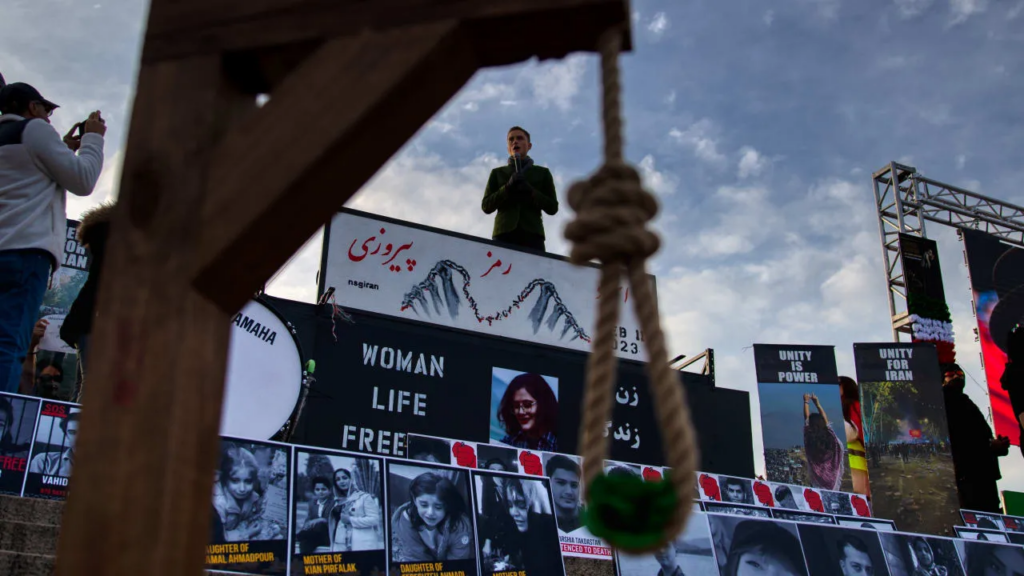
The execution of 18-year-old musician Amir Hossein Hatami has intensified scrutiny of Iran’s response to recent protests, drawing condemnation from human rights groups and raising urgent questions about due process and state power. His death—carried out at Ghezel Hesar prison near Tehran—has become a flashpoint in a broader pattern of Iran protest executions that critics say reflect a rapid escalation in state crackdowns.
Hatami’s case is not isolated. It sits at the intersection of political unrest, international tensions, and a justice system under global scrutiny.
What Happened in Amir Hossein Hatami’s Case?
Amir Hossein Hatami, an 18-year-old musician, was executed after being convicted of national security offences linked to protests that erupted in January.
According to Iran’s judiciary:
- He allegedly broke into a military facility.
- He was accused of destroying property to seize weapons.
- Authorities claimed he acted on behalf of foreign adversaries, including the United States and Israel.
Hatami was sentenced to death in February, less than a month after his arrest—along with six others tied to the same case.
Why the Timeline Matters
The speed of the trial has drawn significant criticism. Fast-track prosecutions in politically sensitive cases often raise concerns about:
- Limited access to legal counsel
- Lack of transparent evidence
- Coerced confessions
Why Are Iran Protest Executions Increasing?
The execution of Hatami marks the fourth known case linked to protests that began in late December over rising living costs.
From Economic Anger to Political Crisis
What started as demonstrations over inflation and economic hardship quickly evolved into broader anti-government protests.
Key developments include:
- Mass mobilizations across cities
- Escalation into clashes with security forces
- A sweeping crackdown resulting in thousands of reported deaths
A Pattern of Harsh Sentencing
Authorities have increasingly used capital punishment in protest-related cases. For example:
- Three individuals were executed on March 19 for allegedly killing police officers during unrest.
- Among them was a 19-year-old wrestler, underscoring the youth of many defendants.
This pattern signals a shift from crowd control to deterrence through severe penalties.
What Do Human Rights Groups Say?
Human rights organisations have sharply criticised Iran’s handling of these cases, particularly the use of expedited trials and capital punishment.
Amnesty International’s Position
Amnesty International has labeled Hatami’s execution as “grossly unfair,” citing:
- The rapid sentencing timeline
- Concerns over judicial independence
- Allegations of due process violations
Iran Human Rights (IHR) Warning
The Norway-based NGO Iran Human Rights has issued a stark warning:
- Hundreds of individuals may face imminent execution
- The judiciary appears to be accelerating cases tied to unrest
How Do Geopolitics Factor In?
The surge in Iran protest executions comes amid heightened tensions between Iran and Western powers.
A Triggering Event
According to reports:
- A conflict involving Iran, the United States, and Israel escalated following strikes on February 28
- These strikes reportedly resulted in the death of Supreme Leader Ali Khamenei
This geopolitical backdrop has likely influenced domestic policy, with authorities framing protest actions as foreign-backed threats.
National Security Framing
Iran’s judiciary has increasingly characterised protest-related offences as:
- “Enmity against God”
- “Corruption on earth”
- “Conspiracy against national security”
These charges carry severe penalties, including the death sentence, and are often used in politically sensitive cases.
What Are the Concerns About the Trial Process?
The legal proceedings in Hatami’s case—and others like it—have drawn intense scrutiny.
The Role of the Judiciary
The trial was overseen by a judge widely known for issuing harsh sentences in political cases. Critics argue that:
- Judicial outcomes may be predetermined
- Courts lack independence in high-profile cases
Allegations from Defense Counsel
Defense lawyers have raised serious concerns, including:
- Claims that plainclothes forces may have instigated violence during protests
- Allegations that demonstrators were trapped in a building before it was set on fire
These claims, if substantiated, would significantly alter the narrative presented by authorities.
Why This Case Matters Beyond Iran
The execution of Amir Hossein Hatami resonates far beyond Iran’s borders.
Human Rights Implications
The case highlights ongoing global concerns about:
- Use of the death penalty in political cases
- Fair trial standards under international law
- Treatment of young defendants
A Signal to Protest Movements
Domestically, these executions may serve as a deterrent. Internationally, they raise questions about:
- The limits of state power
- The role of global pressure in influencing domestic policy
What Comes Next?
The situation remains fluid, with several key developments to watch:
- Potential increase in executions: Human rights groups warn that many more could follow.
- International response: Governments and organisations may impose sanctions or issue formal condemnations.
- Information transparency: Access to reliable data will be critical in assessing the scale of the crackdown.
TL;DR
- 18-year-old musician Amir Hossein Hatami was executed in Iran over protest-related charges.
- His trial and sentencing happened in less than a month, raising due process concerns.
- Human rights groups say the execution was unfair and part of a broader crackdown.
- Iran protest executions are increasing amid political unrest and geopolitical tensions.
- Hundreds more individuals may face similar fates in the coming weeks.