
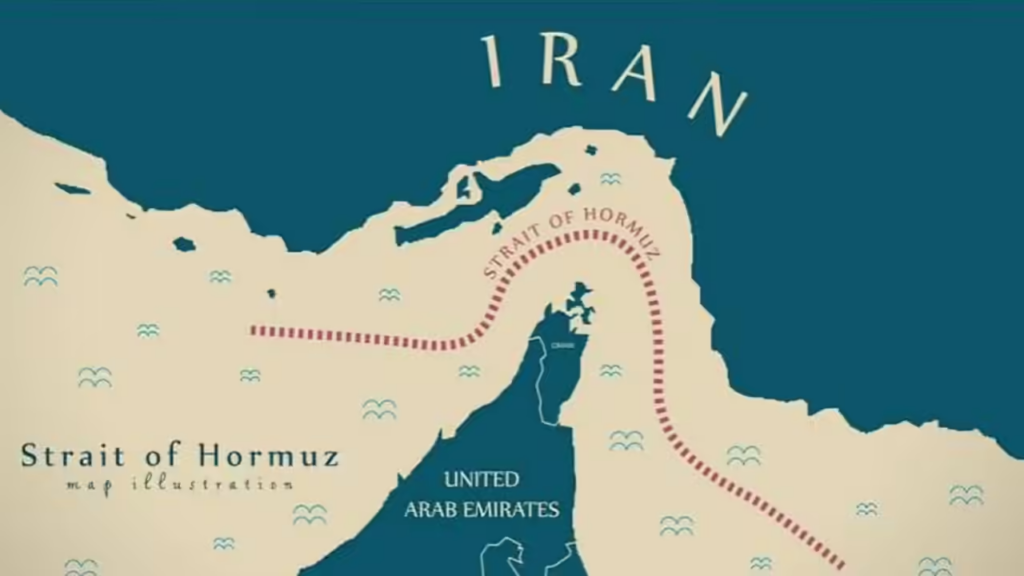
Iran is weighing a controversial move that could ripple across global markets: charging transit fees on ships passing through the Strait of Hormuz. If implemented, the policy would effectively monetise control over one of the world’s most critical energy chokepoints—through which roughly 20% of global oil and liquefied natural gas (LNG) flows.
The proposal comes amid heightened tensions following the ongoing US-Israel conflict involving Iran, and a series of disruptions that have already slowed maritime traffic through the region.
What Is Iran Proposing in the Strait of Hormuz?
Iranian lawmakers are reportedly considering legislation that would require ships to pay tolls for using the Strait of Hormuz.
What the Plan Includes
- Transit fees on vessels carrying:
- Oil and LNG
- Commercial goods
- Food supplies
- Charges are applied to countries using the route for trade
- Potential restrictions tied to geopolitical alignment
An adviser to Iran’s leadership has also hinted at a broader “new regime” governing access to the strait after the conflict subsides.
Why the Strait of Hormuz Matters So Much
The Strait of Hormuz is not just another shipping lane—it is the single most important energy transit corridor in the world.
Key Facts
- About one-fifth of the global oil supply passes through it
- A significant portion of global LNG shipments also transits the route
- It is only about 33 km (21 miles) wide at its narrowest point
Who Depends on It?
Major oil exporters rely heavily on this passage, including:
- Saudi Arabia
- Iraq
- United Arab Emirates
- Kuwait
- Iran
Meanwhile, nearly 80% of these exports are destined for Asian economies, including major importers like India and China.
How Has the Conflict Already Disrupted Shipping?
Even before any formal fee structure, Iran has been exercising de facto control over the strait.
Recent Disruptions
- At least 20 merchant vessels have been attacked since late February
- Ships hit by:
- Drones
- Missiles
- Some vessels forced to:
- Abandon voyages
- Evacuate crews
Traffic Impact
- Tanker movement has dropped sharply
- Over 1,000 vessels are reportedly delayed or rerouted
- Hundreds of ships are stranded near the corridor
Is Iran Already Controlling Who Passes Through?
In practice, yes.
Iran has reportedly:
- Allowed certain shipments—especially oil bound for Asia
- Restricted or disrupted vessels linked to Western countries
- Turned the strait into a selectively controlled corridor
Some ships have even turned off their Automatic Identification System (AIS) to avoid detection, making real-time tracking more difficult.
What Would Transit Fees Change?
Charging tolls would formalise Iran’s control—and raise the stakes significantly.
Economic Impact
- Higher shipping costs: Fees would increase the cost of transporting oil and gas
- Rising energy prices: These costs would likely be passed on globally
- Insurance premiums: Already elevated due to risk, they could climb further
Strategic Impact
- Iran gains leverage over global energy flows
- Countries dependent on Gulf oil become more vulnerable
- Trade routes could shift to avoid the strait—where possible
Could This Trigger a Global Oil Shock?
The risk is real.
Why Markets Are Sensitive
- Oil markets react quickly to supply disruptions
- Even small reductions in flow can spike prices
- The Strait of Hormuz has no easy substitute route at scale
In the past, even threats to close the strait have pushed oil prices sharply higher.
What Are the Legal and Geopolitical Challenges?
International Law Questions
The Strait of Hormuz is widely considered an international waterway, meaning:
- Ships have the right of transit passage
- Imposing unilateral fees could face legal challenges
Risk of Escalation
- Western powers may push back militarily or diplomatically
- Naval presence in the region could increase
- Miscalculations could lead to broader conflict
What Does This Mean for India and Asia?
Countries like India are particularly exposed.
Why It Matters
- Heavy reliance on Gulf oil and gas
- Limited alternative supply routes
- Increased import costs could:
- Widen trade deficits
- Push up domestic fuel prices
Reports already suggest millions of tonnes of oil and gas shipments linked to India have been delayed in the strait.
What Happens Next?
The proposal is still under consideration, but several scenarios are possible:
1. Fees Are Implemented
- Shipping costs rise immediately
- Global markets react with volatility
2. Diplomatic Pushback
- Negotiations could delay or dilute the plan
3. Continued Informal Control
- Iran may maintain selective access without formalising tolls
TL;DR
- Iran is considering charging transit fees in the Strait of Hormuz
- The strait carries about 20% of global oil and LNG
- Ongoing attacks and disruptions have already slowed shipping
- Fees could increase global energy prices and geopolitical tensions
- Asian economies, especially India and China, would be heavily impacted