
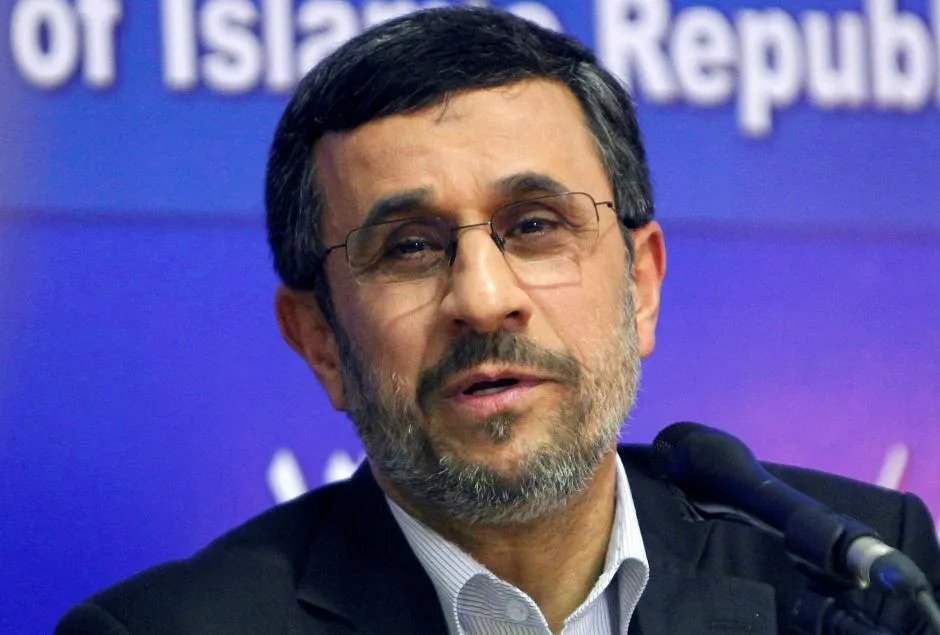
Former Iranian President Mahmoud Ahmadinejad made a public appearance in Tehran on Tuesday, just one day after reports claimed he had been placed under house arrest by Iran’s powerful Islamic Revolutionary Guard Corps (IRGC) over alleged contacts with Israel’s intelligence agency, Mossad.
His appearance at a memorial service, alongside several of Iran’s most senior officials, has added another twist to an already extraordinary political story—one that includes allegations of espionage, denials from Ahmadinejad’s office, and questions about Iran’s internal power dynamics.
TL;DR
- Mahmoud Ahmadinejad appeared publicly in Tehran after reports claimed he had been placed under house arrest.
- The allegations suggested Iran’s IRGC detained him over alleged secret meetings with Mossad chief David Barnea.
- Ahmadinejad’s office dismissed the claims as “Hollywood-style” fabrications and said he continues to work normally.
- His appearance alongside Iran’s top political and military leaders appears to contradict reports that he had been detained.
- The incident highlights ongoing speculation about factional politics inside Iran following recent political upheaval.
Mahmoud Ahmadinejad’s Public Appearance Challenges House Arrest Reports
Mahmoud Ahmadinejad attended a funeral memorial in Tehran where Iranian state television showed him greeting attendees, smiling, and interacting with senior officials.
The appearance came less than 24 hours after a report claimed the IRGC had placed the former president under house arrest over alleged ties to Israel’s intelligence service.
Photographs and video from the ceremony showed Ahmadinejad alongside several prominent figures, including:
- Iranian President Masoud Pezeshkian
- Quds Force commander Esmail Qaani
- Judiciary chief Gholam-Hossein Mohseni-Ejei
- Parliament Speaker Mohammad Bagher Ghalibaf
According to reports, this was Ahmadinejad’s second public appearance within a week. He had also reportedly attended Supreme Leader Ali Khamenei’s funeral earlier in the week.
The timing of these appearances has fueled debate over the credibility of claims that he was under any form of detention.
Suggested visual: A timeline comparing the publication of the house arrest report with Ahmadinejad’s confirmed public appearances.
What Did the House Arrest Report Claim?
The allegations originated from a report that claimed the IRGC had uncovered secret meetings between Ahmadinejad and Mossad Director David Barnea during 2024.
According to the report, Israeli intelligence had allegedly spent years cultivating Ahmadinejad as a potential political asset with the long-term goal of helping him emerge as Iran’s next leader.
The report further alleged that after a joint U.S.-Israeli operation on February 28, plans existed to move Ahmadinejad into a secure location.
These are extraordinary claims that, if true, would represent one of the most significant intelligence penetrations of the Iranian political establishment in decades.
However, no publicly available evidence has been presented to independently verify these allegations.
Ahmadinejad’s Office Strongly Denies the Allegations
Ahmadinejad’s office rejected the reports outright.
In its response, his office described the allegations as “Hollywood-style claims” and argued they were so implausible they were “not worthy of denial.”
Officials also stated:
- Ahmadinejad is not under house arrest.
- He continues carrying out his normal activities.
- The reports are fabricated.
- The allegations are part of psychological warfare intended to create confusion within Iran’s political leadership.
The unusually forceful response reflects the seriousness of accusations involving alleged cooperation with Israel, which Iran considers its primary regional adversary.
Why Mahmoud Ahmadinejad Remains a Divisive Figure in Iran
Although Mahmoud Ahmadinejad served as Iran’s president from 2005 to 2013, his relationship with the country’s political establishment has become increasingly complicated since leaving office.
Once a hardliner
During his presidency, Ahmadinejad became known internationally for:
- Strong anti-Israel rhetoric.
- Expanding Iran’s nuclear program.
- Frequent confrontations with Western governments.
- A populist domestic political style.
His presidency drew international sanctions and significantly shaped Iran’s relations with the United States and Europe.
Later disagreements with Iran’s leadership
In the years after leaving office, Ahmadinejad increasingly criticized aspects of Iran’s political system.
He has spoken against:
- Government corruption.
- Economic mismanagement.
- The suppression of public protests.
- Restrictions on political participation.
He has also repeatedly attempted political comebacks, including registering as a presidential candidate despite opposition from Iran’s Guardian Council.
This complicated political position has made him difficult to classify—remaining critical of some state institutions while still identifying with many core ideological positions of the Islamic Republic.
Social Media Has Added Another Layer to the Story
Adding to the controversy, a Persian-language social media account associated with Mossad circulated an AI-generated image showing several senior Iranian officials—including Ahmadinejad—with Stars of David displayed on their hands.
The image carried the caption:
“Which one?”
The post appeared designed to encourage speculation about possible Israeli intelligence assets inside Iran.
While such online campaigns often attract widespread attention, they should not be viewed as evidence supporting espionage allegations.
Increasingly, information warfare and AI-generated content have become part of the broader confrontation between Iran and Israel, making independent verification more important than ever.
Suggested infographic: How information warfare and AI-generated imagery are increasingly used in geopolitical conflicts.
Why Ahmadinejad’s Appearance Matters
Whether or not the original allegations prove accurate, Ahmadinejad’s public appearance carries political significance.
Public events in Iran involving senior political figures are often closely choreographed. Appearing alongside the country’s president, military commanders, and judiciary chief may signal that Ahmadinejad remains publicly accepted within parts of Iran’s political establishment.
At the same time, public appearances do not necessarily reveal the full extent of behind-the-scenes political tensions.
Iran’s internal politics have long involved competing power centers, including:
- The presidency
- The IRGC
- The Supreme Leader’s office
- The judiciary
- Parliament
Observers caution against drawing firm conclusions from a single appearance, particularly given the opaque nature of Iranian politics.
What Questions Remain Unanswered?
Several key issues remain unresolved:
- Was Ahmadinejad ever under any form of restriction?
- What evidence, if any, supports claims of contacts with Mossad?
- Why did the allegations emerge at this particular moment?
- Could the reports reflect internal political rivalries rather than confirmed intelligence findings?
Until additional independently verified information emerges, many aspects of the story remain unconfirmed.
The Bottom Line
Mahmoud Ahmadinejad’s appearance at a memorial ceremony in Tehran has complicated reports that he had been placed under house arrest over alleged links to Mossad.
His office has categorically denied the accusations, calling them fabricated psychological warfare, while his visible participation in a high-profile public event appears inconsistent with claims that he was being detained.
The episode underscores how difficult it can be to verify politically sensitive information emerging from Iran, where official transparency is limited and competing narratives often dominate public discourse. As more evidence becomes available, the story is likely to remain closely watched by analysts of Iranian politics and Middle East security.