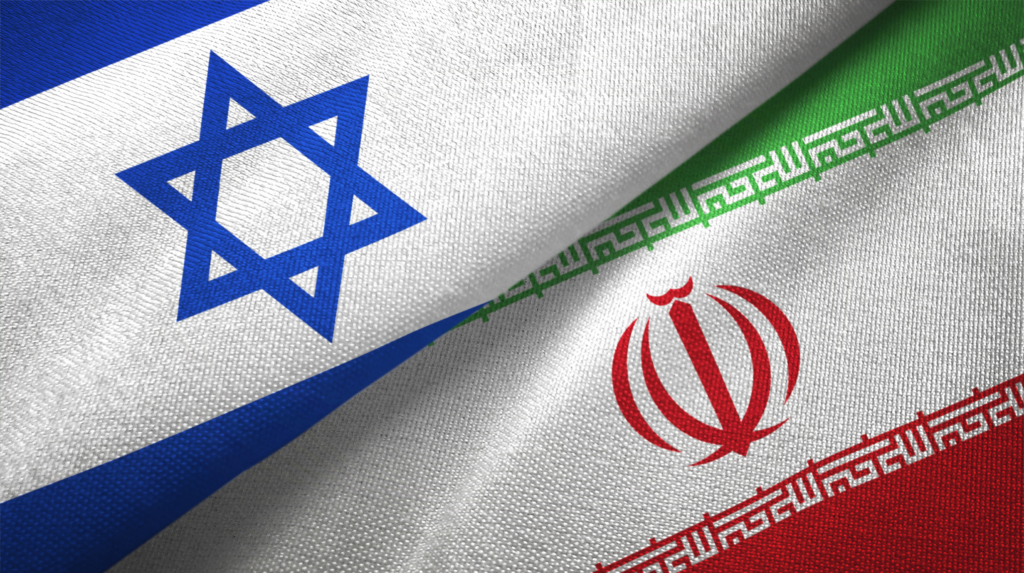
The US–Israel attack on Iran marks one of the biggest confrontations between the longtime adversaries in years, and it has already triggered a wave of retaliation across the Middle East. Israeli officials say the strikes followed months of “close and joint planning” with Washington. Iranian media and international outlets report that the targets included some of the highest-ranking figures in Tehran, including Supreme Leader Ayatollah Ali Khamenei, President Masoud Pezeshkian, and the head of Iran’s armed forces.
Iran responded within hours, launching missile and drone strikes against Israeli targets and US military installations across the region. Explosions were reported in Israel, Bahrain, and areas hosting US bases in the United Arab Emirates, Kuwait, Saudi Arabia, and Qatar.
What Happened in the US–Israel Attack on Iran?
According to Israeli military statements and reporting from CNN and other international outlets, the operation targeted senior Iranian leadership and strategic assets. The strikes follow years of tension over Iran’s nuclear program, its regional proxy network, and repeated clashes involving Israeli and Iranian forces in Syria and elsewhere.
Iran’s Immediate Retaliation
Iran launched ballistic missiles and other projectiles toward:
- Israel
- US military bases in Bahrain
- Installations in the UAE (Abu Dhabi and Dubai)
- Kuwait
- Riyadh in Saudi Arabia
- Parts of Qatar
Several Gulf states reported activating air defense systems. The UAE said it intercepted multiple ballistic missiles and described the attack as a “dangerous escalation.”
Who Stands With Iran?
Despite Iran’s reputation for regional influence, it currently appears more isolated than at any point in recent years.
The “Axis of Resistance”
For decades, Tehran has relied on a loose coalition of armed groups known as the Axis of Resistance. This includes:
- Hezbollah in Lebanon
- Popular Mobilization Forces (PMF) in Iraq
- Houthi militants in Yemen
- Hamas in Gaza
This network has served as Iran’s deterrence strategy. Instead of confrontation, Tehran often acts through proxy groups, creating plausible deniability and raising the cost of retaliation for Israel or the US.
However, Israeli military operations over the past few years have significantly weakened several of these groups. Hamas has faced sustained pressure in Gaza. Hezbollah has absorbed targeted Israeli strikes. Iraqi militias have been constrained by domestic political realities.
The result: Iran’s traditional shield looks thinner.
Russia’s Support: Rhetorical for Now
Russia condemned the US strikes. Former Russian President Dmitry Medvedev criticized US leadership, suggesting negotiations were a “cover operation” and framing the confrontation as a test of endurance between civilizations.
Yet Moscow’s position remains complex. Russia is heavily engaged in Ukraine and may hesitate to enter another active conflict zone.
Still, Iran–Russia military cooperation has deepened in recent years. Reports of increased coordination, alongside growing Iran–China ties, suggest Tehran may be strengthening its great-power partnerships as insurance.
What About Pakistan?
Pakistan, the only nuclear-armed Muslim-majority country, has historically maintained ties with Iran. But during the brief Israel–Iran conflict in June 2025, Islamabad publicly distanced itself from Tehran.
That stance appears unchanged. While Pakistan may call for de-escalation, it is unlikely to align militarily with Iran.
Who Stands With the United States?
The US–Israel attack on Iran has drawn swift reactions from Gulf states and Western allies, many of whom condemned Iran’s retaliatory strikes.
Gulf States Signal Defensive Alignment
Several Middle Eastern governments made their positions clear:
- UAE: Intercepted Iranian missiles and reserved the right to respond.
- Qatar: Condemned missile strikes as a violation of sovereignty.
- Kuwait: Confirmed air defenses engaged incoming threats.
- Saudi Arabia: Expressed solidarity with the Gulf states and condemned Iran’s actions.
These responses suggest a defensive alignment with the US, even if these countries are wary of full-scale war.
The Gulf monarchies face a dilemma: They rely on US security guarantees but fear becoming battlegrounds in a US–Iran confrontation.
Europe: Critical of Iran, Cautious on War
Germany and France have long criticized Iran’s nuclear program and domestic repression. But it remains unclear whether European governments had advance notice of the strikes.
A French military spokesperson stated that French forces are adapting their posture to ensure the protection of installations. Italy called for de-escalation while reiterating support for Iranian civilians.
Europe’s approach appears to be:
- Condemn Iran’s actions
- Avoid direct military entanglement
- Push for diplomatic off-ramps
Why This Escalation Is Different
The US–Israel attack on Iran crosses a psychological and strategic threshold.
1. Direct Targeting of Senior Leadership
Striking senior leadership figures, if confirmed, is not symbolic. It signals a willingness to destabilize the regime itself.
2. Regional Spillover
Missile exchanges now affect multiple sovereign states. This expands the conflict zone beyond Israel and Iran.
3. Risk to Global Energy Markets
The Gulf region controls critical shipping lanes, including the Strait of Hormuz. Any sustained conflict could disrupt oil exports.
Even the perception of risk can spike energy prices, affect global markets, and intensify inflation pressures worldwide.
Could Russia or China Step In?
Over the past week, observers have noted increased military coordination between Iran, Russia, and China. Beijing, in particular, has economic stakes in Gulf stability due to energy imports.
However:
- China typically avoids direct military entanglements.
- Russia is constrained by its commitments in Ukraine.
Their support may remain diplomatic and economic, unless the conflict expands dramatically.
What Happens Next?
Three possible scenarios are emerging:
1. Controlled Escalation
Limited strikes continue, but backchannel diplomacy prevents full-scale war.
2. Regional War
Hezbollah, the Houthis, and Iraqi militias intensify attacks, drawing Israel and the US into multi-front combat.
3. Diplomatic Reset
International pressure forces renewed nuclear or security negotiations.
The next 72 hours will likely determine which path prevails.
TL;DR
- The US–Israel attack on Iran targeted senior leadership and strategic assets.
- Iran retaliated with missile strikes across Israel and the Gulf states hosting US bases.
- Iran’s traditional allies, Hezbollah, Hamas, PMF, and the Houthis, are weakened but remain relevant.
- Russia condemned the US; China and Pakistan remain cautious.
- Gulf states are signaling defensive alignment with Washington.
- The conflict risks a broader regional war and energy market disruption.
Final Thoughts
The balance of power in the Middle East is shifting in real time. Iran’s deterrence strategy, built on proxies and ambiguity, is being tested by confrontation. Meanwhile, US allies must weigh loyalty against vulnerability.
Whether this becomes a contained crisis or a wider regional war depends less on rhetoric and more on restraint.
The world is watching and calculating.