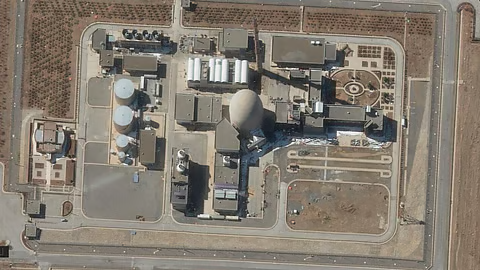
As tensions in the Middle East escalate, Israel has carried out airstrikes targeting Iran’s Arak heavy water reactor—a facility long scrutinized for its potential role in nuclear weapons development. The attack raises critical questions about Iran’s nuclear ambitions and the risks of plutonium-based weaponization.
Here’s what you need to know about the Arak reactor, why it’s a focal point in the Iran-Israel conflict, and what this strike means for regional stability.
What Is the Arak Heavy Water Reactor?
The Arak Nuclear Complex, now referred to as Khondab, is located about 280 kilometers southwest of Tehran. The facility houses two key components:
- A heavy water experimental reactor
- A heavy water production plant
Heavy water (deuterium oxide) serves as a coolant in nuclear reactors. Unlike ordinary water, it allows reactors to run on natural uranium while also producing plutonium-239—a fissile material used in nuclear weapons.
Why Is Plutonium a Concern?
While most attention on Iran’s nuclear program focuses on uranium enrichment, plutonium offers a second pathway to a bomb. If Iran reprocesses spent fuel from Arak, it could extract weapons-grade plutonium.
Historically, countries like North Korea and India have used similar reactors to develop nuclear weapons.
A History of Secrecy and International Scrutiny
Iran began constructing the Arak reactor in secret in 2003, drawing immediate suspicion from global powers. Under the 2015 Joint Comprehensive Plan of Action (JCPOA), Tehran agreed to:
✔ Redesign the reactor to minimize plutonium production
✔ Halt construction of additional heavy water facilities
✔ Allow IAEA inspections
The UK even assisted in modifying Arak’s design to reduce proliferation risks. However, after the U.S. withdrew from the JCPOA in 2018, Iran gradually resumed activities at the site.
Why Did Israel Strike the Arak Reactor?
Israel’s military stated that the strike specifically targeted the reactor’s core seal, a critical component for plutonium production. Their goal:
🔹 Prevent Iran from restoring the reactor
🔹 Disrupt potential plutonium-based bomb development
Iran insists the facility is only for peaceful purposes, such as medical isotope production. However, intelligence agencies and nuclear experts remain skeptical.
What Happens Next?
The attack on Arak marks a dangerous escalation in the shadow war between Israel and Iran. Key repercussions to watch:
✅ Iran’s Response: Will Tehran retaliate directly, or through proxy forces?
✅ Nuclear Program Adjustments: Could Iran accelerate enrichment elsewhere?
✅ Global Diplomatic Fallout: How will the U.S., EU, and UN respond?