

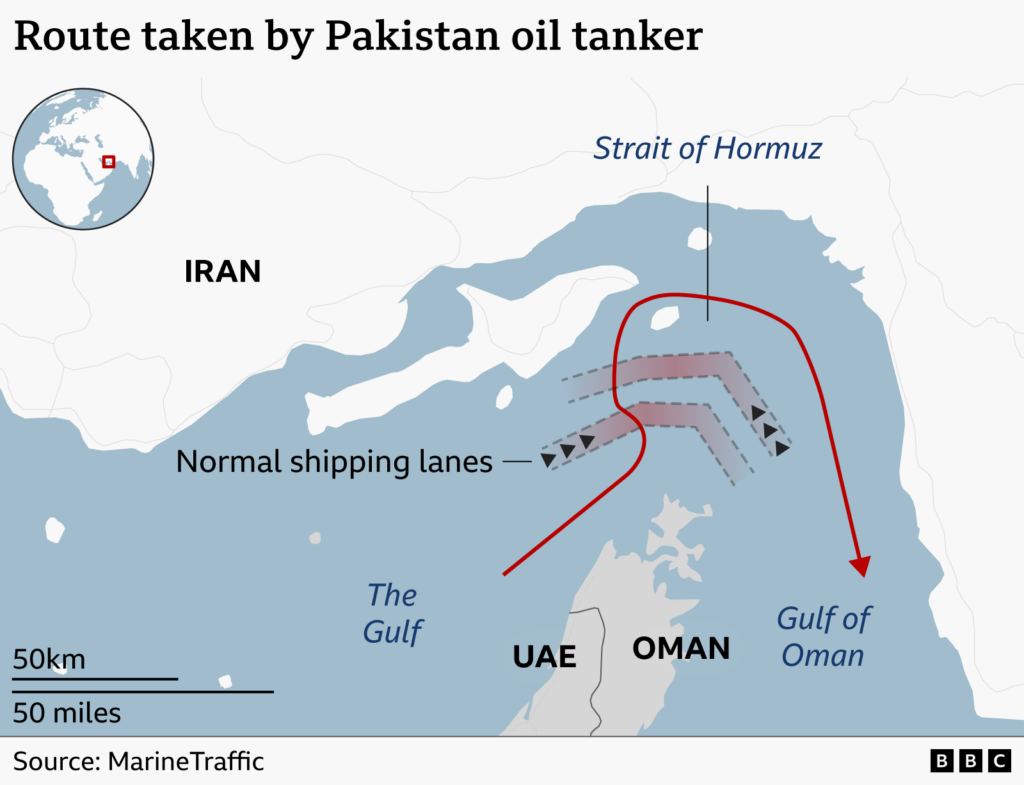
As tensions escalate across the Gulf, one of the world’s most critical maritime chokepoints—the Strait of Hormuz—has become a strategic pressure valve. Iran hasn’t fully shut it down. Instead, it’s doing something far more calculated: selectively allowing passage.
The move is not random. It’s a mix of geopolitics, economics, and signaling.
What Is Happening in the Strait of Hormuz Right Now?
The Strait of Hormuz handles roughly one-fifth of global oil trade, making it one of the most strategically sensitive waterways on the planet.
Amid the ongoing conflict, Iran has:
- Tightened control over maritime movement
- Allowed passage only to “non-hostile” vessels
- Effectively blocked or discouraged ships linked to adversaries
Iranian Foreign Minister Abbas Araghchi has made the policy explicit: the strait is “not completely closed,” but access depends on political alignment.
Which Countries Are Being Allowed—and Why?
Iran has reportedly permitted vessels linked to five countries:
- India
- Pakistan
- China
- Russia
- Iraq
At first glance, the list may seem diverse. But there’s a clear pattern: none of these countries are actively aligned against Iran in the current conflict.
Let’s break down the logic country by country.
Why Has India Been Allowed Through Hormuz?
Strategic Neutrality Meets Economic Importance
Narendra Modi has maintained a careful balancing act—calling for restraint without taking sides militarily.
That neutrality matters.
Key Factors
- India has avoided joining any anti-Iran military bloc
- It relies heavily on Gulf oil imports via Hormuz
- Active diplomacy led by S. Jaishankar ensured communication channels stayed open
The Chabahar Factor
The Chabahar Port strengthens this relationship further. It’s not just a trade hub—it’s a long-term strategic project connecting India to Central Asia.
Allowing Indian vessels through Hormuz protects:
- Iran’s economic ties
- A major energy buyer
- A politically neutral partner
Why Has Pakistan Been Allowed?
Geography and Quiet Diplomacy
Pakistan shares a border with Iran, making stability a shared priority.
Key Factors
- Maintains a low-profile, neutral stance
- Avoids direct alignment with anti-Iran forces
- Has explored mediation roles in the region
For Iran, denying Pakistan access could risk regional spillover instability—something Tehran wants to avoid.
Why Is China on the List?
Economic Lifeline
China is arguably the most important country on this list for Iran.
Key Factors
- One of the largest buyers of Iranian oil
- Opposes Western-led sanctions frameworks
- Maintains a pro-de-escalation diplomatic stance
Allowing Chinese tankers through Hormuz ensures:
- Continued oil revenue
- Strategic backing from a global power
In short, this is less about friendship—and more about economic survival.
Why Has Russia Been Allowed?
Strategic Alignment Against the West
Russia and Iran share overlapping geopolitical interests, particularly in countering U.S. influence.
Key Factors
- Coordinated positions in global forums
- Growing cooperation in energy and logistics
- Shared opposition to Western military actions
Allowing Russian vessels reinforces a mutual strategic bloc during conflict.
Why Has Iraq Been Allowed?
Proximity and Political Alignment
Iraq is deeply intertwined with Iran—economically, politically, and geographically.
Key Factors
- Strong bilateral ties
- Economic dependence on regional stability
- No hostile stance toward Iran
Blocking Iraq would hurt not just Baghdad—but also Iran’s own regional influence.
What’s the Bigger Strategy Behind Iran’s Decision?
Selective Access as a Pressure Tool
Iran isn’t just controlling shipping—it’s sending a message.
1. Reward Neutrality
Countries that:
- Avoid military alignment
- Maintain diplomatic engagement
…are granted access.
2. Punish Adversaries
By restricting others, Iran increases:
- Economic pressure
- Energy insecurity
- Political leverage
3. Keep Revenue Flowing
A full blockade would hurt Iran too. By allowing select countries:
- Oil exports continue
- Key trade relationships remain intact
This is controlled disruption, not total shutdown.
How Does This Impact Global Oil Markets?
Immediate Effects
- Shipping delays and rerouting
- Increased insurance and freight costs
- Oil price volatility
Uneven Impact
Countries with access (like India or China):
- Maintain supply continuity
Others:
- Face higher costs or shortages
Is This Situation Sustainable?
Not indefinitely.
Selective access creates:
- Diplomatic tensions
- Trade imbalances
- Pressure from global markets
At some point, major powers may push for:
- International naval interventions
- Negotiated reopening
- Alternative trade routes
Why This Story Matters
This isn’t just about five countries getting through a strait.
It’s about how modern conflicts are fought:
- Not just with weapons—but with supply chains
- Not just on land—but through trade routes
- Not just against enemies—but in favor of strategic partners
Iran’s Hormuz strategy shows how geography can become leverage—and how access itself can be weaponized.
TL;DR
- Iran has restricted Hormuz access but allowed five “friendly” countries
- These include India, Pakistan, China, Russia, and Iraq
- The decision is based on neutrality, economic ties, and strategic alignment
- It allows Iran to maintain oil revenue while pressuring adversaries
- The move highlights how trade routes are used as geopolitical tools




