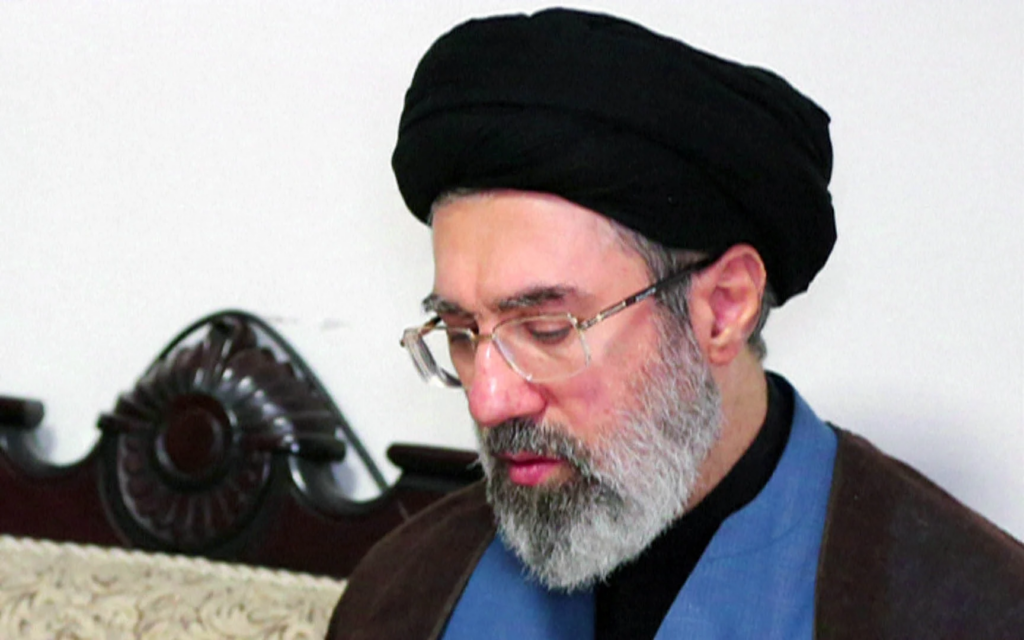
Reports that Iran’s new Supreme Leader, Mojtaba Khamenei, is seriously ill and unable to govern have added a new layer of uncertainty to an already volatile geopolitical moment.
According to a report by The Times, citing a diplomatic memo based on U.S. and Israeli intelligence, Khamenei is allegedly unconscious and undergoing treatment in Qom. If true, this would mean Iran’s top decision-maker is currently incapacitated.
But as with many developments involving Iran’s leadership, the facts remain murky, contested, and politically sensitive.
Is Mojtaba Khamenei incapacitated?
The central claim is stark: Mojtaba Khamenei is reportedly in a severe medical condition and unable to participate in governance.
What the report says:
- He is being treated in Qom, Iran’s religious capital
- His condition is described as “severe”
- He is not involved in decision-making
- He may have been rendered unconscious
The memo cited by The Times is reportedly based on U.S. and Israeli intelligence assessments, not direct public confirmation.
What’s missing:
- No official statement from Iran
- No independent verification
- No medical confirmation or timeline
Why this matters:
In authoritarian or tightly controlled systems, leadership health is often treated as a state secret. That makes early reports difficult to verify—and highly consequential if true.
How was Mojtaba Khamenei injured?
The report links his condition to U.S. and Israeli airstrikes that allegedly killed his father, Ali Khamenei.
Key claims:
- Mojtaba was wounded in the same strike
- The attack marked the beginning of a broader military campaign
- Several family members were also reportedly killed
The U.S. had earlier hinted at his condition. Defense Secretary Pete Hegseth reportedly said the new leader was “wounded and likely disfigured.”
Iran has acknowledged that Mojtaba was injured—but has not publicly detailed the severity.
Has Mojtaba Khamenei appeared in public?
No.
Since assuming power, Mojtaba Khamenei has:
- Made no public appearances
- Issued only written or broadcast statements
- Avoided live addresses or visual confirmation
Why that’s significant
In Iran’s political system, the Supreme Leader is not just a political figure but a symbolic authority. Public visibility:
- Signals control and legitimacy
- Reassures domestic and international audiences
- Reinforces continuity of power
His absence has fueled speculation about his health and ability to govern.
Why is Qom significant?
The reported location of his treatment—Qom—is not incidental.
Qom’s importance:
- It is Iran’s religious capital
- A major center for Shia Islamic scholarship
- A traditional base of clerical authority
Strategic implications
If Khamenei is indeed in Qom:
- It suggests a controlled, secure environment
- It places him within the religious establishment’s sphere
- It may indicate internal coordination among clerical elites
What’s happening with Ali Khamenei’s burial?
The memo cited by The Times also claims that preparations are underway in Qom for the burial of Ali Khamenei.
Reported developments:
- Construction of a large mausoleum
- Space for multiple graves
- Potential burial of other family members
The report even suggests the possibility that Mojtaba himself could be buried there, highlighting the seriousness of his reported condition.
Important caveat
These claims remain unverified and should be treated with caution until confirmed by:
- Official Iranian sources
- Satellite imagery or independent reporting
- Statements from religious authorities
What has Iran officially said?
Iran has acknowledged only part of the narrative.
Confirmed:
- Mojtaba Khamenei was injured in an airstrike
- The strike also killed members of his family
Not confirmed:
- His current medical condition
- His location
- His ability to govern
Instead, Iranian media have continued to broadcast statements attributed to him, including messages thanking Iraq for support against U.S. and Israeli actions.
Why this matters for Iran—and the world
If Mojtaba Khamenei is indeed incapacitated, the implications are significant.
1. Leadership vacuum
Iran’s Supreme Leader holds:
- Ultimate political authority
- Control over military and security apparatus
- Final say on foreign policy
An incapacitated leader could mean:
- Delayed decision-making
- Internal power struggles
- Increased influence of competing factions
2. Regional instability
At a time of heightened tensions:
- U.S.–Iran relations are already strained
- Israel remains actively engaged
- Proxy conflicts are ongoing
Uncertainty at the top could:
- Increase miscalculations
- Escalate conflicts
- Complicate diplomatic efforts
3. Information warfare
Conflicting narratives from:
- U.S. and Israeli intelligence
- Iranian state media
…highlight how information itself becomes a battleground.
How credible are these reports?
This is the key question.
Reasons for caution:
- Based on intelligence leaks, not official confirmation
- Could be influenced by strategic messaging
- Lack of independent verification
TL;DR
- Mojtaba Khamenei is reportedly in critical condition in Qom, according to intelligence cited by The Times.
- He has not made any public appearances since taking power.
- Iran confirms he was injured but has not verified the severity.
- Reports suggest preparations for Ali Khamenei’s burial are underway.
- The situation, if true, could create a leadership vacuum with global implications.