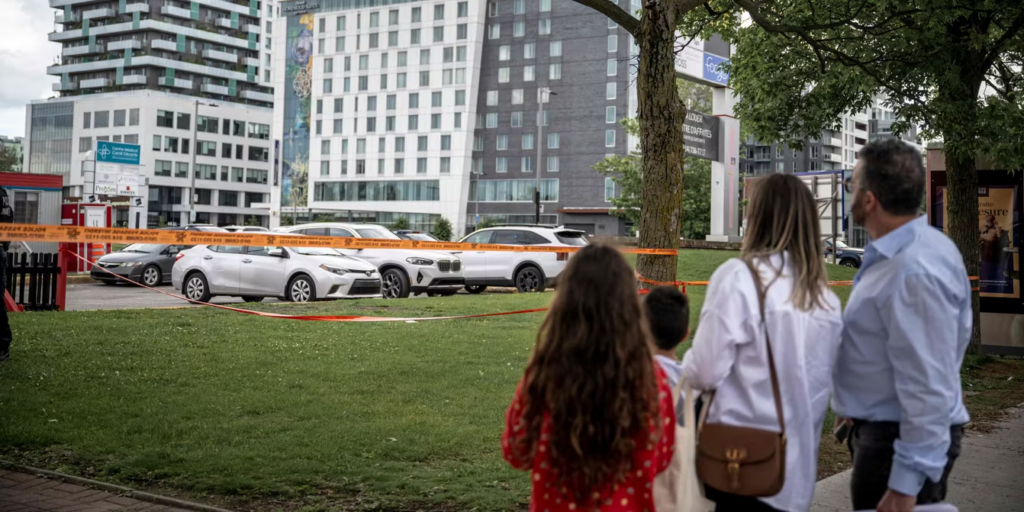
Authorities investigating the deadly Montreal shooting are examining a lengthy manifesto allegedly written by the suspect, which reportedly contains anti-feminist views, criticism of modern society, and calls for violent political change.
The shooting, which occurred in Montreal’s Côte-des-Neiges neighborhood on June 22, left three people dead, including a police officer, a civilian, and the suspected gunman. Investigators are reviewing the document to better understand the motive behind the attack and determine whether specific individuals or groups were targeted.
The manifesto has drawn attention because of its reported links to extremist online ideologies, including themes associated with the so-called “incel” movement.
TL;DR
- A 104-page manifesto allegedly linked to the Montreal shooting suspect is being reviewed by investigators.
- Reports say the document contains anti-feminist views and criticism of capitalism.
- Three people died in the shooting, including a police officer, a civilian, and the suspected attacker.
- Authorities are examining whether ideology played a role in the attack.
- The suspect has been identified by some local media outlets as Seth Hatfield, though official confirmation may still be pending.
- Investigators have not publicly announced a definitive motive.
What happened in the Montreal shooting?
The incident unfolded in Montreal’s Côte-des-Neiges district after police reportedly received a call about an individual displaying a firearm from a hotel window.
According to reports, gunfire erupted shortly afterward, leading to a confrontation between the suspect and responding officers.
The violence resulted in multiple fatalities, including a member of the Montreal police force and a civilian who was present at the scene.
Authorities eventually neutralized the suspect after an exchange of gunfire.
Who were the victims?
Among those killed was Constable Mohamed Lamine Benredouane of the Service de police de la Ville de Montréal (SPVM).
A civilian identified in reports as Michael (Michel) Moshe Mizrahi also lost his life during the attack.
Public officials, community leaders, and law enforcement agencies have expressed condolences to the victims’ families and praised the actions of first responders.
What does the manifesto reportedly contain?
According to Canadian media reports, the document spans more than 100 pages and focuses heavily on themes of male loneliness, social alienation, and dissatisfaction with modern society.
The alleged author reportedly criticized feminism, contemporary dating culture, and economic systems, while expressing hostility toward what he viewed as social inequalities affecting men.
Investigators are analyzing the text to determine whether it reflects broader extremist influences or connections to known online communities.
Reported themes in the document include:
- Criticism of feminism and gender relations.
- Claims about male isolation and loneliness.
- Hostility toward modern capitalist systems.
- Frustration with social and economic conditions.
- Calls for radical political change.
Authorities have not publicly released the full document, and its contents remain under review.
What is the incel ideology?
The term “incel” is short for “involuntary celibate” and generally refers to online communities centered around frustration over romantic or sexual relationships.
While many people who identify with the term do not advocate violence, some extremist factions have been linked to misogynistic beliefs and, in rare cases, violent attacks.
Security experts have increasingly monitored such communities because several attackers in North America and Europe have cited incel-related grievances in manifestos or online posts.
Sources told TVA Nouvelles that his ideology was similar to that of “incels”. He denounced the fate of a majority of men, calling them “ordinary men”, saying the women supposedly preferred a small number of “brutes.” He also slammed capitalism and deplored “the state of affairs regarding young people (under 30 years old) who live in highly developed Western countries.”
Was the attack ideologically motivated?
At this stage, investigators have not publicly confirmed a definitive motive.
However, law enforcement agencies are examining whether the suspect’s writings influenced his actions and whether the attack was connected to ideological beliefs expressed in the manifesto.
Authorities often review personal writings, social media activity, and digital communications after mass casualty incidents to establish motive and identify any wider threats.
Why are manifestos important in investigations?
Manifestos can provide insight into an attacker’s mindset, motivations, and potential targets.
However, investigators typically approach such documents with caution because
- They may contain false or exaggerated claims.
- They often reflect personal grievances rather than coherent ideologies.
- The existence of a manifesto does not automatically explain an attack.
- Mental health, personal circumstances, and other factors may also play a role.
Experts generally discourage amplifying extremist writings because doing so can unintentionally spread harmful narratives or provide publicity to attackers.
What happens next?
Police and security agencies are expected to continue analyzing the manifesto, interviewing witnesses, and reviewing evidence collected from the scene.
Investigators will likely focus on:
- Establishing a clear motive.
- Determining whether the suspect acted alone.
- Identifying any online influences or networks.
- Assessing whether specific communities were targeted.
Authorities have not indicated that there is any ongoing threat connected to the incident.
Why this story matters
The Montreal shooting has renewed discussions about online radicalization, extremist ideologies, and the role of digital communities in shaping violent beliefs.
As investigators work to determine what motivated the attack, the case highlights broader concerns about how personal grievances, social isolation, and extremist narratives can intersect in dangerous ways.
The findings of the investigation may also contribute to ongoing debates about preventing radicalization and identifying warning signs before violence occurs.