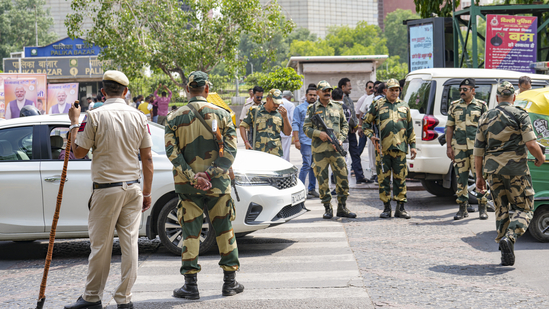
Mock drills across 244 cities test readiness against “new and complex threats” following cross-border military response
As tensions with Pakistan escalated following a retaliatory military operation along the Line of Control, India on Wednesday launched an unprecedented wave of nationwide civil defense mock drills to test its emergency preparedness.
Ordered by the Ministry of Home Affairs, the drills were carried out across states and union territories to assess how ready the country is to handle “new and complex threats,” particularly in light of growing regional hostilities and the ongoing threat of terror attacks.
Operation Sindoor prompts urgent preparedness
The drills came just hours after India executed Operation Sindoor, a covert military strike on terrorist camps across the Pakistan-occupied Kashmir region. Conducted during the intervening night of Tuesday and Wednesday, the operation involved focused strikes on nine identified terror targets — a direct response to the April 22 terror attack in Pahalgam, Kashmir, that killed 26 people, most of whom were terrorists.
Underlining the urgency of the situation, government officials said the operation had caught Pakistan “completely off guard,” sending a strong message about India’s zero-tolerance stance on terrorism.
Civil defense drills underway since Wednesday afternoon
Beginning at 4:00 PM in several cities, the full-scale drills simulated real-world emergency scenarios. The exercises included blaring air raid sirens, activation of emergency control rooms, mass evacuation drills, and coordination efforts between civil defense staff, first responders, and local authorities.
Sources say such large-scale mock drills — arguably the most extensive since the 1971 Indo-Pak War—are meant to ensure that India’s civil systems are not just reactive but proactive in the face of hybrid warfare and terrorist threats.
Metro cities and high-risk zones under the spotlight
Major urban centers like Delhi, Mumbai, Chennai, and Kolkata, along with cities housing critical infrastructure such as nuclear facilities, oil refineries, and military bases, were placed on high alert. In Delhi alone, drills were conducted at over 55 locations, including King’s Court in GK-2, Khan Market, and Moti Nagar’s DLF Capital Greens.
Participation spanned across all layers of society — from students and private employees to healthcare workers, metro staff, railway officials, and members of the armed forces. Schools across Delhi, Siliguri, and Noida were active participants, with mock evacuation protocols practiced in real-time.
Despite the scale of operations, authorities confirmed that no emergency services or transportation lines were disrupted during the nationwide drills.
“New and complex threats” demand evolving strategies
A senior official involved in the drills said, “The point is to build public awareness and institutional muscle memory. In the current geopolitical climate, preparedness is no longer optional — it’s essential.”
The drills come at a time when Indian intelligence agencies are on high alert for potential retaliatory moves or cyber disruptions in response to Operation Sindoor. Officials added that such security rehearsals will likely become more frequent and more nuanced in the coming months.
Public cooperation and media awareness
The Ministry of Home Affairs also issued instructions to minimize panic, urging citizens to cooperate with drill instructions, seek shelter during sirens, and avoid unnecessary phone usage to keep communication lines clear for emergency coordination.
Social media was flooded with visuals of sirens, school evacuations, and simulation exercises — many showing coordinated responses between local law enforcement, civil defense volunteers, and emergency medical teams.
A historic mobilization — but a sign of the times
India’s latest civil defense initiative underscores the country’s evolving national security doctrine — one that balances strategic offensive action with robust civilian preparedness.
As geopolitical dynamics continue to shift and asymmetric threats evolve, New Delhi’s message is clear: India is not just ready to respond — it is preparing to endure.