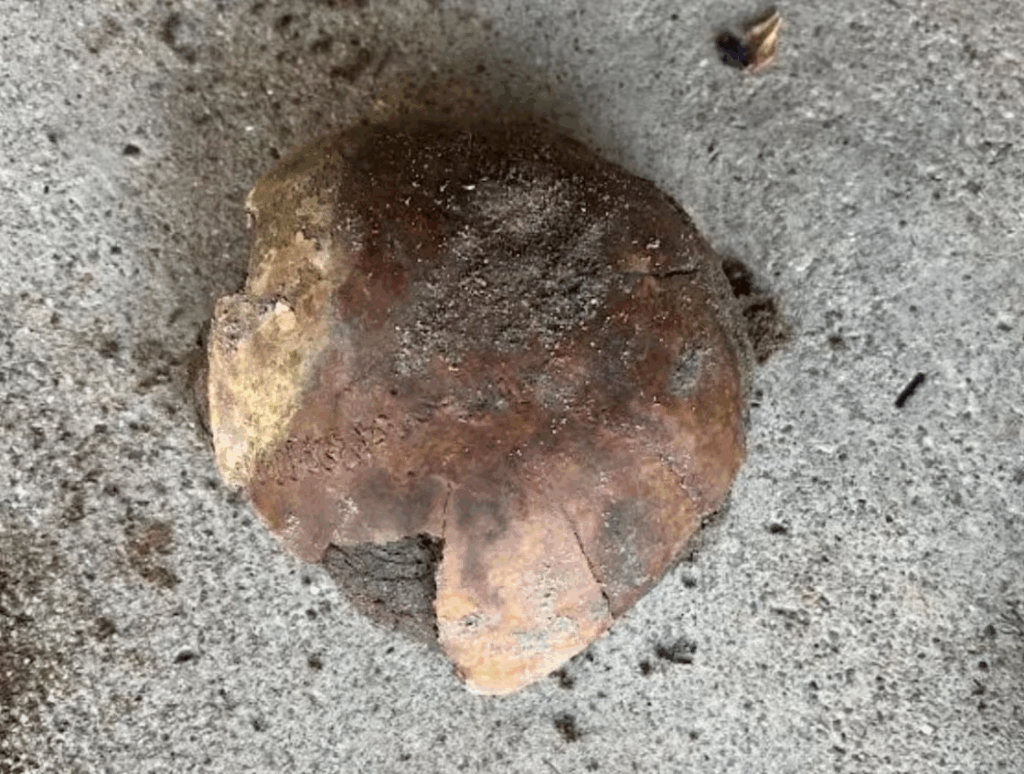
When and where was the ancient skull discovered?
A remarkable archaeological discovery in Fayette County, Indiana, has shed light on the early human presence in North America. On June 2, 2025, a portion of a human skull was found along the Whitewater River bank, and after extensive testing, experts confirmed the remains date back to around 2300 BC, more than 4,000 years ago.
The finding was publicly announced by Fayette County Coroner Eddie Richardson on Indigenous Peoples’ Day, emphasizing its deep historical significance. “This discovery underscores the importance of our community’s vigilance and the necessity of professional collaboration,” Richardson said, commending the landowner for promptly reporting the find rather than disturbing it.
Preliminary radiocarbon dating conducted by the University of Georgia placed the remains at approximately 4,270 years old, aligning them with a period when the Harappan Civilization was flourishing thousands of miles away along the Indus River.
What makes this discovery significant?
The discovery of the skull fragment in Indiana provides a rare glimpse into prehistoric North American life long before the rise of major indigenous cultures. At a time when ancient civilizations were developing in Asia and the Middle East, early humans were already traversing and settling the North American continent.
Scientists believe that DNA analysis of the remains could help answer long-debated questions about:
- Early migration routes into North America.
- Ancestral lineages of ancient populations, including possible connections to Native American tribes or even pre-Clovis peoples.
- Adaptations in diet, environment, and lifestyle among early settlers.
If genetic material can be recovered, it could reveal whether these early inhabitants migrated via northern ice-free corridors, Pacific coastal routes, or through other lesser-known pathways into the continent.
What do experts say about the prehistoric context?
According to researchers at the Indiana State Museum and Historic Sites, around 2300 BC, early Native American populations in the region were transitioning to more plant-based diets and forming small, localized communities. This marks a period before the widespread cultivation of crops like maize, indicating that early inhabitants were beginning to experiment with agriculture and trade alongside traditional hunting and gathering.
The remains also coincide with the Late Archaic period in North American archaeology, a time characterized by the development of stone tools, pottery, and early trade networks across river systems like the Whitewater.
What can DNA and isotope testing reveal?
Experts say that further testing could yield vital insights into the biological identity and ancestry of the individual. Through DNA sequencing and isotope analysis, scientists hope to determine:
- Sex, age, and health of the individual.
- Hair, eye, and skin pigmentation characteristics.
- Genetic similarities to modern Native American tribes or ancient pre-Clovis groups.
- Geographical origins — whether the person lived and died near the discovery site or was transported by river flow from another area.
The University of Indianapolis assisted in the initial human identification process, confirming the skull fragment as belonging to a homo sapiens, not an animal.
For now, researchers remain cautious as they await precise radiocarbon calibration results and DNA extraction outcomes, which could take several months.
Why Fayette County could become an archaeological hotspot
The Whitewater River valley has long been recognized as an area of archaeological interest due to its fertile terrain and water access, which would have made it ideal for early human settlement. Previous discoveries in neighboring parts of Indiana have revealed ancient burial mounds, stone tools, and ceremonial artifacts dating back several thousand years.
This new discovery could prompt a renewed survey of the area, potentially uncovering more remains or artifacts that help piece together a broader picture of early Midwestern habitation.
Local authorities are reportedly working with archaeologists and Indigenous representatives to ensure that the remains are handled respectfully and in accordance with federal and tribal heritage protection laws.
A window into ancient America
While the final results of the ongoing analysis are pending, this finding already represents a significant milestone in Midwestern archaeology. It bridges the gap between local prehistory and global ancient civilizations, reminding us that human societies were simultaneously evolving and adapting across continents thousands of years ago.
For archaeologists, this 4,000-year-old skull is more than a relic, it’s a story of migration, survival, and connection, buried in the banks of an Indiana river and resurfacing to rewrite a small but crucial chapter of North American prehistory.