
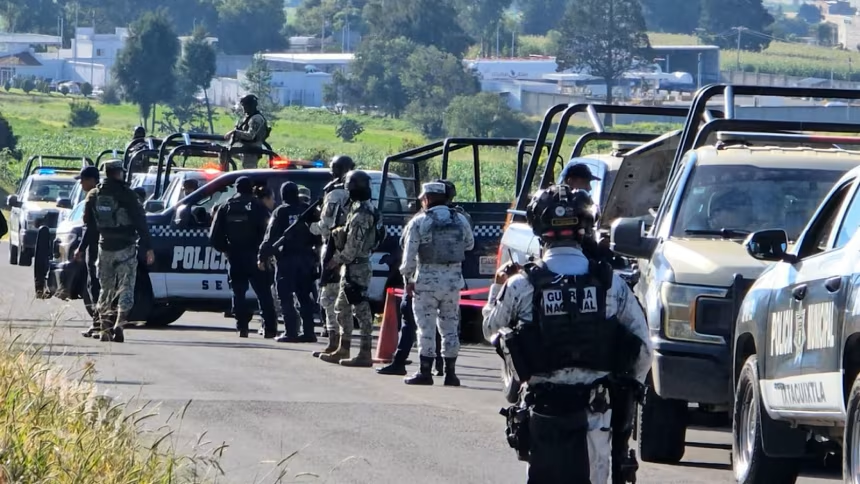
Mexican authorities have launched an investigation after the discovery of six severed human heads along the border of Puebla and Tlaxcala, two states just over 100 kilometers from Mexico City. The Tlaxcala Prosecutor’s Office confirmed the grisly find late Tuesday, saying the heads belonged to men, though it did not release further details about their identities or how they were found.
What we know so far
- The six heads were located between Puebla and Tlaxcala, two states not typically associated with Mexico’s most violent crime hotspots.
- Officials have not disclosed whether the remains were linked to drug cartels or other organized criminal groups.
- CNN and other international outlets have requested additional information from local prosecutors but have not yet received a response.
The discovery adds to a grim pattern of cartel-related killings in Mexico, where beheadings are often used as a tool of intimidation and territorial control.
Are Puebla and Tlaxcala cartel hotspots?
Compared to states like Sinaloa, Jalisco, or Michoacán, Puebla and Tlaxcala are not typically considered among Mexico’s most violent regions. Official figures show:
- Puebla accounted for 3.4% of Mexico’s 14,769 intentional homicides between January and July 2025.
- Tlaxcala represented just 0.5% of national homicide totals in the same period.
Both states currently hold a Level 2 travel advisory from the US State Department, meaning Americans should “exercise increased caution,” but they remain lower-risk than regions with Level 3 or Level 4 warnings.
Still, the states’ location in central Mexico makes them vulnerable to spillover crime. Authorities point to three major risks:
- Drug trafficking routes – The region serves as a corridor connecting coastal and border states.
- Human trafficking – Migrants traveling north through Mexico often pass through Puebla and Tlaxcala.
- Fuel theft (“huachicoleo”) – Organized groups frequently tap pipelines running through central Mexico.
Not the first mass killing this year
The discovery recalls other shocking cases in 2025. In January, authorities in Sinaloa found 20 male bodies dumped on a federal highway bridge, five of them decapitated. Those killings came shortly after the arrest of a high-ranking cartel figure, which triggered violent clashes across the state.
Such acts are designed to send messages to rivals or authorities, experts say. Displaying mutilated bodies or severed heads is a tactic cartels have long used to enforce fear, signal strength, or mark territorial disputes.
Why this matters
While Puebla and Tlaxcala are not at the top of Mexico’s crime rankings, incidents like this highlight the unpredictable spread of cartel violence beyond traditional hotspots. For residents and travelers alike, the killings underscore:
- The adaptability of organized crime networks.
- The challenges faced by local authorities in containing violence.
- The persistent use of terror tactics despite ongoing federal and military crackdowns.
At the same time, officials stress that overall crime rates in Puebla and Tlaxcala remain lower than in Mexico’s northern and Pacific states.
What happens next?
The Tlaxcala Prosecutor’s Office has opened an investigation to identify the victims and determine whether the killings were linked to organized crime. Security experts expect federal forces to increase surveillance in the region, at least temporarily, to prevent escalation.
For now, the identities of the victims remain unknown, and no group has claimed responsibility.