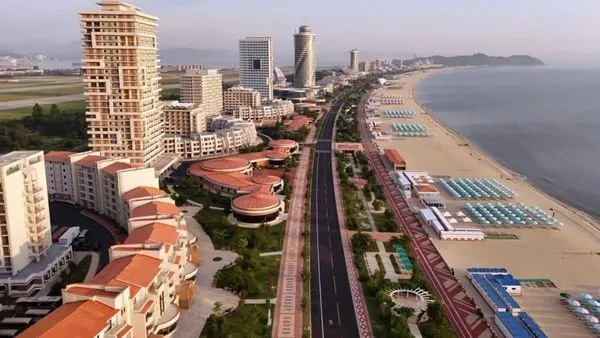
North Korea’s latest attempt to boost its economy and soften its isolated image comes in the form of a sprawling beach resort complete with water slides, swimming pools, and white sandy beaches. The newly opened Wonsan-Kalma Coastal Tourist Zone, dubbed “North Korea’s Waikiki” by South Korean media, is a pet project of leader Kim Jong Un, who has championed tourism as a key economic driver. But with strict entry policies still in place, will this resort attract more than just domestic visitors?
What’s Inside North Korea’s New Beach Resort?
State media images show a surprisingly vibrant scene:
- A massive water park with slides and pools
- Hundreds of beachfront buildings in “artistic harmony”
- Parasol-lined shores where locals swim and relax
- Capacity for 20,000 visitors, though current crowds are mostly North Korean
According to Korean Central News Agency (KCNA), the resort has already drawn citizens from across the country, who arrived “filled with joy at experiencing a new level of civilization.” Photos depict children playing with inflatable tubes and families lounging under red-and-white umbrellas—a rare glimpse of leisure in one of the world’s most secretive nations.
Will Foreign Tourists Be Allowed In?
While the resort is now operational, North Korea has not confirmed a full reopening to international tourism. So far, the only foreign guests expected are Russian tourists, with the first group reportedly set to arrive on July 7. This aligns with Pyongyang’s deepening ties with Moscow amid Western sanctions over its weapons programs.
However, the numbers are modest:
- Only about 880 Russian tourists visited North Korea in 2024.
- No signs yet of broader access for Western travelers.
Experts speculate that the regime may be testing the waters with limited tourism before committing to a wider opening.
Why Is North Korea Pushing Tourism Now?
Kim Jong Un has long promoted the Wonsan-Kalma project as a symbol of economic progress. At the resort’s inauguration, he called it “one of the greatest successes this year” and a step toward realizing state-driven tourism development.
But there’s a bigger picture:
- Economic strain: Sanctions and pandemic closures have hurt North Korea’s economy. Tourism could bring in much-needed foreign currency.
- Soft power play: The resort helps project a more “normal” image, countering its reputation as a repressive state.
- Strategic alliances: Prioritizing Russian tourists strengthens ties with a key ally.
The Bigger Challenge: North Korea’s Isolation
Despite the glitzy resort, major hurdles remain:
- Strict visa policies make it difficult for most foreigners to visit.
- U.S. and South Korean travel bans discourage Western tourism.
- Limited infrastructure—unreliable electricity, internet restrictions—could deter luxury travelers.
For now, the Wonsan-Kalma resort appears to be more for show than a real economic game-changer. But if North Korea gradually eases restrictions, it could become a curiosity for adventurous travelers, provided they’re okay with heavy surveillance and guided tours.
- North Korea opened a luxury beach resort with water parks and hotels.
- Currently, only domestic visitors and some Russians are allowed.
- The project is part of Kim Jong Un’s push to boost tourism and the economy.
- Full reopening to international tourists remains unlikely in the near future.