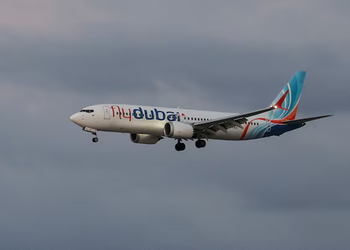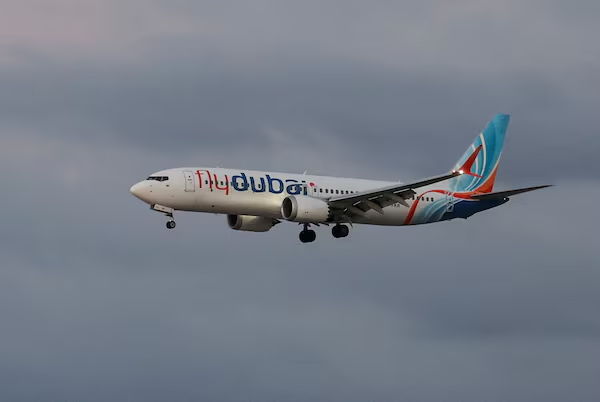
The FlyDubai cockpit attack that nearly turned a routine Dubai-to-Tel Aviv flight into a mass-casualty disaster may have been planned long before Hamam al-Hammami joined the airline.
According to two Israeli officials familiar with the investigation, the Omani co-pilot told UAE interrogators that he had already considered crashing a flydubai aircraft into Israel’s Ben Gurion Airport before he was employed by the Dubai-based carrier.
The revelation has added a new dimension to the investigation into FlyDubai Flight FZ1073, which was diverted to Saudi Arabia on October 1 after al-Hammami allegedly attacked Indian captain Smit Machchhar inside the cockpit and attempted to take control of the aircraft.
Israeli security officials have now travelled to the United Arab Emirates to participate in questioning al-Hammami, according to The Times of Israel.
The Shin Bet has not publicly commented on its reported involvement.
The alleged disclosures have also raised fresh questions about how al-Hammami was recruited, how he was cleared to fly international routes and whether authorities missed warning signs before he boarded a Tel Aviv-bound aircraft.
‘Revenge for Gaza’: What Did the Co-Pilot Tell Investigators?
According to Israeli media reports, al-Hammami told investigators that his actions were carried out in “revenge for Gaza” and that he wanted to “die as a martyr.”
The claims were reported by Channel 12 and cited by The Times of Israel and other Israeli outlets. They have not been independently confirmed in a public statement by UAE or Israeli authorities.
If the account is confirmed, it would provide investigators with a possible ideological motive behind an attack that initially appeared to be a sudden cockpit assault.
The UAE prosecutor general has already described the incident as a terrorist attack. Reuters reported that al-Hammami allegedly attacked Machchhar with an axe and attempted to interfere with the aircraft’s controls.
Israeli investigators are nevertheless examining whether al-Hammami acted entirely alone.
The central question is whether the alleged attack was the product of an individual plan or whether another person, organization or network influenced, directed or assisted him.
Early assessments have reportedly leaned toward a lone-actor scenario, but investigators are continuing to examine his contacts, travel history, online activity and professional background.
Did He Plan the Attack Before Joining flydubai?
One of the most significant revelations is the claim that the alleged plot predated al-Hammami’s employment at flydubai.
The two Israeli officials said he told investigators that he had searched for airlines operating flights to Tel Aviv before applying to fly for flydubai.
That detail could be crucial because it would suggest that the airline may not have been the starting point of the alleged plot. Instead, according to the account, the opportunity to fly a Tel Aviv route may have been part of a plan that existed beforehand.
A separate source briefed on the UAE investigation reportedly told Israeli media that al-Hammami had operated a Tel Aviv flight earlier this year and had considered hijacking and crashing that aircraft but ultimately abandoned the idea.
Investigators are now reportedly examining whether the alleged plan was postponed for a specific reason.
The Guardian reported that investigators believe al-Hammami may initially have planned an attack in July but delayed it, possibly because someone he knew was among the crew. That account remains part of the developing investigation.
What Happened Aboard Flydubai Flight FZ1073?
Flight FZ1073 was travelling from Dubai toward Tel Aviv on October 1 when the situation inside the cockpit suddenly escalated.
Al-Hammami allegedly attacked Captain Smit Machchhar with a cockpit crash axe while the aircraft was over the region near Jordan.
Despite being seriously injured, Machchhar managed to open the reinforced cockpit door.
That proved critical.
An off-duty pilot travelling as a passenger was alerted, while passengers and crew members rushed toward the cockpit and helped restrain al-Hammami. Other pilots travelling aboard the aircraft then assisted in stabilizing the aircraft.
Flight-tracking data shows the aircraft issued emergency signals before diverting to Tabuk in northwestern Saudi Arabia.
The aircraft eventually landed safely with more than 170 passengers and crew members aboard.
The incident could have ended very differently.
Indian media reports citing flight data said the aircraft plunged thousands of feet during the struggle. Indian Express reported that the aircraft dropped approximately 17,000 feet before passengers intervened.
Captain Smit Machchhar’s Actions Became Critical
Machchhar’s ability to open the cockpit door was one of the decisive moments in the incident.
According to footage and accounts reported after the attack, passengers entered the cockpit and helped subdue the co-pilot while other crew members assisted the injured captain.
Machchhar later described the moment during a video call with Indian Prime Minister Narendra Modi.
He said he knew the aircraft was falling and pushed himself to reach the cockpit door despite being attacked.
The captain has since undergone medical treatment and is recovering from his injuries.
His actions have also highlighted a difficult problem in modern aviation security: reinforced cockpit doors are designed to keep unauthorized people out, but they can become a barrier when the threat originates from someone already inside the flight deck.
Why Were Shin Bet Investigators Sent to the UAE?
Israel has a direct interest in the investigation because the aircraft was bound for Tel Aviv and was carrying a large number of Israeli passengers.
Reuters reported earlier that Israeli officials were expected to question the co-pilot as part of the investigation. The latest reports indicate that Shin Bet interrogators have since travelled to the UAE and are participating in the questioning.
The reported interrogation is focused not only on what happened during Flight FZ1073 but also on al-Hammami’s background.
Investigators are examining his previous employment, travel, online activity and possible contacts.
A separate report said a Mossad official told Israeli Cabinet ministers that al-Hammami had made brief visits to several countries considered hostile to Israel in recent years. That claim has also emerged through Israeli media rather than an official public confirmation.
The UAE remains the country leading the investigation.
How Did Al-Hammami Get Cleared to Fly to Israel?
The investigation is also turning toward aviation security and pilot vetting.
Oman does not maintain diplomatic relations with Israel, raising questions over how an Omani national was able to operate a commercial flight into Tel Aviv.
However, reporting after the incident indicates that the aviation arrangements between Israel and the UAE did not necessarily require pilots operating the route to be nationals of countries that maintain diplomatic relations with Israel.
That distinction could become important as authorities examine whether existing rules were followed.
The question is no longer simply whether al-Hammami intended to attack the aircraft.
Investigators also want to establish whether there were warning signs that should have prevented him from reaching the cockpit of a passenger aircraft bound for Israel.
Were There Warning Signs Before the Attack?
There were reportedly concerns about al-Hammami before the October 1 incident.
Associated Press reporting cited by Indian Express said he had previously been barred from flying in Oman because of concerns over extremist views.
His professional history and online activity are now being examined by investigators in multiple countries.
Reports have also raised questions about social-media accounts apparently connected to him, including material involving Israeli aviation and extremist themes.
None of these reports, by themselves, establishes that the alleged attack was directed by an outside organization.
That is precisely what investigators are now trying to determine.
Israel Is Reviewing Pilot Security Checks
The incident has already prompted Israel to reassess how pilots entering the country are vetted.
Israeli Prime Minister Benjamin Netanyahu said authorities would strengthen checks on pilots operating flights into Israel and ensure that their identities were known to Israeli authorities.
The incident has exposed a different kind of aviation-security challenge from the one that dominated international aviation after September 11, 2001.
For decades, much of the focus has been on preventing passengers or outsiders from entering the cockpit.
FZ1073 raises the question of what happens when the potential threat already has authorized access to the flight deck.
The Cockpit Door Dilemma
Reinforced cockpit doors are among the most important security measures introduced across commercial aviation after the September 11 attacks.
They are designed to prevent hijackers from gaining access to pilots.
But the flydubai incident demonstrates the vulnerability inherent in that design.
If an authorized crew member becomes the aggressor, the same reinforced door intended to protect the pilots can make it harder for passengers or other crew members to intervene.
Aviation-security experts quoted by the Associated Press have said crew screening should closely mirror passenger security procedures, while also cautioning that practices vary between countries and airlines.
The investigation will therefore have to examine whether the problem was a gap in existing rules, a failure to follow those rules, or something else entirely.
What Investigators Still Need to Establish
The investigation into the flydubai cockpit attack is likely to focus on several unanswered questions.
Was the attack planned before al-Hammami joined flydubai?
The latest interrogation reports suggest that it was. Investigators will need to establish whether the alleged statements can be independently corroborated.
Did he act alone?
Israeli officials are examining whether another person or organization influenced or assisted him.
Why did he choose flydubai?
Investigators are reportedly examining the claim that he searched for airlines operating flights to Tel Aviv before joining the carrier.
Were there earlier opportunities?
The claim that he previously operated a Tel Aviv flight and considered an attack on it could become a key part of the investigation.
Were warning signs missed?
Authorities will examine his employment history, previous aviation restrictions, background checks and online activity.
How did he gain access to the cockpit with a weapon?
Investigators will also need to establish exactly what weapon was used and how it came into the cockpit.
A Near Disaster That Is Now Raising Bigger Questions
The flydubai attack was stopped because several things went right at a critical moment.
Machchhar managed to open the cockpit door despite being injured. Passengers responded quickly. Off-duty pilots were available to help. And the aircraft was eventually diverted and landed safely in Saudi Arabia.
But the latest revelations have shifted the focus from what happened during those chaotic minutes to what may have happened months earlier.
If the interrogation claims are confirmed, investigators will have to determine how an alleged plan to attack an Israel-bound aircraft could have developed before the suspect even joined the airline.
For now, the reported “revenge for Gaza” statement, the alleged plans involving earlier Tel Aviv flights and the claim that al-Hammami searched for an airline operating the route remain allegations emerging from an active multinational investigation.
The central question is no longer only how Flight FZ1073 survived.
It is how much of the alleged plan could have been detected before the aircraft ever left Dubai.