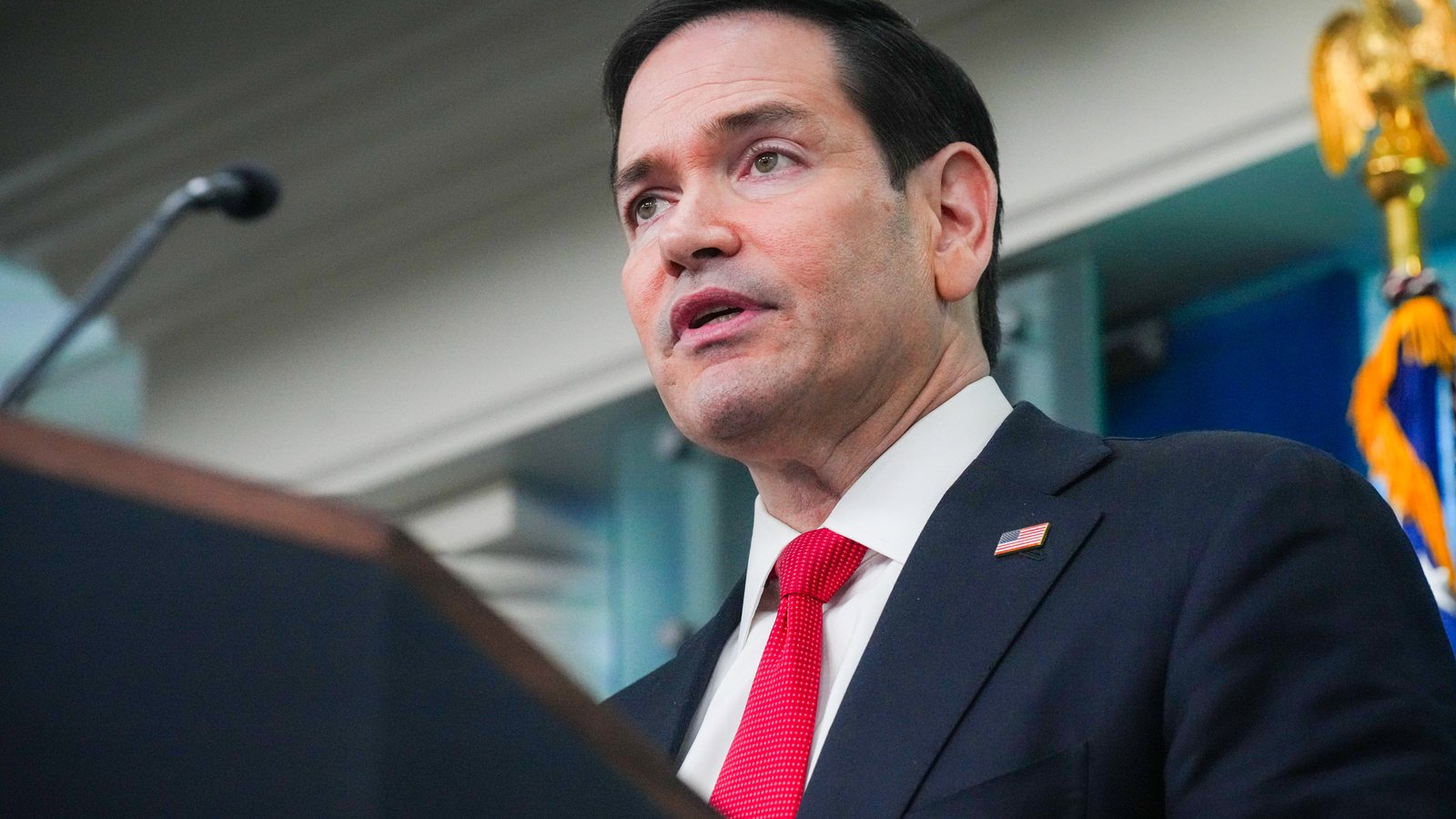
Secretary of State Marco Rubio said on Oct. 21 that SpaceX, not the White House, decides how Ukraine can use Starlink. Speaking in Mumbai, he said the service “is governed by a private commercial contract,” according to the State Department transcript. That contract sets “how their stuff can be used and what speeds they allow it to be used at,” he said.
Elon Musk has pointed the other way. A week earlier, he wrote on X that the US military and “ultimately POTUS” set limits on Starshield, the military version Ukraine says SpaceX throttled.
Ukraine flies interceptor drones over that link against Russian attack drones. The answer decides whom Kyiv has to ask to get full service back.
Ukraine’s drones lost their link above 100 mph
The trouble started on Oct. 14. Ukrainian officials said SpaceX had capped its military-grade Starshield terminals, CNBC reported. The terminals stopped working above about 160 km/h (100 mph).
Serhii Beskrestnov, Zelenskyy’s adviser on defense technology, called interceptor drones that fly on Starlink Ukraine’s “most effective solution” against Russia’s Shahed drones.
The cap limits how fast a terminal can travel while staying connected. It does not limit data speed.
Ground terminals and most short-range drones on direct radio links kept working, the Kyiv Post reported. The losses fell on fast aircraft that steer by satellite.
President Volodymyr Zelenskyy said on Oct. 17 that Ukrainian specialists tested the same terminals at 180 km/h (112 mph) inside the European Union. They saw no dropouts there, he said, which in his view showed the limit targeted Ukraine.
In a message online, he said troops also use the link for strikes in occupied territory. Drones on the same network carry food and water to soldiers at the front.
Musk pointed at Washington, and Washington pointed back
Musk answered on X the day the cap appeared. “Starshield systems are owned and controlled by the U.S. government,” he wrote. “Any limits on speed or usage are decided by the US military and ultimately POTUS.” He added that civilian Starlink is not for “offensive military action,” CNN noted.
That hints at a second dispute over how Ukraine uses the consumer service.
On Oct. 16, Reuters reported that the order came from inside the White House, citing two US officials and a Western official. Pentagon leaders got a message to slow Ukraine’s Starshield service, they said. They did not say who made the call.
A senior US official told Reuters that “no such request was ever made by the president.”
Trump denied it the same day. “I don’t know if it was anybody, because it wasn’t me, and I don’t think it was Elon,” he said, NPR reported.
Rubio went further on Oct. 17 at Joint Base Andrews in Maryland. He called the reports “categorically false” and said the disruption “wasn’t deliberate,” according to Al Jazeera.
He also said Ukraine did not have Starshield at all. “They do not have access to it at this moment,” he said. Kyiv’s request to use it for deep strikes in Russia was “under conversation,” he added.
Other accounts contradict that. NPR reported that the Pentagon has shared Starshield with Ukraine since 2024. Speaking in Uzbekistan on Oct. 19, Rubio himself said “Ukraine has benefited from it,” CNN reported.
Trump said that day, “I don’t know who it was, but I’d like to find out.”
What Rubio said in Mumbai, and what he left open
On Oct. 20, The Wall Street Journal reported that Musk himself ordered the restrictions, citing US officials and people familiar with the matter.
The Journal’s sources disagreed on timing, according to the Kyiv Post. One said Musk discussed the move with Trump and White House officials beforehand. Two said the conversation came afterward.
Reporters put that report to Rubio at the Taj Mahal Palace Hotel in Mumbai the next day. He said he had not read it.
“Starlink is a private company,” he said. “The important point is we cannot direct a private company as to the decisions they make or not make.”
Asked whether the administration knew in advance, he said, “I’m not aware that we knew about this decision beforehand.” Then he added: “But it’s irrelevant.”
Pressed again, he said “there was no foreknowledge” and that the president “can’t direct that company to do anything.”
Reuters called the remarks an apparent shift, since Rubio had earlier said no one ordered a slowdown.
The transcript also shows where his argument stops. Rubio drew the private-contract line around Starlink, then set the military product apart. Starshield is “a different matter,” he said, “because that’s something we are purchasing and using for our use.”
Ukraine and Musk both say Starshield is the system that slowed. By Rubio’s own description, the government buys and uses that product, so his commercial-contract answer does not cover it. Musk and SpaceX did not respond to Reuters’ requests for comment.
Congress and Kyiv want to know who gave the order
The two answers send Kyiv to different doors. If SpaceX set the cap under its own terms, Ukraine has to negotiate with Musk. If the Pentagon or the White House set it, the fix runs through an administration that denies any role.
Defense Secretary Pete Hegseth said on Oct. 20 that “we haven’t pulled anything back,” CNN reported. He pointed instead to Starlink’s “terms of service.” Zelenskyy told NBC’s Meet the Press on Oct. 18 that SpaceX acted on a “message from [the] American government.” He said service still had not fully returned.
Republicans have joined Democrats in demanding answers. Rep. Brian Fitzpatrick of Pennsylvania wrote on X that those who limited Starshield would face a full investigation, CNN reported. He also promised congressional hearings.
The dispute follows Rubio across a busy trip. In India, six House Democrats had urged him to raise a student-protest crackdown. The row also comes as Musk co-directs the Pentagon’s Project Meridian, a role that has already raised conflict-of-interest questions.
Rubio said he spoke with Zelenskyy for 45 minutes on Oct. 20, according to a separate State Department transcript. Zelenskyy said on Telegram that they discussed restoring Starlink and Starshield service and agreed to speak again soon. Neither side has set a date for that call or said whether SpaceX will lift the speed cap before it.