
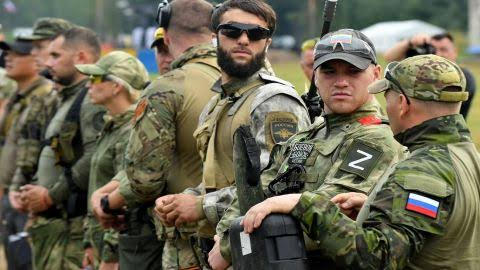
Russian President Vladimir Putin has ordered another increase in the authorized strength of Russia’s armed forces, adding 15,500 military positions as Moscow continues its war in Ukraine. The September 28 decree raises the authorized number of military personnel to 1,550,500, within a total armed-forces establishment of 2,441,630 personnel.
The move is significant because it is the fourth adjustment to Russia’s military establishment this year. But the decree does not itself announce a new mobilization, and it does not say that 15,500 people are immediately being drafted.
That distinction is central to understanding what Putin’s latest order actually means.
What did Putin’s latest military decree change?
Putin’s September 28 decree sets the authorized strength of the Russian Armed Forces at:
- 2,441,630 total personnel
- 1,550,500 military personnel
- An increase of 15,500 military positions from the previous ceiling
- The requirement for the Russian government to provide the Defense Ministry with the budget needed to implement the new establishment
The decree took effect on the day it was signed.
The term “authorized strength” is important. It refers to the number of positions the armed forces are legally authorized and funded to maintain. It is not the same thing as a verified count of personnel currently serving, trained, equipped or deployed in combat.
In other words, the new figure establishes a higher ceiling. It does not mean that Russia suddenly gained 15,500 additional soldiers on September 28.
How much has Russia expanded its military establishment in 2026?
The latest increase follows three earlier adjustments:
| Date | Authorized military personnel |
|---|---|
| March 4, 2026 | 1,502,640 |
| June 12, 2026 | 1,510,000 |
| July 27, 2026 | 1,535,000 |
| September 28, 2026 | 1,550,500 |
The March decree raised the military component to 1,502,640. The June order increased it to 1.51 million, while the July decree raised it again to 1.535 million.
Taken together, those changes increased the authorized military component by 47,860 positions from the March level. Compared with the level before the four 2026 adjustments cited in the supplied material, the increase is 50,500 military positions.
The July increase had a stated administrative explanation: Russia said it was connected to the creation of military construction units. The September decree, by contrast, does not provide a specific public explanation for the additional positions.
Does the 15,500 increase mean Russia has announced a new mobilization?
No. The September 28 decree does not amount to a new mobilization order.
A change to the authorized strength of the armed forces and a mobilization order are different government actions. The former changes the number of positions the military establishment can maintain. A mobilization order involves calling up personnel under Russia’s mobilization system.
That distinction matters because speculation about another Russian mobilization has intensified in recent months.
On September 2, Putin dismissed reports that Russia was preparing another mobilization wave as “utter nonsense,” describing the reports as an information attack against Russia.
Moscow has instead relied heavily on contract recruitment and other forms of voluntary enlistment to generate personnel.
The latest decree therefore should not be presented as evidence that Russia has begun a new nationwide call-up.
Why are people talking about mobilization anyway?
The concern stems from the wider manpower demands of a war that has lasted more than four years.
Russia’s 2022 partial mobilization was a very different event. In September 2022, Moscow announced plans to call up 300,000 reservists, marking Russia’s first mobilization since World War II.
The September 2026 decree contains no comparable call-up figure.
That does not mean Russia’s manpower requirements have disappeared. It means the document itself does not establish that Moscow has ordered a new mass mobilization.
Why does the increase matter for the Ukraine war?
The repeated increases provide a clearer picture of how Russia is managing the personnel demands of a prolonged conflict.
Rather than relying solely on one large mobilization announcement, Moscow has continued to adjust its formal military establishment while recruiting personnel through contracts and other channels.
That approach can provide the Kremlin with additional manpower without the political shock associated with announcing another large-scale reservist call-up.
But there is an important limitation: an authorized position is not necessarily a filled position.
A higher establishment figure does not tell us:
- How many new recruits have actually joined.
- How many are combat-ready.
- How many are deployed in Ukraine.
- How many are assigned to support, training or administrative roles.
- How many additional personnel Russia can equip and sustain.
That is why the 1.55 million figure should be treated as an authorized ceiling rather than a battlefield headcount.
Russia is also relying on foreign personnel
The manpower issue extends beyond Russia’s own recruitment system.
Ukrainian President Volodymyr Zelenskyy said September 28 that more than 8,000 North Korean troops were already on Russian territory and that another 10,000 were being selected and prepared for deployment. Reuters reported that North Korea had sent an estimated 14,000 to 15,000 soldiers since 2024, primarily to Russia’s Kursk region, according to Western and Ukrainian assessments.
These figures should be treated as Ukrainian claims and reported assessments rather than independently verified Russian troop numbers.
Zelenskyy has also said Russia is seeking greater involvement from foreign nationals as Moscow attempts to expand its manpower pool. Ukrainian officials have characterized these developments as part of what they call “additional mobilization.”
Russia’s formal military-strength decree, however, does not identify North Korean personnel or foreign recruitment as the reason for the September increase.
What happened in the earlier 2026 increases?
The sequence of decrees is useful because it shows that the September move did not happen in isolation.
March: a small increase
Putin’s March 4 decree set the authorized strength at 2,391,770 personnel, including 1,502,640 military personnel. That represented an increase of 2,640 military positions over the previous establishment.
June: another adjustment
On June 12, the authorized military component was raised to 1.51 million, an increase of 7,360 military personnel from the March figure. The total authorized establishment reached 2,399,130.
July: the largest 2026 increase before September
On July 27, Putin raised the military component by another 25,000 to 1.535 million. That decree was scheduled to take effect August 1 and linked the increase to the creation of military construction units.
September: 15,500 more positions
The September 28 decree now puts the authorized military component at 1,550,500, adding another 15,500 positions.
The pattern is therefore one of repeated adjustments rather than one single announcement of a dramatically larger force.
What does the latest decree tell us — and what does it not tell us?
The clearest conclusion is that Russia is continuing to expand the formal capacity of its armed forces.
The decree also matters financially. It explicitly directs the Russian government to provide the Defense Ministry with the federal budget allocations required to implement the new staffing level.
That fits with a broader increase in Russia’s planned military spending. Reuters reported on September 28 that Russia plans to raise defense spending to 17.1 trillion rubles in 2027, up 27% from the initially budgeted 13.5 trillion rubles.
But several conclusions would go beyond the available evidence.
The decree does not establish that:
- 15,500 soldiers have already been recruited.
- Russia has ordered a new nationwide mobilization.
- All newly authorized positions will be deployed to Ukraine.
- Russia has increased its combat strength by exactly 15,500 troops.
- The increase is directly linked to North Korean deployments.
Those questions require separate evidence about recruitment, force generation, deployment and military readiness.
Why the distinction between “authorized” and “actual” strength matters
Military personnel figures can be misleading if different categories are treated as interchangeable.
A government can increase the number of positions its armed forces are authorized to maintain without immediately filling every position. Conversely, personnel can be recruited, trained and assigned across different parts of the military without all of them being deployed to the battlefield.
For readers following the Ukraine war, the more useful indicators are therefore likely to include:
- Recruitment: How many Russians are signing military contracts?
- Deployment: How many troops are actually being sent to Ukraine?
- Training: How quickly can new personnel become combat-ready?
- Equipment: Can Russia provide weapons, vehicles and ammunition for additional personnel?
- Casualties and attrition: How many personnel are being lost or withdrawn?
- Foreign support: How much manpower is being supplied by Russia’s partners?
The September decree answers only one of these questions: how many military positions Russia is now formally authorized to maintain.
The bottom line
Putin’s September 28 order raises Russia’s authorized military personnel ceiling to 1,550,500, with the total authorized strength of the armed forces reaching 2,441,630. It is the fourth such adjustment in 2026.
The increase is another indication that Moscow continues to build the institutional capacity of its military while the war in Ukraine remains active. It also comes amid continuing debate over Russia’s ability to sustain its manpower requirements through contract recruitment, volunteers and foreign support.
But the decree itself is not a new mobilization order.
That distinction is likely to remain important as speculation about another Russian call-up continues. A higher authorized ceiling tells us that Russia is making room for a larger military establishment. It does not, by itself, tell us how many additional soldiers are actually serving, where they will be deployed or whether the Kremlin has decided to launch another mass mobilization.