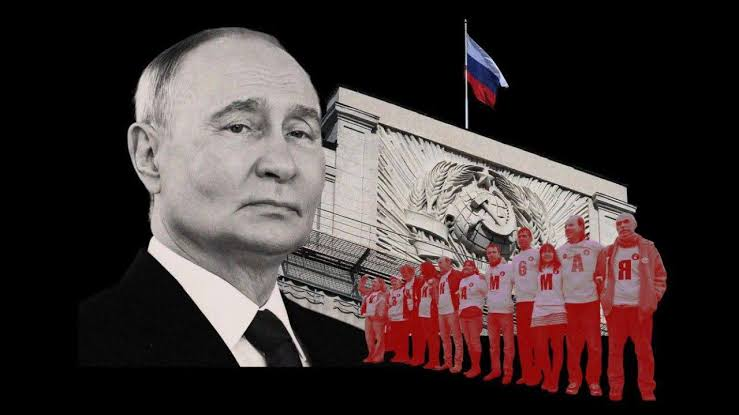
President Vladimir Putin’s United Russia party has secured 355 of the 450 seats in Russia’s State Duma, according to preliminary results released by the Central Election Commission on September 21.
The result gives United Russia a constitutional majority and surpasses the 343 seats it won after the 2016 parliamentary election. With more than 95% of ballots counted, the party had also won 57.83% of the party-list vote, according to Russia’s election authorities.
The three-day election was held from September 18 to 20 and marked Russia’s first parliamentary vote since Moscow launched its full-scale invasion of Ukraine in February 2022.
How many seats did United Russia win?
Preliminary figures released by Central Election Commission Chair Ella Pamfilova put United Russia at 355 seats in the 450-member State Duma.
That figure includes seats won through Russia’s party-list system and single-member constituencies. United Russia was leading in 208 of the 225 single-mandate districts as more than 95% of precinct results had been processed.
The Communist Party of the Russian Federation was projected to hold 40 seats, while the Liberal Democratic Party of Russia had 25. New People was set to receive 20 seats, with A Just Russia on four, according to the preliminary allocation.
A constitutional majority in the State Duma requires at least 301 seats. United Russia’s preliminary total therefore gives the party enough seats to retain that threshold by a wide margin.
How does the 2026 result compare with 2016 and 2021?
United Russia’s latest tally exceeds its previous high from the 2016 election.
The party won 343 seats in 2016, when it also secured a commanding majority in the 450-member chamber.
In the 2021 election, United Russia won 326 seats and received 49.82% of the party-list vote. The preliminary 2026 result of 355 seats therefore represents an increase in both seats and vote share compared with the previous election.
The comparison is important because the Russian electoral system combines party-list voting with single-member district races. A party’s final number of seats cannot be determined from the national party-list percentage alone.
What was the vote share for United Russia?
With more than 95% of ballots counted, United Russia had received 57.83% of the party-list vote, according to the Central Election Commission.
The Communist Party followed with 13.81%, while the LDPR had 8.98% and New People had 7.96%.
A Just Russia was below the 5% threshold in the preliminary count, although election officials said it still had a chance of reaching the required level as counting continued.
These percentages apply specifically to the party-list portion of the election. They should not be confused with United Russia’s eventual share of all 450 Duma seats.
Why was this election significant?
The 2026 vote was the first nationwide parliamentary election in Russia since the full-scale war in Ukraine began.
The Kremlin had presented the election as an opportunity for voters to express their views on the country’s political direction while the war continued. At the same time, international news organizations and election analysts noted that the field of political competition was tightly restricted.
The liberal opposition party Yabloko was removed from the main ballot before the election, and anti-war candidates faced major barriers to participation. Several independent critics of the Kremlin were also excluded from meaningful competition.
Because of those restrictions, the election’s political environment differed significantly from a contest featuring a broad field of government and opposition parties.
Were opposition parties allowed to compete?
Several established parties did compete, including the Communist Party, LDPR, New People and A Just Russia.
However, the election did not include a full range of forces opposed to Putin’s policies or Russia’s war in Ukraine.
AP reported that the liberal Yabloko party was largely sidelined, while many anti-war figures were barred from participating. Opposition groups outside Russia also alleged voting irregularities and criticized the use of electronic voting.
Russian officials have disputed claims of widespread electoral manipulation and continued to describe the vote as legitimate.
What role did electronic voting play?
Online voting was a notable feature of the election.
Russian authorities said more than 3.6 million people cast ballots electronically, while the election infrastructure also came under a reported wave of cyberattacks.
Pamfilova said Russia’s election systems had faced more than 1,000 waves of distributed denial-of-service attacks. She described the attacks as coordinated and technically sophisticated, although she did not publicly identify those responsible.
The combination of electronic voting and cyberattacks added another layer of scrutiny to an election already taking place under heightened security conditions.
What was voter turnout?
According to preliminary figures cited by Russia’s Central Election Commission, turnout reached more than 59% as counting progressed.
Pamfilova described the figure as a record for a State Duma election, although turnout figures can change slightly as final results are processed.
The turnout number is particularly significant because the Kremlin had sought to frame the vote as a measure of public support during wartime and amid continuing economic pressure.
Did voting take place in occupied Ukrainian territory?
Yes.
Voting was also conducted in Russian-occupied areas of Ukraine that Moscow claims to have annexed, including parts of Donetsk, Luhansk, Kherson and Zaporizhzhia, as well as Crimea.
Ukraine and many governments around the world do not recognize Russia’s annexation claims over those territories. The United Nations has repeatedly affirmed Ukraine’s territorial integrity and rejected the legitimacy of Russia’s attempted annexations.
The inclusion of these territories in Russia’s election process remains a major point of international dispute.
What does 355 seats mean for Putin’s government?
United Russia’s 355-seat preliminary total allows it to retain a constitutional majority in the State Duma.
That majority gives the party substantial control over the legislative process and allows it to pass constitutional amendments without needing support from other parliamentary factions, provided the relevant constitutional requirements are met.
The result also means the composition of the Duma will continue to be dominated by a party closely aligned with Putin and his government.
The political significance extends beyond the parliament itself because the Kremlin has sought to portray elections as evidence of domestic support for its policies during the war in Ukraine.
Does the result prove overwhelming public support for Putin?
The election result provides a measurable result for United Russia, but interpreting what it says about public opinion requires caution.
The party’s 57.83% preliminary share applies to a restricted electoral environment in which major anti-war opposition forces were absent or unable to compete. That means the result cannot simply be treated as a direct measure of support for every government policy or for Putin personally.
Reuters and AP both highlighted the tightly controlled nature of the election while reporting the preliminary results.
At the same time, voters did participate in large numbers and United Russia clearly won the parliamentary contest under the rules used by Russian authorities. Those two facts can be reported separately from competing interpretations of what the election means politically.
What happens next?
Final election results are expected after the remaining ballots and constituency results are processed.
The immediate consequence will be the formation of the new State Duma, where United Russia is expected to retain its dominant position.
The parliament will then continue its legislative work, including on domestic policy, the economy and issues connected to Russia’s ongoing war with Ukraine.
The 2026 result also establishes a new benchmark for United Russia. Its preliminary 355 seats exceed the party’s 2016 record, even as the election itself remains subject to international scrutiny over political competition, electronic voting and the inclusion of Ukrainian territories claimed by Moscow.