

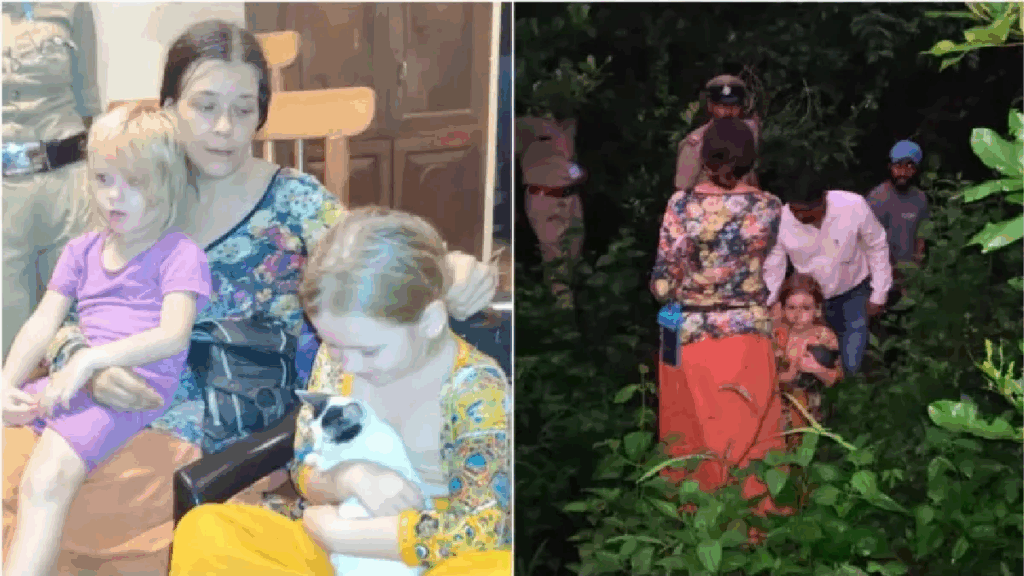
Why a Russian mother chose to live off-grid with her daughters in India and why authorities stepped in
In a striking episode that blurs the line between alternative living and public safety, a Russian woman named Nina Kutina has fiercely defended her decision to live in a cave near Gokarna, Karnataka, with her two daughters. Rescued by local police and processed by immigration authorities, Kutina has become the center of an ongoing debate: how far can one go in choosing an unconventional life, especially when children are involved?
In her own words, the family was “not dying” but instead thriving in what she describes as a life of health, creativity, and harmony with nature.
Who is Nina Kutina and what led her to Karnataka?
Kutina, a Russian national, told reporters that she has not lived in Russia for over 15 years. Her life, as she explains it, has been one of constant travel and natural living, across countries like Costa Rica, Malaysia, Bali, Thailand, Nepal, and even Ukraine.
Her journey eventually brought her to India—where she settled in the forests near Gokarna with her children, drawn by the area’s natural beauty and relative isolation. Kutina claims she adopted the cave lifestyle as a conscious decision for health and spiritual freedom, not due to desperation or poverty.
What was her life in the cave really like?
In an emotional statement, Kutina described a peaceful existence:
“We were not dying… we swam in waterfalls, we lived, had very good place for sleeping, art lessons, we made from clay, we painted, we ate good, I was cooking with gas—very good and tasty food.”
She emphasized that her daughters were never neglected or hungry. Rather, she claims they were well-fed, well-dressed, and given daily education in art, reading, and writing.
“They have everything best… not one time in their life they were sick.”
She also defended the safety of the cave, calling it spacious, well-ventilated, and close to a village, not some remote jungle hideout. In her words:
“It has window to look to ocean… not a dangerous place. Every tourist three minutes can come at place.”
Why did authorities intervene?
Authorities in Karnataka, acting on reports about foreigners residing in unsafe conditions, rescued Kutina and her daughters from the cave. The family was processed through the Foreigners Regional Registration Office (FRRO) and later transferred to a rescue center in Tumakuru.
The official concerns appeared to center around:
- The children’s welfare and safety
- Expired travel documents
- The general unsuitability of living in a cave with minors
Although no evidence of physical harm or immediate health risk was reported, the authorities moved the family out of concern for long-term well-being, child rights, and immigration law.
What does Kutina say about her visa status?
A major point of contention is the alleged visa overstay. While reports claimed that Kutina had been living in India illegally since 2017, she disputes this timeline, explaining:
“It is lying… they found my old passport… our visa finished, but it was short time ago. After 2017, we already were in four countries, leave and then come back to India.”
Her account suggests intermittent travel rather than a continuous overstay. She also mentioned that her extended stay after her son’s death may have contributed to visa delays.
What are the legal and ethical questions here?
1. Right to live freely vs. the state’s responsibility to protect
While adults have broad autonomy over how they live, the state has an obligation to ensure children’s safety. Even in the absence of abuse or malnutrition, questions of shelter, healthcare, education, and legal status come into play.
2. Immigration law and expired visas
Whether or not Kutina overstayed since 2017, she admits her current visa has expired. This places her and her children in violation of Indian immigration law, requiring either regularization or deportation proceedings.
3. Cultural misunderstanding or legitimate concern?
Some have argued that cultural bias may influence how authorities perceive off-grid families. Kutina’s rejection of conventional living may seem radical—but does that equate to unfit parenting?
How have authorities responded since?
The Karnataka Police have maintained that their actions were preventative, not punitive. After medical evaluations found the children in good health, the focus shifted to immigration processing and sheltering the family in a supervised facility.
As of now, Kutina and her daughters remain at a rescue center in Tumakuru, pending further legal action regarding their visa status.
What does this say about modern nomadic living?
Kutina’s story taps into a larger global trend of “digital nomads,” eco-living advocates, and alternative families who seek to raise children in non-traditional ways. While this can be empowering, it often runs into legal friction in host countries with strict immigration and child welfare regulations.
Russian woman Nina Kutina, who was found living in a cave in Karnataka with her daughters, insists they were healthy and happy, rejecting claims of neglect or illegality. Authorities rescued the family over concerns about expired visas and child safety. The case raises questions about how far parents can go in choosing an unconventional lifestyle, especially abroad.


