Groundbreaking discovery confirms Renaissance master’s hidden architectural details
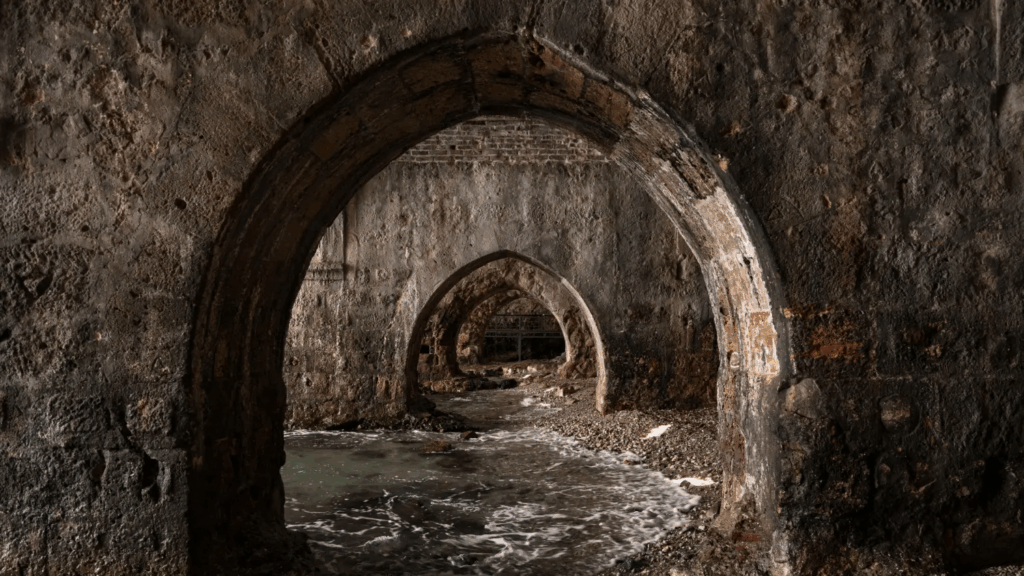
Researchers have uncovered a network of secret tunnels beneath Milan’s Sforza Castle that were previously known only through Leonardo da Vinci’s artwork. The discovery confirms centuries-old speculation that the Renaissance genius incorporated real architectural elements into his paintings.
A collaborative team from the Polytechnic University of Milan, Codevintec, and Sforza Castle employed ground-penetrating radar and laser scanning technology to verify the existence of the underground passages first illustrated by da Vinci in the late 15th century.
From canvas to reality: da Vinci’s architectural accuracy
The tunnels appear in da Vinci’s works created during his employment at the Sforza court from 1482-1499. While scholars long suspected these depictions reflected actual structures, physical evidence remained elusive until now.
“These findings demonstrate how da Vinci’s art consistently documented reality, even in seemingly imaginative elements,” explained Francesca Biolo of Polytechnic University of Milan. “The radar data has revealed previously unknown walkways that align remarkably with his drawings.”
A fortress with hidden dimensions
The Sforza Castle’s underground network dates to the late 1400s when Ludovico Sforza commissioned da Vinci to enhance the fortress originally built by Francesco Sforza. The tunnels served multiple purposes:
- Military defense: Strategic passageways for troop movements
- Royal access: Private route connecting to Santa Maria delle Grazie basilica
- Funerary processions: Direct path to Sforza family burial sites
Notably, the same basilica houses da Vinci’s iconic The Last Supper, creating an intriguing historical connection between the artist’s architectural work and his masterpiece.
Bringing history to life through virtual reality
Researchers are now developing an immersive virtual recreation of the castle’s complete original layout, including the newly verified tunnels. This digital reconstruction will enhance visitor experiences at the castle’s three museums, allowing exploration of previously inaccessible spaces.
“The virtual model will let visitors experience the castle as da Vinci knew it,” Biolo added. “We’re essentially reconstructing lost chapters of Renaissance history.”