Quick Summary
An F-35 crashed in Alaska after its landing gear froze due to hydraulic icing. The pilot spent nearly an hour on a mid-air call with Lockheed Martin engineers trying to fix the problem, but was forced to eject. The incident raises fresh concerns about the F-35’s reliability in extreme weather and highlights broader challenges facing the world’s most expensive fighter jet program.
What happened during the Alaska F-35 crash?
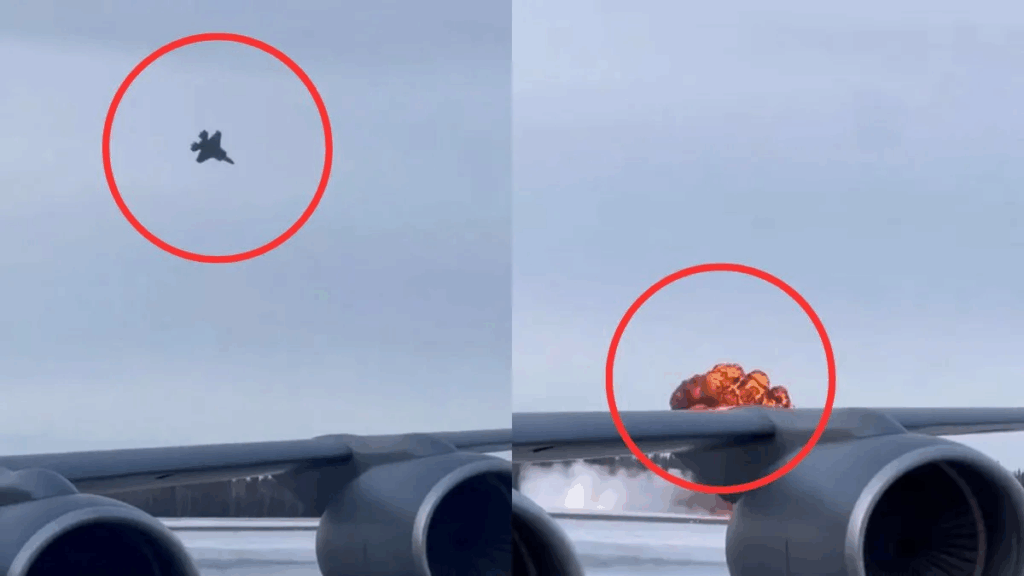
On January 28, 2025, an F-35 fighter jet at Eielson Air Force Base in Fairbanks, Alaska, crash in dramatic fashion after its landing gear malfunctioned. The $200 million jet was completely destroyed, but the pilot survived with only minor injuries after ejecting just seconds before impact.
The crash, captured on video and widely shared online, showed the jet plunging nose-first into the runway before exploding into a fireball. Investigators later revealed the cause: ice inside the jet’s hydraulic systems prevented its landing gear from working properly.
Why did the landing gear fail?
The sequence of events began shortly after takeoff when the pilot attempted to retract the landing gear but found it stuck. Despite repeated attempts, the system wouldn’t respond as expected.
- The investigation found ice contamination in hydraulic lines connected to both the nose and right main landing gear.
- About one-third of the hydraulic fluid present was not supposed to be there, suggesting abnormal conditions in the system.
- A similar icing problem was later found in another F-35 at the same base just nine days after the crash, but in that case the pilot managed a safe landing.
Hydraulic icing is a rare but serious hazard in aviation, particularly in cold regions like Alaska, where moisture can accumulate and freeze inside sensitive systems.
How did engineers try to save the jet?
In a highly unusual move, the pilot initiated a 50-minute conference call mid-flight with engineers from Lockheed Martin, the jet’s manufacturer.
On the call were:
- A senior software engineer
- A flight safety engineer
- Three specialists in landing gear systems
The team walked the pilot through multiple troubleshooting steps. Despite their efforts, the malfunction persisted, leaving the pilot with no choice but to eject as the aircraft became uncontrollable on descent.
Why does this matter for the F-35 program?
The F-35 Lightning II is the most advanced—and most expensive—fighter jet program in U.S. history, with each unit costing roughly $80–120 million depending on configuration. The Alaska crash reignites long-standing concerns about the aircraft’s reliability in extreme conditions.
Key concerns raised by the crash:
- Cold-weather vulnerability: The F-35 must operate globally, including in Arctic conditions where the U.S. military maintains strategic interests. Hydraulic icing poses risks to both safety and readiness.
- Complexity of systems: The fact that five engineers could not solve the issue remotely highlights the complexity—and potential fragility—of the jet’s design.
- Program costs vs. reliability: With over $1.7 trillion projected lifetime costs for the program, critics argue that recurring technical issues undermine the jet’s value.
How common are F-35 technical issues?
The Alaska incident is not isolated. The F-35 program has faced repeated headlines over safety and performance:
- Reports of engine overheating during high-speed maneuvers.
- Software glitches affecting weapons targeting and display systems.
- Issues with the ejection seat system, which at one point was deemed unsafe for lighter pilots.
- Sustainment costs remain significantly higher than originally projected.
While the jet remains operational across U.S. forces and allied militaries, incidents like Alaska fuel debates over whether the F-35 is ready for the full scope of missions it is expected to perform.
What happens next?
The Air Force has pledged to address the hydraulic icing problem, implementing fixes and inspections at bases in cold regions. Lockheed Martin, meanwhile, is working with the Pentagon to refine maintenance protocols and system safeguards.
For pilots, the Alaska crash underscores the stakes of flying cutting-edge aircraft: even with the world’s most advanced fighter, a relatively simple mechanical issue like frozen hydraulics can bring a $200 million jet down.