
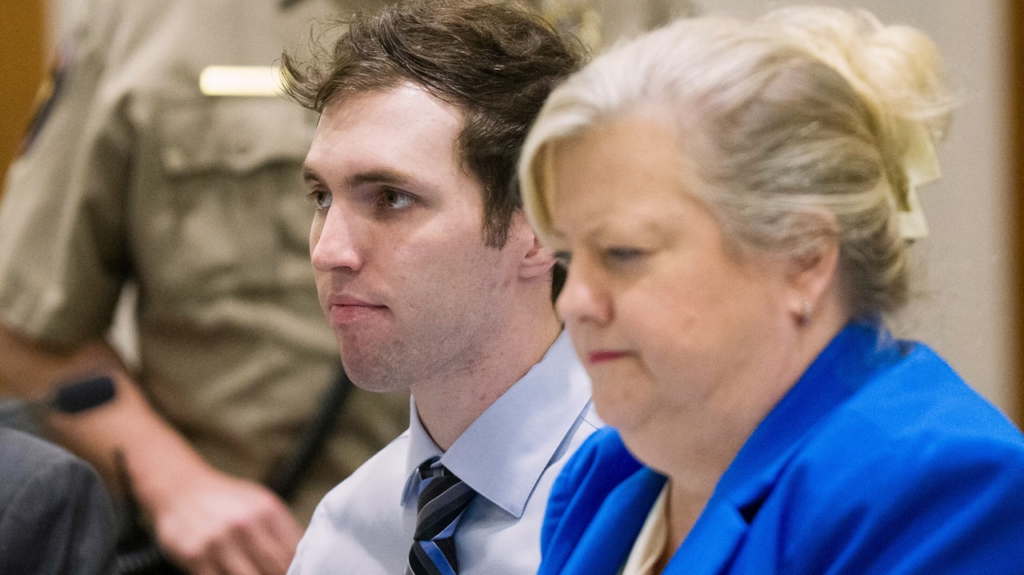
The legal battle over the killing of Charlie Kirk has taken a critical turn, with defense attorneys arguing that forensic evidence may not directly tie the accused gunman to the fatal shot.
At the center of the dispute is a key question that could shape the entire trial: can investigators definitively match the bullet recovered from Kirk’s body to the rifle linked to the suspect?
What is the latest development in the Charlie Kirk assassination case?
Attorneys representing Tyler Robinson, a 22-year-old facing multiple charges, say a forensic ballistics analysis failed to link the bullet to the alleged weapon conclusively.
The analysis was conducted by the Bureau of Alcohol, Tobacco, Firearms, and Explosives (ATF), which typically plays a central role in firearm-related investigations.
Why this matters
Ballistic evidence often serves as a cornerstone in gun-related prosecutions. A definitive match between:
- The bullet was recovered during the autopsy
- The suspected firearm
can strongly support the prosecution’s case.
In this instance, the defense claims that the link is uncertain, opening the door to reasonable doubt.
How does forensic ballistics work, and what are its limits?
Forensic ballistics is part science, part interpretation.
What experts analyze
Investigators typically examine:
- Bullet caliber and size
- Rifling marks left inside the barrel
- Striations, or microscopic scratches unique to a firearm
These characteristics can help determine whether a specific gun fired a specific bullet.
Where uncertainty can arise
Ballistics is not always definitive. Challenges include:
- Damaged or fragmented bullets
- Limited or degraded markings
- Similarities between firearms of the same model
In high-stakes cases, even a small degree of uncertainty can become a focal point for defense teams.
What is the defense arguing?
Robinson’s legal team is positioning the ballistics report as potentially exculpatory evidence.
Key defense claims
- The ATF analysis does not conclusively match the bullet to the rifle
- The prosecution’s narrative may rely on circumstantial or incomplete forensic links
- More time is needed to review evidence thoroughly
They have requested:
- A delay in the preliminary hearing
- Time to examine over 20,000 files provided by prosecutors
- Access to and scrutiny of the full forensic report
Push for a televised trial
The defense has also asked for proceedings to be televised, arguing that:
- Public visibility could counter misinformation
- The case has already been shaped by media narratives
This is not guaranteed and would depend on court approval and jurisdictional rules.
What do we know about the case so far?
The incident took place on September 10 during an event linked to Kirk’s “American Comeback Tour.”
Timeline of events
- Location: Utah Valley University in Orem, Utah
- Incident: Charlie Kirk was shot during a public speech
- Aftermath: A 33-hour manhunt led to Robinson’s arrest
Alleged statements and evidence
According to reports:
- Robinson allegedly confessed or implied involvement to his father
- Similar statements were reportedly made to his partner, Lance Twiggs
- He is accused of expressing frustration with Kirk’s views
These claims, if admitted in court, could carry significant weight, though they are likely to be contested.
What charges does Tyler Robinson face?
Robinson faces a series of serious criminal charges.
Charges include:
- Aggravated murder
- Additional counts tied to the use of a firearm and the circumstances of the attack
Prosecutors are reportedly seeking the death penalty, raising the stakes of the trial considerably.
Why has the case become so polarizing?
The killing of a high-profile political figure has amplified tensions in an already divided political climate.
Role of media and influencers
Prominent voices such as:
- Candace Owens
- Tucker Carlson
have raised questions and, in some cases, promoted theories suggesting a broader conspiracy.
Political reactions
Spencer Cox stated that
- Bullet casings recovered at the scene reportedly contained anti-fascist engravings and taunting messages
These details have further fueled debate about motive and potential ideological underpinnings.
How important is the ballistics dispute to the outcome?
This issue could become a pivotal battleground during the trial.
If the match is inconclusive
- The defense can argue reasonable doubt
- The prosecution may need to rely more heavily on circumstantial evidence
If other evidence is strong
Even without a definitive ballistics match, prosecutors could still build a case using the following:
- Alleged confessions
- Witness testimony
- Digital or forensic evidence
In many criminal trials, no single piece of evidence determines the outcome.
What happens next in the legal process?
The case is still in its early stages.
Upcoming steps
- Court decision on whether to delay the preliminary hearing
- Continued review of evidence by both sides
- Potential rulings on trial format, including media access
Given the volume of evidence and the seriousness of the charges, this case is likely to unfold over months, if not longer.
Why this case matters beyond the courtroom
This isn’t just a criminal case. It reflects broader tensions around politics, media, and trust in institutions.
Key issues at play
- The reliability of forensic science in high-profile trials
- The influence of public narratives before a verdict is reached
- The legal system’s ability to handle politically charged cases
TL;DR
- Defense attorneys say bullet analysis does not definitively link the weapon to the fatal shot
- The suspect, Tyler Robinson, faces aggravated murder charges and could face the death penalty
- The case stems from the killing of Charlie Kirk during a speech in Utah
- Alleged confessions and circumstantial evidence remain key to the prosecution
- The case has sparked political division and widespread debate