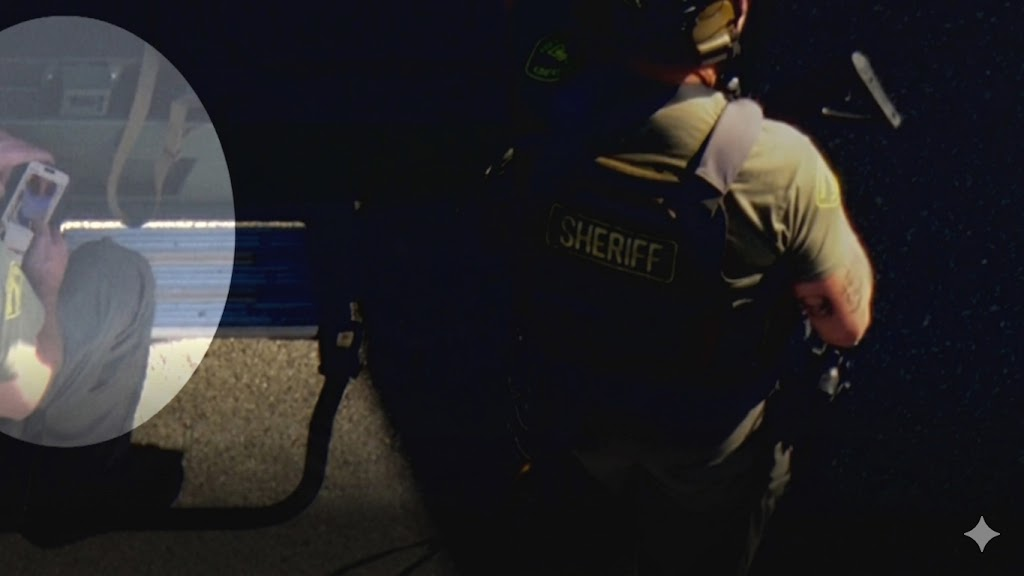
The California sheriff’s deputy dating app incident has quickly become one of those viral moments that feel almost scripted. In the middle of a high-stakes SWAT operation, a deputy in full tactical gear was seen scrolling through a dating app. Aerial footage by CBS Los Angeles allegedly shows the deputy with the Riverside County Sheriff’s Office on the phone during a standoff while pursuing a grand theft suspect.
The footage has triggered a national conversation about professionalism, downtime in policing, and how smartphones are reshaping behavior even in critical situations.
What happened in the California sheriff’s deputy dating app incident?
The episode unfolded in Riverside County, California, during a tense standoff involving a suspected car thief.
Timeline of the standoff
According to reports:
- A suspect driving a stolen vehicle led deputies on a chase around 2 PM
- The suspect reportedly called 911, claiming to be armed
- Officers attempted to stop the vehicle using a grappler device, which failed
- The vehicle eventually crashed into a wall
- The suspect refused to surrender, triggering a standoff
During this prolonged standoff, aerial footage captured a deputy sitting behind an armored vehicle, appearing to scroll through a dating app on his phone.
The situation ultimately ended with the suspect being found dead from what authorities described as a self-inflicted gunshot wound.
Why is the video drawing so much attention?
The reaction isn’t just about one officer’s actions. It reflects a broader tension between expectations of constant vigilance and the realities of long-duration police operations.
Optics vs. operational reality
To the public, the image is jarring.
A heavily armed officer, positioned in a potentially dangerous situation, casually browsing a dating app creates a stark contrast. It raises immediate questions:
- Was the officer distracted?
- Could this have compromised safety?
- Does this reflect a larger issue in police conduct?
But operationally, standoffs are often slow-moving.
Law enforcement sources frequently note that such incidents can stretch for hours, with long periods of waiting punctuated by brief moments of action.
What did the Riverside County Sheriff’s Office say?
The department acknowledged the video and confirmed an internal review.
In its statement, the Riverside County Sheriff’s Office said the behavior does not align with departmental standards, expectations, or policies.
That response signals two things:
- The incident is being taken seriously at an institutional level
- There are likely clear internal rules governing phone usage during active operations
Is using a phone during a SWAT operation always wrong?
This is where the debate gets complicated.
The case against the deputy
Critics argue that
- Officers should maintain full situational awareness at all times
- Personal phone use during an active operation is unprofessional
- It risks setting a poor example for law enforcement standards
Some have gone further, calling for disciplinary action or even termination.
The case in defense of the deputy
Supporters offer a different perspective:
- Standoffs can involve hours of inactivity
- Officers rotate responsibilities and may not all be actively engaged at every moment
- A calm demeanor, even in unusual ways, can indicate confidence rather than negligence
One viral comment summed up the sentiment: if the situation was stable enough for scrolling, it may not have been as immediately dangerous as it appeared.
How smartphones are changing behavior in high-stakes jobs
This incident sits at the intersection of technology and human behavior. Smartphones have quietly become constant companions, even in professions where focus is critical.
The “always-on” paradox
Modern professionals are expected to be
- Constantly connected
- Instantly responsive
- Mentally engaged for long durations
But human attention doesn’t work that way. In extended operations, whether in policing, medicine, or the military, people look for ways to manage downtime. In earlier eras, that might have meant conversation or simply waiting. Today, it often means a screen.
Risk vs. normalization
The key question is not whether officers use phones. It’s when and how.
- Controlled use during low-risk periods may be common
- Visible personal use during active incidents can undermine public trust
Why public perception matters as much as protocol
Even if the deputy’s actions didn’t interfere with the operation, perception plays a powerful role in policing.
The trust factor
Law enforcement operates on public trust.
Moments like this can:
- Reinforce existing skepticism
- Amplify criticism of police culture
- Spread rapidly through social media, often without full context
In the age of viral clips, a few seconds of footage can shape public opinion more than hours of uneventful professionalism.
The viral effect
This incident gained traction because it combines the following:
- High-stakes imagery (SWAT gear, armored vehicles)
- Relatable behavior (scrolling a dating app)
- A touch of irony that makes it highly shareable
It’s the kind of visual contradiction that thrives online.
What happens next?
The internal investigation will likely focus on:
- Departmental policies on phone usage
- The deputy’s specific role during the standoff
- Whether the behavior impacted operational safety
Possible outcomes could range from a warning to formal disciplinary action, depending on findings.
What should readers take away from this incident?
The California sheriff’s deputy dating app incident is less about one individual and more about a shifting landscape.
Key takeaways:
- Long-duration operations create natural downtime, even in high-risk jobs
- Smartphones are increasingly filling that downtime
- Public expectations of constant vigilance may not align with operational realities
- Perception can be as important as actual conduct in law enforcement
In a world where every moment can be recorded and shared, the margin for casual behavior in serious settings is shrinking.
TL;DR
A California sheriff’s deputy was caught on video using a dating app during a SWAT standoff, sparking debate over professionalism, downtime in policing, and the impact of smartphones on high-stakes jobs. An internal investigation is underway.