Legislation aims to boost public trust and transparency following masked federal raids
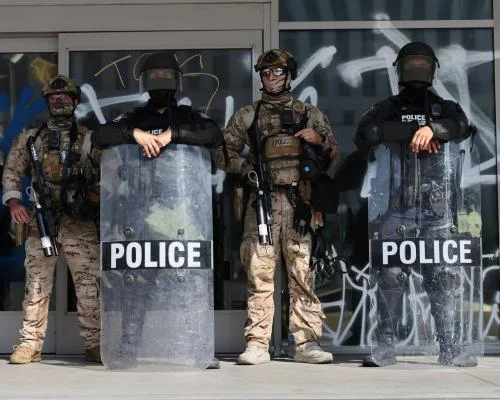
A new legislative proposal in California could make it a misdemeanor for local, state, and even federal law enforcement officers to conceal their faces while carrying out official duties.
Unveiled Monday, the bill would require all law enforcement officers operating in California to display their faces and wear identifiable uniforms with visible names or other official markers. The legislation exempts the National Guard, military personnel, SWAT teams, and officers responding to natural disasters.
The measure is co-sponsored by State Senator Scott Wiener (D-San Francisco) and State Senator Jesse Arreguin (D-Berkeley and Oakland), who argue the law is necessary to ensure accountability and prevent the impersonation of law enforcement by unauthorized actors.
Calls for transparency after anonymous raids
“We are seeing more and more law enforcement officers, particularly at the federal level, covering their faces entirely, not identifying themselves at all, and sometimes wearing army fatigues,” Wiener said. “We can’t tell if these are law enforcement officers or a vigilante militia.”
“These officers are grabbing people off our streets and disappearing people, and it’s terrifying,” he added.
The proposal follows a wave of immigration enforcement activity in Los Angeles, where masked federal agents conducted raids on June 6, resulting in more than 100 detentions and triggering several days of public protests. The unrest prompted President Donald Trump to dispatch National Guard troops and Marines to the region.
Immigrant rights advocates have expressed concern that detainees from the raids remain unreachable, fueling accusations of civil rights violations.
Enforceability raises legal concerns
While the bill seeks greater public accountability, some legal experts caution that the state’s jurisdiction may not extend far enough. Ed Obayashi, a California special prosecutor and law enforcement policy expert, said the measure may be unenforceable against federal agents.
“If they are following federal directives, they are following federal law,” Obayashi said. “State courts can’t prosecute federal officers acting in their official capacity.”
Obayashi added that current California law already requires local and state officers to display identifiable department insignia and personal identifiers.
ICE defends use of face coverings
Federal agencies, however, insist that face coverings are a safety measure. Todd Lyons, acting director of U.S. Immigration and Customs Enforcement (ICE), defended the use of masks by his agents during a recent press conference in Boston.
“I’m sorry if people are offended by them wearing masks, but I’m not going to let my officers and agents go out there and put their lives or their families’ lives on the line because people don’t like what immigration enforcement is,” Lyons said.
The press conference followed ICE’s announcement of nearly 1,500 arrests in the northeastern U.S. as part of a “surge operation.”
A broader debate on visibility and accountability
Senators Wiener and Arreguin maintain that transparency must be prioritized over operational secrecy. They argue that the ability to clearly identify officers is essential in a democratic society where law enforcement is accountable to the people.
“Law enforcement officers are public servants,” Wiener said. “People should be able to see their faces, know who they are. Without that, there’s no transparency and no accountability.”
The proposal is expected to spark intense debate in Sacramento and Washington as issues of law enforcement authority, immigration, and civil liberties continue to collide.