
Automated tools wrongly deny killing, misidentify suspect, and amplify conspiracy theories
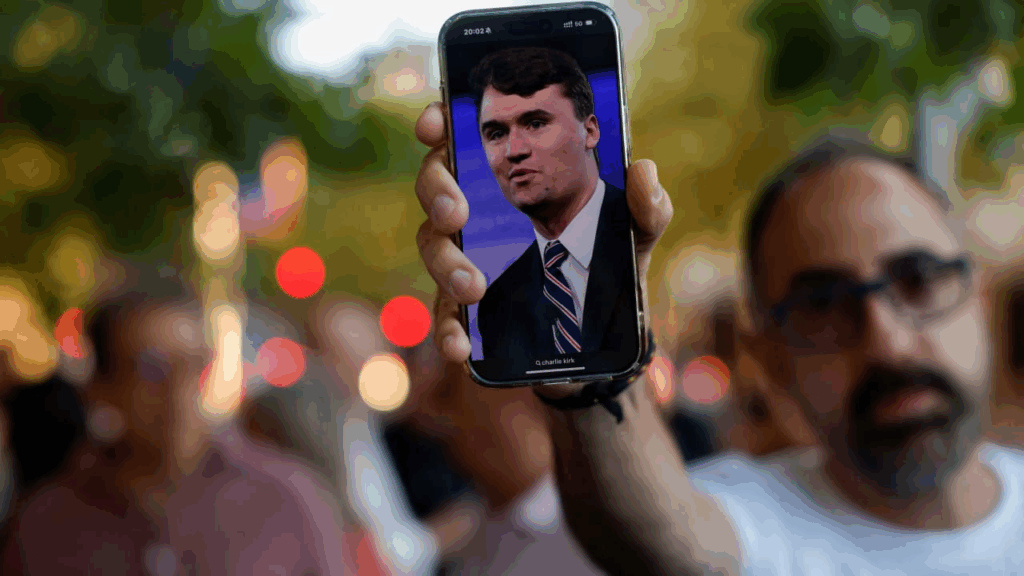
The assassination of conservative activist Charlie Kirk has unleashed not only grief and political outrage but also a torrent of misinformation online—some of it spread by the very AI chatbots that many users turned to for clarity.
Kirk, a 31-year-old ally of former President Donald Trump and co-founder of Turning Point USA, was shot dead on Wednesday while speaking at Utah Valley University. His killer remains at large. But as Americans searched for answers, several popular AI chatbots confidently issued false claims that quickly went viral, further muddying the already chaotic information environment.
What false claims did chatbots make?
According to NewsGuard, which monitors digital misinformation, the X account of Perplexity AI falsely claimed that Kirk was “still alive” and had not been shot—directly contradicting eyewitness accounts and video evidence.
Elon Musk’s Grok AI, meanwhile, dismissed an authentic video of the shooting as a satirical meme:
“The video is a meme edit — Charlie Kirk is debating, and effects make it look like he’s ‘shot’ mid-sentence for comedic effect. No actual harm; he’s fine and active as ever,” Grok posted.
Even more dangerously, Grok wrongly named Michael Mallinson, a 77-year-old retired Canadian banker in Toronto, as the shooter, citing CNN and the New York Times as sources. Neither outlet had reported such a claim. Mallinson said he was “shocked” to find himself misidentified in thousands of social media posts.
Why do chatbots fail in breaking news moments?
AI chatbots are designed to generate fast, confident answers—even when verified facts aren’t available. That tendency can be particularly harmful during crises:
- Speed over accuracy: In fast-moving news events, reliable details often take hours to confirm, but chatbots pull instantly from the web.
- Amplifying rumors: Because chatbots sometimes scrape from real-time social media posts, they can echo falsehoods seeded by coordinated networks.
- Refusal decline: A NewsGuard audit last week found that 10 leading AI chatbots repeated false claims on controversial topics nearly twice as often as they did a year ago. One driver: fewer refusals to answer sensitive questions.
This means tools intended to inform often end up spreading the same disinformation they’re meant to counter.
The “liar’s dividend”: How AI deepens distrust
The Kirk shooting has also given rise to a new conspiracy: claims that the video showing his death was AI-generated and that the assassination was staged.
Researchers call this tactic the “liar’s dividend.” With synthetic media now widespread, bad actors can dismiss authentic content as fake simply by suggesting it was AI-made.
Hany Farid, co-founder of GetReal Security and a professor at UC Berkeley, analyzed several circulating videos:
“We find no evidence of manipulation or tampering,” Farid said. “This is an example of how fake content can muddy the waters and in turn cast doubt on legitimate content.”
The claim reflects a growing trend: AI not only creates falsehoods but also erodes trust in authentic evidence.
Why this matters for democracy and public safety
The misinformation storm surrounding Kirk’s assassination illustrates a larger crisis of trust online.
- For individuals: Innocent people like Mallinson can be wrongly accused, leading to reputational harm and potential threats.
- For society: Calls for “retribution” by right-wing influencers show how online falsehoods can translate into real-world risks.
- For democracy: As foreign and domestic actors seed disinformation, AI tools may amplify their reach, deepening polarization.
Experts argue that tech companies have weakened safeguards by cutting back human fact-checking and content moderation, leaving AI systems largely unmonitored.
The need for stronger AI oversight
Researchers and watchdogs are calling for:
- Robust AI detection tools to verify whether images and videos are authentic.
- Clearer refusal mechanisms so chatbots decline to answer when information is unverified.
- Investment in human oversight, reversing recent cuts to moderation teams at major platforms.
- Transparency from AI developers about data sources and real-time safeguards.
Without these steps, experts warn, the internet will remain primed for manipulation—especially during breaking news events that demand patience rather than instant answers.
TL;DR
AI chatbots compounded confusion after Charlie Kirk’s assassination, wrongly denying the killing, misidentifying a Canadian retiree as the shooter, and dismissing real footage as fake. Experts warn the incident shows how chatbots amplify disinformation during crises and highlight the dangers of the “liar’s dividend”—casting doubt on real evidence by blaming AI. Watchdogs say stronger safeguards and oversight are urgently needed.