
What happened during the LaGuardia tarmac collision?
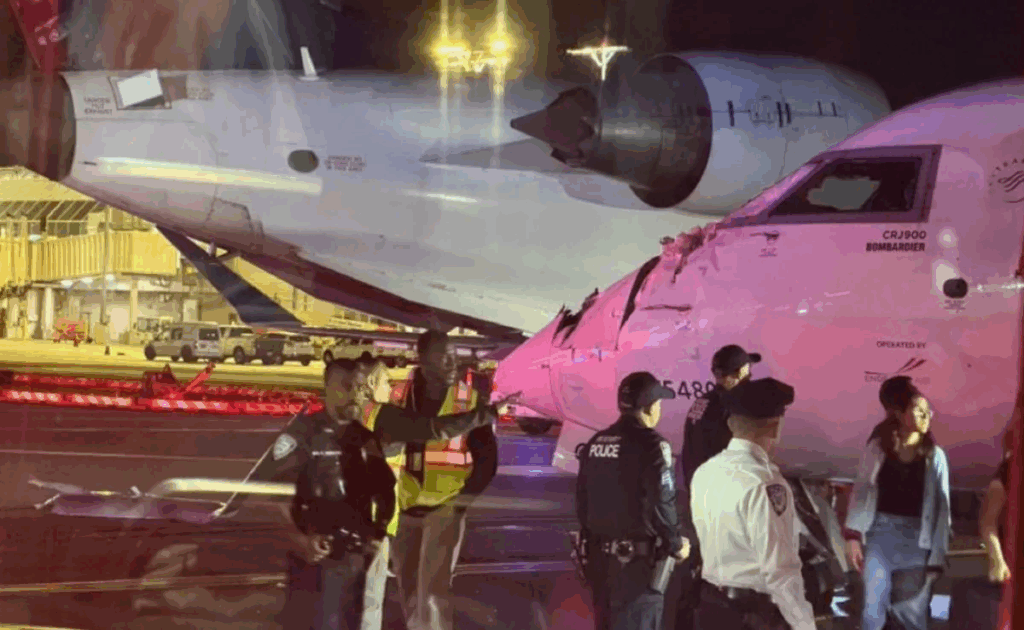
Two Delta Airlines planes collided on the tarmac at New York’s LaGuardia Airport on Wednesday night, sparking alarm over airport safety standards. According to reports and air traffic control audio, the nose of one Delta jet struck the right wing of another while both aircraft were taxiing around 9:56 p.m. local time.
Video footage filmed by a passenger on a nearby aircraft shows flashing emergency lights and visible wing damage. ABC News reported that one person was injured in the accident, while CBS News confirmed that one of the damaged planes was Delta flight DL5047 arriving from Charlotte Douglas International Airport.
The impact caused the wing of the arriving plane to snap, while the other aircraft sustained damage to its nose and windshield. Both planes were regional jets operating under Delta’s domestic network.
Has Delta Airlines responded?
As of Thursday morning, Delta had not issued a public statement addressing the incident. The airline has, however, faced increased scrutiny over several operational issues this year. Industry analysts expect Delta to coordinate closely with the Federal Aviation Administration (FAA) as investigators assess the circumstances that led to the collision.
Why LaGuardia’s safety record is under the spotlight
LaGuardia Airport, one of New York City’s busiest travel hubs, has been the site of multiple recent safety incidents:
- March 2025: A Delta jet struck the runway with its wing during a landing attempt, forcing a go-around and triggering an FAA probe.
- 2024–2025: Several near-miss incidents involving taxiway congestion and runway incursions were logged by air traffic controllers.
These incidents have fueled concerns that LaGuardia’s aging infrastructure, coupled with rising air traffic volumes, may be creating unsafe conditions on the ground. Aviation safety advocates have urged the FAA to increase inspections and implement stricter ground control protocols at the airport.
How do tarmac collisions happen?
While mid-air collisions grab more headlines, tarmac accidents are more common than many passengers realize. They typically occur due to:
- Taxiway congestion: High traffic volumes during peak hours make maneuvering difficult.
- Communication lapses: Miscommunication between air traffic control, ground staff, and pilots can lead to navigational errors.
- Blind spots in cockpit visibility: Pilots sometimes have restricted sightlines, especially when maneuvering larger aircraft.
In this case, preliminary audio suggests both jets were taxiing at the same time, with one clipping the other’s wing during a turn.
What happens next?
The FAA is expected to launch an official investigation, focusing on:
- Whether air traffic control instructions were clear and correctly followed.
- If pilot error or misjudgment contributed to the accident.
- Whether LaGuardia’s ground operations protocols need tightening to prevent future collisions.
Both planes will undergo maintenance assessments, and passengers affected by the flights are likely to face delays or rebookings.
Why this matters for passengers and airlines
For travelers, the incident raises concerns about safety and reliability at one of the nation’s most critical airports. For airlines, tarmac collisions are costly — not only in terms of repairs and delays, but also in potential lawsuits and reputational damage.
Delta, a carrier that typically boasts one of the strongest safety records among U.S. airlines, may face difficult questions from both regulators and customers.
The bigger picture: airport safety in the U.S.
This collision highlights a broader debate over U.S. airport infrastructure and safety oversight. According to the FAA, there were more than 1,600 runway incursions across U.S. airports in 2023–24, though only a small fraction resulted in accidents.
Experts argue that increasing air traffic, older airport layouts, and strained air traffic control staffing all heighten risks. LaGuardia, in particular, is undergoing renovations, but its constrained space and outdated taxiway design remain challenges.
What could improve safety?
- Upgraded ground radar systems to track aircraft movements more precisely.
- Expanded taxiway redesigns to reduce bottlenecks.
- Increased ATC staffing to ensure clear guidance during peak operations.
- Better pilot training in ground navigation at high-density airports.
Conclusion
The Delta collision at LaGuardia underscores the pressing need for stronger safety measures at U.S. airports already stretched by record passenger volumes. While the FAA investigation will determine the direct cause, the incident adds urgency to calls for infrastructure upgrades and stricter operational oversight at New York’s airports.