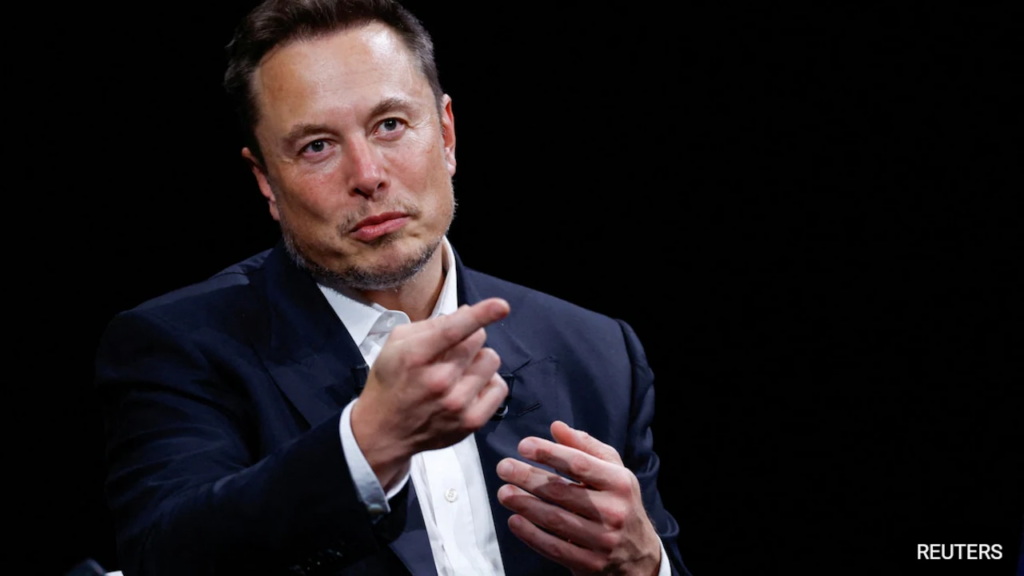
The Wisconsin Elections Commission has voted to refer complaints against Elon Musk to a county prosecutor after finding probable cause that his $1 million cash giveaways during the 2025 Wisconsin Supreme Court election may have violated the state’s election bribery law.
The bipartisan commission voted 5-1 to send the matter to the Brown County District Attorney’s Office for possible criminal review. The decision does not mean Musk has been charged with a crime. Instead, it authorizes prosecutors to determine whether the evidence warrants a criminal investigation or prosecution.
Why is Elon Musk under scrutiny?
The controversy centers on a series of $1 million payments made during Wisconsin’s 2025 Supreme Court election campaign.
The payments were distributed through America PAC, a political action committee backed by Musk. According to complaints filed with the Wisconsin Elections Commission, the money was offered to individuals who signed a petition opposing what the organization described as “activist judges.”
Critics argue that the campaign effectively offered something of value during an election, raising questions about whether it violated Wisconsin’s election bribery statute.
What did the Wisconsin Elections Commission decide?
The six-member Wisconsin Elections Commission, composed equally of Republican and Democratic appointees, voted 5-1 to find probable cause that Wisconsin election law may have been violated.
The commission decided to refer the complaints to the Brown County District Attorney’s Office for possible criminal review.
A finding of probable cause is not a determination of guilt. It simply means commissioners concluded there was sufficient evidence for prosecutors to examine the case further.
Brown County District Attorney David Lasee has not indicated whether criminal charges will be pursued.
What does Wisconsin’s election bribery law say?
Wisconsin law generally prohibits offering anything of value to induce someone to vote or influence voting behavior.
The central legal question is whether the $1 million giveaways constituted an unlawful incentive connected to electoral participation or whether they fall under constitutionally protected political activity.
That issue remains unresolved and could ultimately be decided by the courts if prosecutors move forward.
What is Musk’s defense?
Musk’s legal team has argued that the giveaways were protected political speech under the First Amendment.
According to previous court filings, the payments were tied to petition-signing and political advocacy rather than voting itself.
Supporters of the program have maintained that the initiative was intended to encourage civic engagement and recruit advocates rather than purchase votes.
Those arguments have not yet been fully tested in court.
Have these giveaways faced legal challenges before?
Yes.
The Wisconsin controversy follows several lawsuits over similar America PAC promotions.
Wisconsin
Before the election, Wisconsin Attorney General Josh Kaul sought to block the payments, arguing they violated state election law.
The Wisconsin Supreme Court declined to intervene before the giveaways occurred.
Pennsylvania
Philadelphia District Attorney Larry Krasner challenged similar $1 million giveaways during the 2024 presidential campaign, alleging violations of election and lottery laws.
The program continued while litigation proceeded.
Arizona
A separate lawsuit alleges America PAC’s promotions were misleading because winners were not selected randomly.
During that litigation, Musk’s attorneys acknowledged that recipients were vetted rather than chosen through a purely random drawing, arguing the program functioned more like a recruitment initiative than a lottery.
That case also remains pending.
Why does this case matter?
The Wisconsin referral could become an important legal test of how election laws apply to modern political campaigns that use large financial incentives tied to petitions, advocacy, or civic participation.
Courts may ultimately have to balance two competing principles:
- Protecting elections from financial inducements that could influence voters.
- Preserving First Amendment protections for political advocacy and campaign activities.
The outcome could influence how political organizations conduct voter engagement campaigns in future elections.
What happens next?
The Brown County District Attorney’s Office will review the commission’s referral and determine whether to:
- Decline further action.
- Open a criminal investigation.
- Seek additional evidence.
- File criminal charges if prosecutors believe the evidence supports doing so.
If charges are filed, Musk would have the opportunity to challenge the allegations in court.
At this stage, no criminal conviction has been established, and Musk has not publicly commented on the Wisconsin commission’s latest decision.
Key takeaways
- The Wisconsin Elections Commission voted 5-1 to find probable cause that Elon Musk may have violated the state’s election bribery law.
- The commission referred the complaints to the Brown County District Attorney for possible criminal review.
- The allegations stem from $1 million payments distributed through America PAC during Wisconsin’s 2025 Supreme Court election.
- Musk’s legal team argues the program constituted protected political speech under the First Amendment.
- Similar legal challenges involving America PAC are ongoing in Pennsylvania and Arizona.
- The referral is not a criminal conviction, and prosecutors have not yet announced whether charges will be filed.