
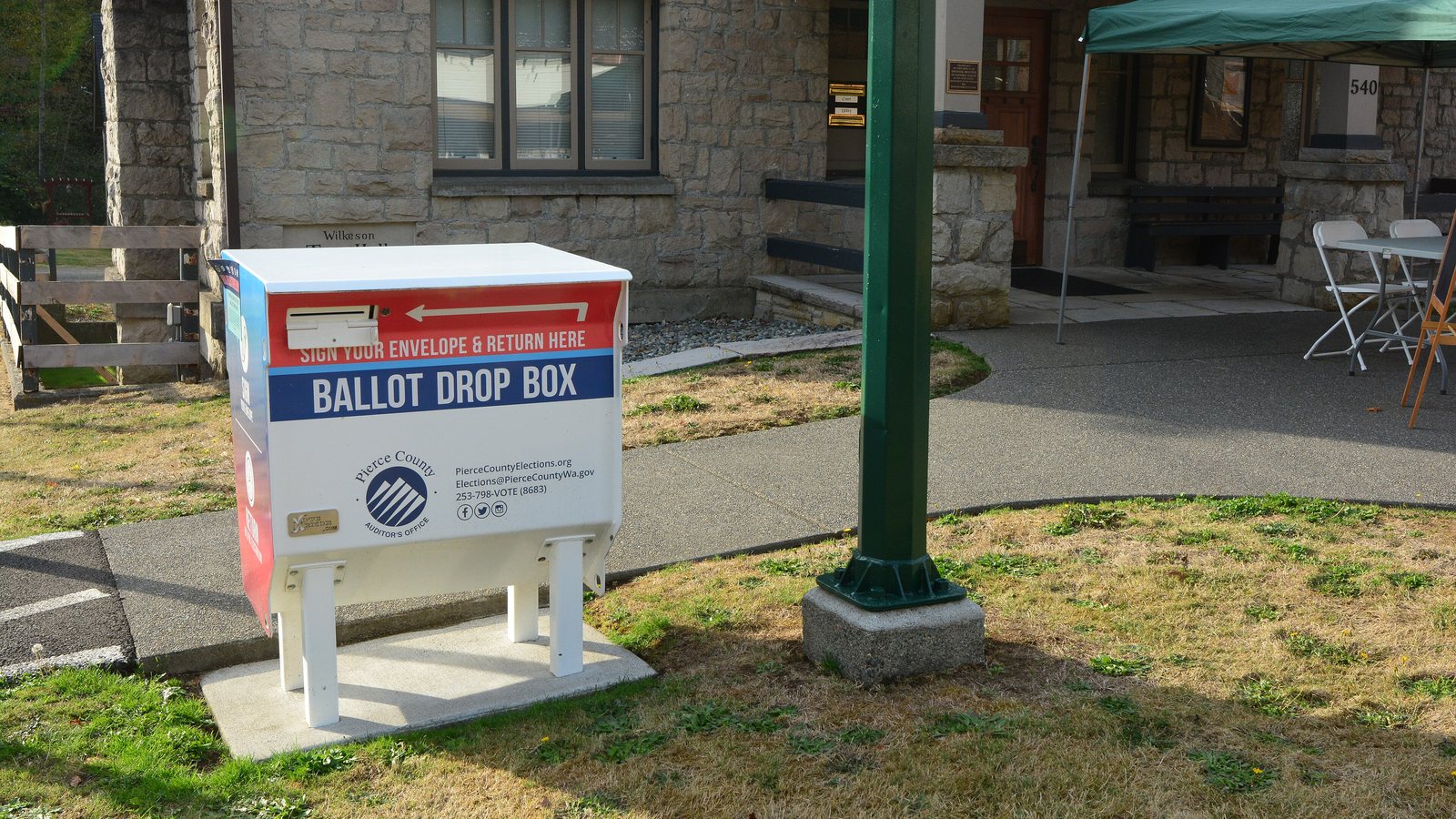

The Justice Department asked Washington on Monday to set aside ballots from more than 400 people it says are noncitizens. The request came in a letter to the secretary of state, not a lawsuit. No court has ordered any ballot held in Washington, California or Alaska.
The same day, a federal appeals court threw out the department’s emergency appeal in its California ballot case. That case returns to a trial judge in Los Angeles on Tuesday afternoon.
In Alaska, the state asked a judge to dismiss the DOJ’s suit before the election. Two groups trying to join the case want the same. This follows our Oct. 24 explainer on the Alaska and California suits.
Washington got a letter, not a lawsuit
Neil Floyd, the acting U.S. attorney in Seattle, announced the request at a news conference on Monday.
“We are asking the state to set aside those ballots until we can confirm they are legal voters,” he said, the AP reported. The DOJ says the people on its list cast 1,500 votes in past elections.
The department put the number at 405, KATU reported. Pete Serrano, a senior federal prosecutor in eastern Washington, co-signed the letter.
Agents asked detainees and border crossers whether they had voted, KATU reported. They then checked the answers against immigration databases and public voter records.
“With the highest level of confidence I have, these are people that are registered to vote, have voted, and are not citizens,” Floyd said. He told KATU it is too early to say whether anyone will face charges. The AP reported that the department plans to send Washington another list before Election Day.
Hobbs says the federal data flags citizens
Secretary of State Steve Hobbs’s office is reviewing the letter, it said in a statement on Monday. Hobbs said his office “will only respond to requests that follow due process.” He added: “We saw what happened in California and don’t want Washingtonians to be harassed.”
One of the roughly 400 records dates from 1994, the office said. It said the federal system “frequently flags legitimate U.S. citizens as noncitizens.” It also cited a federal rule that limits removing voters within 90 days of a federal election.
The timing, one week before the election, “is no doubt intended to cast unfounded suspicion on the results,” Hobbs said.
Washington Republican Party chair Jim Walsh located the problem earlier in the process. “What is not secure is the database of registered voters,” he told KATU.
For now, no court has a role in Washington’s dispute. On Sept. 22 a federal judge in western Washington dismissed a separate DOJ suit. That suit sought the state’s full, unredacted voter roll.
What the 9th Circuit actually ruled in California
Early accounts of Monday’s California ruling differed, so we read the 91-page order. The panel did not decide whether the DOJ’s request is lawful. It dismissed the appeal for lack of jurisdiction, granting a motion from Los Angeles County.
The DOJ first asked Judge David Carter to rule by Nov. 3. Late on Oct. 21, it asked him to rule by noon the next day.
When no ruling came, the DOJ appealed and called the silence a “constructive denial.” The unsigned majority said 15 hours was not enough to count as one. Only three of those hours were business hours. “The United States’s claimed emergency, at least in part, is a self-constructed one,” it wrote.
The vote was 2-1. Judge Mark Bennett, a Trump appointee, wrote that he would also have denied the request on its merits. Judge Gabriel Sanchez, a Biden appointee, warned that the order sought would “transform California’s election rules” mid-election.
Judge Patrick Bumatay, also a Trump appointee, dissented. In his view, federal law bars noncitizen voting and overrides California’s handling of these ballots. “We should’ve enjoined it from accepting and processing ballots likely cast by aliens,” he wrote.
No party sought a rehearing by the full court, and no judge asked for a vote. The court issued its mandate Monday evening. That closes the appeal.
California’s list goes before a judge on Tuesday
Judge Carter hears the DOJ’s request at 1 p.m. Pacific time on Tuesday, Oct. 27. The department wants mail ballots from about 20,000 listed voters held until officials check their citizenship.
The accuracy of that list is now the main dispute. Los Angeles County said a 200-name sample included voters who listed a U.S. birthplace, as we reported Saturday.
On Monday the DOJ filed a sworn response from Nicolas Bartell, a U.S. Citizenship and Immigration Services official. He puts the full list at about 20,930 people.
Bartell said agency records show none of the people it matched from the county’s sample were born in the U.S. A second review found four who “might have a claim to U.S. citizenship.” One person had died. He added that “there is always a risk for human error.”
In a reply brief, the DOJ argued that any noncitizen’s vote “dilutes the influence of honest votes.” That line quotes a 1974 Supreme Court case.
California argues that Congress never gave the attorney general a civil tool to make states hold ballots, Democracy Docket reported. A lawyer for the county registrar said the DOJ wanted him “to engage in an unlawful course of conduct,” per CBS News.
Alaska asks for a ruling before Election Day
The Alaska suit does not target ballots. The DOJ wants Judge Sharon Gleason to block certification of the Senate race in one case. That case is if Senator Dan Sullivan loses and votes for a namesake candidate, Daniel J. Sullivan, would have changed the result.
On Monday, Gleason fast-tracked two requests to join the case. One comes from Alaskans for Mary and the Democratic Senatorial Campaign Committee. The other comes from the League of Women Voters of Alaska and others.
Both groups want the suit dismissed. The DOJ must answer their requests by Tuesday evening, Alaska time, and Gleason plans to rule by 5 p.m. Wednesday.
The state’s Division of Elections filed its own motion to dismiss on Monday. It asks for a decision by Nov. 2. The United States “lacks authority to intervene in state elections at all, much less in support of a favored candidate,” the state’s lawyers wrote.
The DOJ’s complaint argues the second Sullivan’s place on the ballot “threatens to mislead” the senator’s voters.
What voters in the three states should do
Nothing about voting has changed, because no court has ordered any ballot held. The real risk this week is a late ballot. Here is what the official state sources say:
- Washington: use an official drop box by 8 p.m. on Nov. 3, or mail your ballot with a postmark by that day. The state advises mailing more than a week before Election Day, so a drop box is safer now. Check your ballot status at VoteWA.gov. Counties rejected about 20,000 primary ballots in August for late postmarks, Hobbs’s office says.
- California: mailed ballots must be postmarked by Election Day. Drop boxes and vote centers take ballots until 8 p.m. on Nov. 3. Track yours at wheresmyballot.sos.ca.gov.
- Alaska: polls are open 7 a.m. to 8 p.m. on Nov. 3. Mailed ballots need a postmark by then, Alaska Public Media reported.
Alaska’s race is in our guide to the 2026 Senate races to watch. Our report on Democrats switching to in-person voting covers the mail-ballot trend.
The next ruling is likely to come from Judge Carter after Tuesday’s hearing in Los Angeles. Judge Gleason’s decision on who joins the Alaska case is due Wednesday evening.