A forensic scientist says Jeffrey Epstein’s autopsy photos point to strangulation, not suicide. Professor Michael Freeman made the claim about Epstein’s death on Monday, Nov. 16. He spoke to BBC Newsnight and gave a talk in London. New York City’s medical examiner ruled the death a suicide in 2019, and it told CBS News it “stands by its determination.”
Freeman’s analysis is a challenge to that ruling, not an official finding. It has not passed peer review, he never examined the body, and Epstein’s brother supplied his files. Two federal reviews reached the opposite conclusion. The Justice Department’s inspector general in 2023 and the FBI in 2025 found no evidence that anyone else took part.
Freeman’s case for strangulation from behind
Freeman studies bias and error in death investigations, The New York Times reported (via The Philadelphia Inquirer). He holds doctorates in epidemiology and forensic medicine and edits the Journal of Forensic and Legal Medicine. The Times noted he is not a board-certified forensic pathologist. The BBC (syndicated copy on Yahoo) says he has advised on police custody deaths, including George Floyd’s.
He spent a year on the city medical examiner’s file and photographs. Mark Epstein, Jeffrey Epstein’s brother, gave him the material and has long argued his brother was killed. Freeman told the BBC that Mark Epstein did not pay him. The Times reported that Mark Epstein posted the autopsy photos online shortly before the talk.
Freeman makes four main points, according to the BBC, the Times and CBS News:
- A deep, fresh hemorrhage in the muscle of the left shoulder.
- Facial injuries that he said look like the result of a blow.
- Possible fingernail marks above the ligature mark, a sign of someone pulling at a cord.
- 3D models that fit some neck marks but not the shoulder and back injuries.
“The injuries and the way the body was found don’t match up,” he told the BBC. In his view, someone strangled Epstein “most likely from behind” and then hung the body from the bunk bed.
Asked who might have done it, he said: “That is not something I have an opinion about.”
What the medical examiner told federal investigators
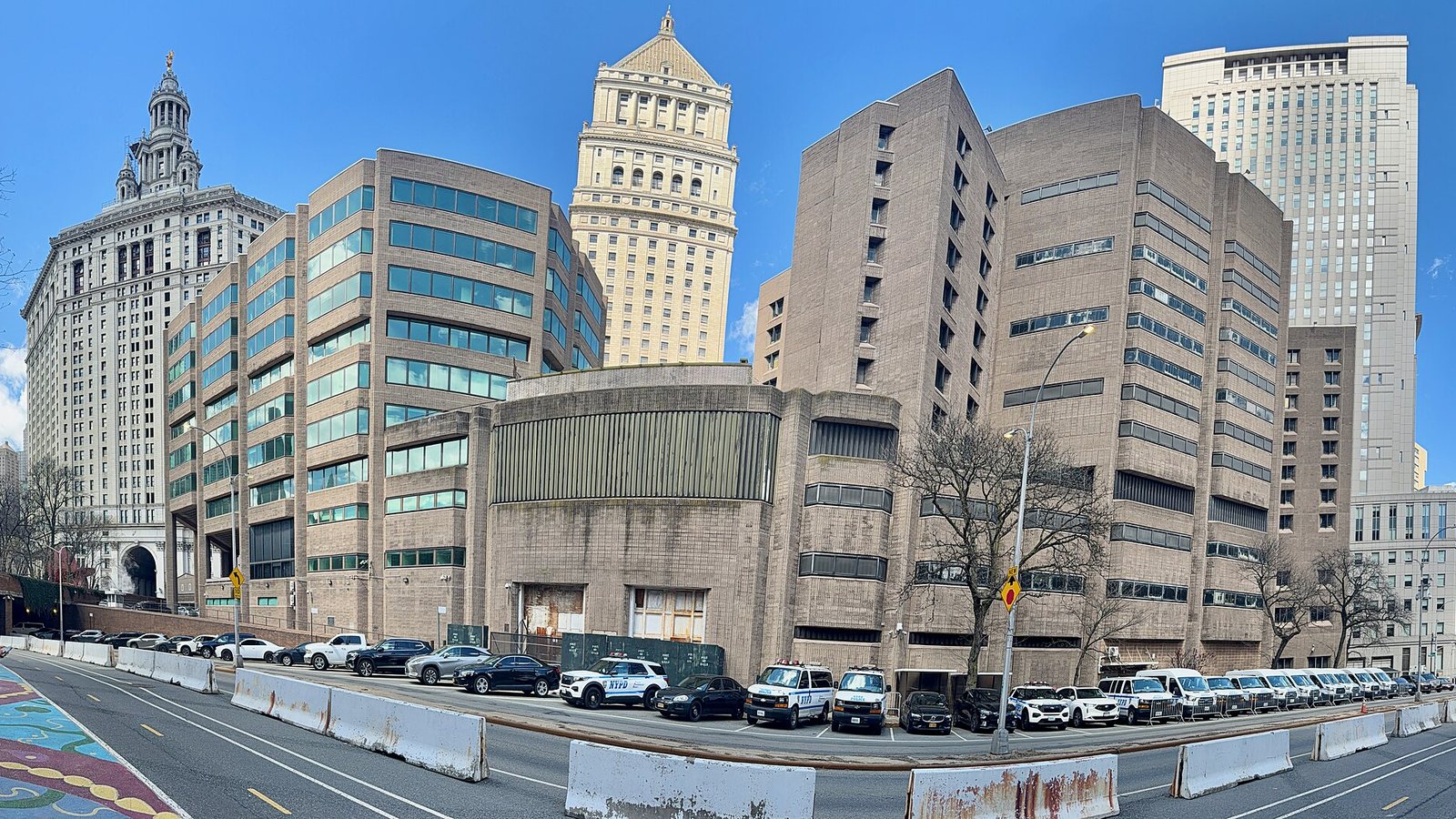
Then-Chief Medical Examiner Barbara Sampson’s office ruled the death a suicide by hanging on Aug. 16, 2019, the AP reported. Jail staff had found Epstein in his Manhattan cell on Aug. 10. He was awaiting trial on federal sex trafficking charges.
The fullest public account of the autopsy is in the June 2023 inspector general report. The doctor who performed it told investigators the injuries pointed to hanging. In the report’s words, they were “more consistent with, and indicative of, a suicide by hanging rather than a homicide by strangulation.” She cited an upward-peaking ligature furrow and burst capillaries from the neck up.
She also pointed to what was missing. Epstein had no marks on his hands, no broken nails, no debris under them and no bruised knuckles. Apart from an arm abrasion, which she linked to convulsions, she found no bruising on his body. That is the sharpest clash with Freeman, who sees signs of a struggle and a deep shoulder injury.
Freeman also said he would have expected a photo of the body before anyone moved it. The report explains why none exists.
Michael Thomas, the jail employee who found Epstein, said he saw him “in a near-seated position” with an orange cloth tied to the top bunk. Thomas told investigators he ripped it free, lowered Epstein to the floor and started chest compressions.
Two federal reviews found no sign anyone entered
The inspector general found serious misconduct at the jail. Staff left Epstein alone with excess bed linens from about 10:40 p.m. on Aug. 9.
They skipped required checks and falsified records. Still, the report found nothing that “contradicted the FBI’s determination regarding the absence of criminality.”
Its reasons were physical. Locked doors guarded each cell and each tier.
Recorded video of the unit’s common area showed no one heading toward Epstein’s tier overnight. Staff and the three inmates who could see his door said no one went in or out.
The Justice Department and FBI went further in an unsigned July 2025 memo. FBI investigators concluded that Epstein “committed suicide in his cell,” it said. The FBI’s own review of the footage confirmed “nobody entered any of the tiers” from 10:40 p.m. until about 6:30 a.m.
The department posted the raw and enhanced video online.
That evidence covers who could reach the cell. It says nothing about the injuries, which is where Freeman has aimed his challenge. And pathologists have split over those injuries before.
The 2019 fight over Epstein’s neck bones
Freeman is not the first expert to dispute the ruling. Mark Epstein hired Dr. Michael Baden, a former New York City chief medical examiner, who watched the autopsy.
In October 2019 Baden cited fractures of the larynx and hyoid bone. He called them “extremely unusual in suicidal hangings,” the AP reported.
He said he had not seen such injuries in a suicide in 50 years.
Sampson rejected that the next day. “I stand firmly behind our determination of the cause and manner of death for Mr. Epstein,” she said. “The cause is hanging, the manner is suicide.”
That is still the core dispute. Some forensic pathologists who saw the photos told the Times the neck mark looked unusual for a hanging. They also said the images could still fit a suicide, and that injuries alone can’t settle the question.
Peer review is Freeman’s next test
University College London canceled Freeman’s talk, citing “well-being implications for our students,” the Times reported. He gave it at Middle Temple, a London legal society, instead.
A journal has turned the paper down. CBS reported that reviewers thought it wrong to criticize a medical examiner’s findings in a peer-reviewed journal. Freeman plans to resubmit.
Epstein pleaded guilty in Florida in 2008 to procuring a minor for prostitution. Federal agents arrested him on July 6, 2019, and his case is still drawing new filings.
On Nov. 10 a House Oversight report urged the Justice Department to examine allegations against Philip Levine and Frédéric Fekkai. Both men deny them.
In October, House Judiciary Democrats cited the Epstein files in a report that includes Beatrice Keul’s allegation against Donald Trump. The White House calls it untrue.
No official body has reopened the question of how Epstein died. The medical examiner’s ruling stands, and Freeman’s next hurdle is getting his work through peer review.
If you or someone you know is struggling, call or text 988 to reach the Suicide & Crisis Lifeline in the US.