
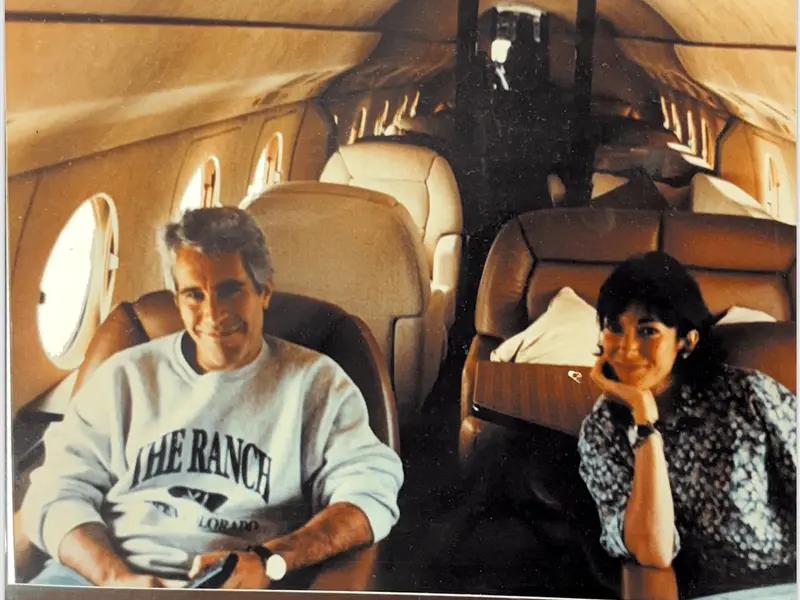
As scrutiny intensifies around the newly released Epstein Files, a fresh set of documents has drawn attention to an unusual and largely unexplored relationship: repeated interactions between the late financier and sex offender Jeffrey Epstein and a Hong Kong-based academic with an interest in so-called psychic phenomena.
The records, part of a massive release of roughly three million pages, show sustained communication, financial transactions, and in-person meetings between Epstein and the academic, who was affiliated with Hong Kong Polytechnic University at the time. While the documents do not allege criminal conduct by the academic, they raise questions about Epstein’s continued efforts to embed himself in academic and intellectual circles—even after his earlier conviction.
Who is the academic mentioned in the Epstein Files?
The individual, whose name appears in approximately 1,000 pages of the newly released documents, is described as an academic researcher based in Hong Kong during the period of correspondence. The files indicate that communication between the two began in 2011 and continued for several years.
At the time, the academic was pursuing research interests that spanned artificial intelligence, human cognition, and controversial claims around individuals with “special abilities,” such as mind-reading or psychokinesis.
Importantly, the documents do not suggest that these interests were endorsed or validated by any mainstream scientific institution.
What do the emails reveal about their relationship?
Early contact and financial support
According to the emails included in the Epstein Files:
- Epstein and the academic began corresponding in 2011
- Epstein provided $20,000 that year for a research project described as related to artificial intelligence
- Over time, Epstein reportedly gave the academic tens of thousands of dollars
The documents do not clarify whether the funding went through a university channel or was a private arrangement.
In-person meetings
Email records suggest that the two men eventually met in person in 2015. Subsequent correspondence points to multiple meetings at Epstein’s Manhattan residence, indicating a relationship that extended beyond casual or purely academic exchange.
The files describe this as a “strong personal relationship,” though no further characterisation is provided.
What role did “psychic” and fringe ideas play?
One of the more striking aspects of the correspondence is Epstein’s apparent fascination with the academic’s pursuit of people claiming paranormal abilities.
Claims mentioned in the documents include:
- Individuals said to possess mind-reading abilities
- An experiment involving a self-described “psychokinesis master”
- Claims of manipulating electrical currents from a distance
There is no evidence in the documents that these claims were substantiated, peer-reviewed, or accepted by the scientific community. Their inclusion reflects Epstein’s long-documented interest in speculative science and unconventional intellectual projects.
What is the significance of the “rebrand the island” emails?
A series of emails from 2017 has attracted particular attention.
In one exchange, the academic asked Epstein:
“Is your island out of commission?”
The email did not name the island but is widely interpreted as referring to Little Saint James, Epstein’s private island in the US Virgin Islands.
In the same message, the academic mentioned a group that “organize[d] events and are looking for an island to collaborate with,” adding:
“Could be a good rebrand for your island.”
The phrasing is notable given Epstein’s growing public notoriety by that time. However, the documents do not show that any such collaboration ever took place.
Connections to other figures named in the files
Another set of 2017 emails shows the academic introducing Epstein to Lydia Laurenson, an author who has previously described a disturbing meeting at Epstein’s Manhattan home.
Laurenson has alleged that Epstein once produced a group of “barely legal” women during a meeting. These claims have circulated publicly for years but are not newly alleged in this document release.
The emails do not indicate whether the academic was present during such encounters or had knowledge of them at the time.
What the documents do—and do not—prove
What they show
- Epstein maintained contact with an academic in Hong Kong for years
- He provided financial support for research projects
- He remained interested in fringe and speculative ideas
- He continued hosting meetings at his Manhattan residence
Do not show
- Evidence of criminal wrongdoing by the academic
- Proof that any psychic or paranormal claims were real
- Confirmation that the academic was aware of Epstein’s full criminal history during early interactions
As with many Epstein-related documents, the material consists of raw emails and submissions, not conclusions or findings.
Why this matters in the broader Epstein Files story
The Epstein Files have exposed how widely Epstein’s network extended across:
- Finance
- Politics
- Academia
- Science and technology
This case illustrates how Epstein used intellectual curiosity, funding, and access to build relationships that, at times, insulated him from scrutiny.
It also highlights a recurring pattern: Epstein’s attraction to ideas and projects that existed on the fringes of legitimacy, often blending scientific language with unproven or sensational claims.
Transparency comes with complications
The Department of Justice has repeatedly emphasized that the Epstein document releases include unfiltered investigative material, such as emails, tips, and third-party communications.
The inclusion of a document does not mean:
- The DOJ endorses its contents
- The claims are factual
- The individuals involved committed wrongdoing
Understanding that distinction is critical as readers navigate the sheer scale of the release.
TL;DR
- Newly released Epstein Files show years-long contact between Epstein and a Hong Kong academic
- Epstein funded the academic’s research and met him multiple times
- Emails reference interests in “psychic” abilities and speculative experiments
- A 2017 email suggested the possibility of “rebranding” Epstein’s island
- No criminal allegations are made against the academic in the documents
- The records underscore Epstein’s deep reach into academic and intellectual circles