
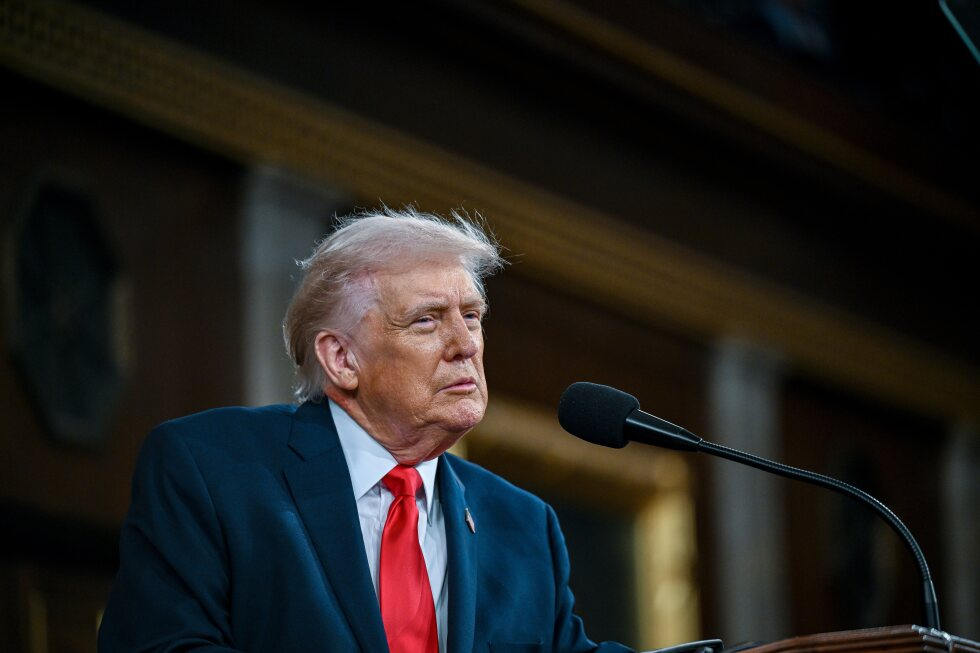
A new national poll suggests a growing unease among Americans over the direction of the Iran conflict, with many questioning both the scale of military action and the judgment behind it.
According to findings from the The Associated Press-NORC Center for Public Affairs Research, a clear majority of Americans believe the United States has crossed a line in its military response. The numbers point to a country that isn’t panicking, but is increasingly skeptical, like a passenger gripping the armrest while the pilot insists everything is under control.
What does the Trump-Iran war poll reveal?
The poll offers a snapshot of public sentiment as the conflict enters its fourth week. The headline numbers are striking:
- 59% of Americans say US military action against Iran has gone too far
- Around 50% say they have little or no trust in Donald Trump to make the right military decisions
- Roughly 60% oppose sending US ground troops into Iran
Despite this, Trump’s overall approval rating remains steady at about 40%, suggesting that while concern is rising, it hasn’t yet translated into a dramatic political shift.
Why do Americans think the US has gone too far?
Public concern appears rooted in both the scale of military operations and the fear of escalation.
A war that keeps expanding
The US has continued to deploy additional warships and troops to the Middle East. For many Americans, this signals not containment, but expansion. The worry is less about what has already happened and more about what might come next.
Fear of another prolonged conflict
There is a lingering shadow from past wars. The idea of deeper involvement, especially boots on the ground, triggers concerns about:
- Long-term military entanglement
- Rising casualties
- Escalating costs with unclear outcomes
In short, many Americans are asking a familiar question with renewed urgency: Where does this end?
How divided is public opinion?
The poll reveals sharp political divides, though not without overlap.
Democrats and independents
- About 9 in 10 Democrats say the US has gone too far
- Around 6 in 10 independents agree
This suggests broad concern outside Republican circles, particularly among voters who often decide elections.
Republicans
Republican opinion is more split:
- About half say the military action is “about right”
- A smaller share believes it hasn’t gone far enough
This internal divide hints at a tension between traditional hawkish foreign policy views and a more cautious, restraint-oriented wing within the party.
What does the poll say about trust in Trump?
Trust is where the numbers turn more personal.
About half of US adults say they have little or no confidence in Donald Trump when it comes to military decision-making. That level of skepticism has remained relatively stable in recent months, suggesting a persistent concern rather than a sudden backlash.
Why trust matters in wartime
Military conflicts often hinge on public confidence in leadership. When trust erodes:
- Support for prolonged operations weakens
- Political pressure to limit or end involvement increases
- Allies and adversaries may reassess US resolve
It doesn’t immediately change policy, but it shapes the environment in which decisions are made.
Is there support for further military action?
The appetite for escalation appears limited.
Ground troops face strong opposition
- About 60% of Americans oppose deploying US troops to Iran
- Opposition spans across party lines, though it is stronger among Democrats
Airstrikes and targeted attacks
Support for additional airstrikes, including those targeting Iranian leadership or military sites, is mixed at best. Many respondents are either opposed or uncertain.
This ambiguity reflects a broader hesitation: Americans are not necessarily demanding a full withdrawal, but they are wary of deeper involvement.
Why hasn’t Trump’s approval rating dropped sharply?
Despite the concerns, Trump’s overall approval rating remains relatively unchanged. That might seem counterintuitive, but several factors help explain it.
Partisan loyalty remains strong
Political polarization means many voters stick with their party’s leader even when they disagree on specific issues.
Foreign policy often moves slowly in public opinion
Unlike economic issues, shifts in foreign policy approval tend to be gradual unless triggered by a major event, such as:
- A significant ռազմական escalation
- High US casualties
- A clear strategic success or failure
The conflict is still evolving
Many Americans may be reserving judgment, waiting to see how the situation develops before fully reassessing their views.
What are the political risks for Trump?
While there’s no immediate collapse in support, the data suggests potential trouble ahead.
Key vulnerabilities
- Growing perception that the US has overreached
- Persistent doubts about decision-making
- Broad opposition to escalation
If the conflict intensifies or drags on, these concerns could harden into political liabilities.
What could change the trajectory?
Public opinion could shift more dramatically if:
- The US commits ground troops
- Casualties rise significantly
- The economic impact becomes more visible
In those scenarios, today’s unease could turn into active opposition.
What does this mean going forward?
The poll doesn’t signal a political crisis, but it does highlight a fragile balance.
Americans are not united behind the war effort, and many are clearly uncomfortable with its direction. At the same time, partisan divides and the absence of a defining turning point have kept overall approval relatively stable.
The result is a kind of political holding pattern: steady on the surface, but with pressure building underneath.
TL;DR
- 59% of Americans say US action in Iran has gone too far
- About half lack trust in Trump’s military decision-making
- Most oppose sending ground troops
- Public opinion is sharply divided along party lines
- Trump’s approval rating remains stable, but risks are growing if the war escalates