
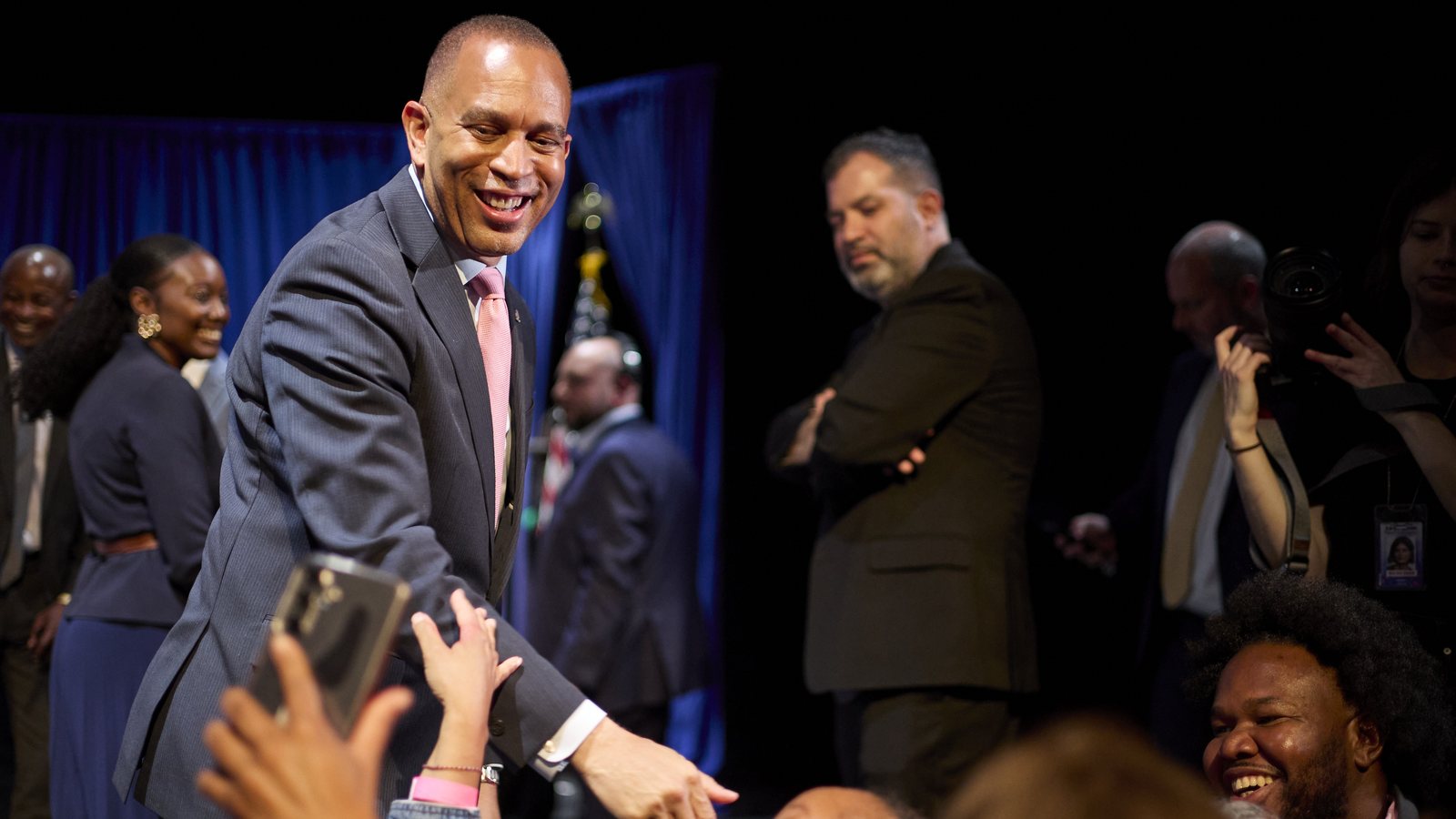

House Democrats nominated Hakeem Jeffries for speaker on Nov. 18 by 251 votes to 11, in a closed-door secret ballot. He ran unopposed. The full House votes when the 120th Congress convenes on Jan. 3, 2027. If it confirms him, the New York Democrat will be the first Black speaker in American history.
The six days since have made that floor vote look safer still. On Nov. 22 the Associated Press called North Carolina’s 5th District for Democrat Chuck Hubbard over Rep. Virginia Foxx, taking Democrats to at least 258 seats, according to a Yahoo News tally citing AP. That is the party’s largest House majority since 1992, and four races are still open.
The 11 no votes were a message, not a challenge
Members-elect and nonvoting delegates cast 262 ballots, and two Democrats did not vote, the AP reported. Because the ballot was secret, the only no voters we know about are the ones who said so.
Seven incoming members put out a joint statement. They are Darializa Avila Chevalier and Claire Valdez of New York, Adam Hamawy of New Jersey and Melat Kiros of Colorado. Donavan McKinney of Michigan, Chris Rabb of Pennsylvania and Frederick Haynes of Texas signed too. They said talks with Jeffries had gone on in good faith, but there was “still work to be done”. Their asks include votes on Medicare for All and on ending the war in Gaza. Don Leonard of Ohio said separately that he voted no over campaign finance and U.S. aid to Israel, CNN reported.
Jeffries chose this fight. Some allies wanted him nominated by acclamation, with no ballot at all. He pointed to 2018, when Democrats held a count after retaking the House. “It certainly seems to me to be appropriate that we take exactly the same approach,” he said at the Capitol on Nov. 17, Al Jazeera reported. A ballot cost him nothing and showed how thin the opposition was.
Nancy Pelosi, who faced her own defectors as leader, read it the same way. “I’m glad he took the vote so people could see how small the opposition was to him,” she told CNN.
Why Jan. 3 should be a formality
The caucus vote is a nomination. The election itself is a roll call of the whole House on Jan. 3. Republicans are expected to back their own leader, Jim Jordan of Ohio. House Republicans chose Jordan as minority leader over Steve Scalise, 106-73, on Nov. 10.
A speaker needs a majority of the votes cast for a person by name, the Congressional Research Service explains. That is not always 218. Members who vote “present” or stay away lower the bar. With all 435 seats filled and voting by name, the target is 218.
Here is the arithmetic that matters. With 258 seats, Jeffries could lose 40 Democrats to another name and still win. If all 11 of the Nov. 18 no votes defected on the floor, he would still have 247. Compare January 2023. Kevin McCarthy had only 222 seats, so a few holdouts could block him, and he needed 15 ballots.
Nobody has yet said they will vote against Jeffries on the floor. The seven-member statement reads as an opening bid for the agenda fights ahead, not a pledge to deny him the gavel.
A leadership slate full of firsts
The Nov. 18 elections filled the rest of the ladder too, and every top post went to an unopposed candidate. Katherine Clark of Massachusetts will become majority leader, the first woman in that job. Pete Aguilar of California is in line to be majority whip, the first Latino in the No. 3 post.
Ted Lieu of California moved up from vice chair to chair the House Democratic Caucus, the No. 4 job. His office says he is the first Asian American to chair either party’s caucus. He is also the highest-ranking immigrant and veteran in the party’s House leadership.
Jeffries pitched the new majority at voters who feel squeezed by prices. “We hear you, we see you, we feel you,” he said, NPR reported. James Clyburn of South Carolina helped nominate him. “This is a historic moment for our nation,” Clyburn told the room.
What a 258-seat speaker inherits
The size of the win matters beyond Jan. 3. A speaker with a 40-seat cushion can pass bills without needing every faction. The last two Republican speakers never had that, and a handful of their own members could stall the floor. The president’s party has lost House seats in 18 of 20 midterms since 1946. This year’s swing was among the biggest.
What Democrats can do with that power, from tax and health bills to oversight, is a separate question. We laid it out in what changes under a Democratic Congress, and when.
The Senate is less settled. Chris Van Hollen of Maryland is challenging Chuck Schumer for Democratic leader, with that election set for early December. In the House, four seats remain uncalled. A recount in Minnesota’s 1st District runs Nov. 30 to Dec. 3, and two Louisiana seats go to a runoff on Dec. 12. Whatever those add, the speaker vote follows on Jan. 3.