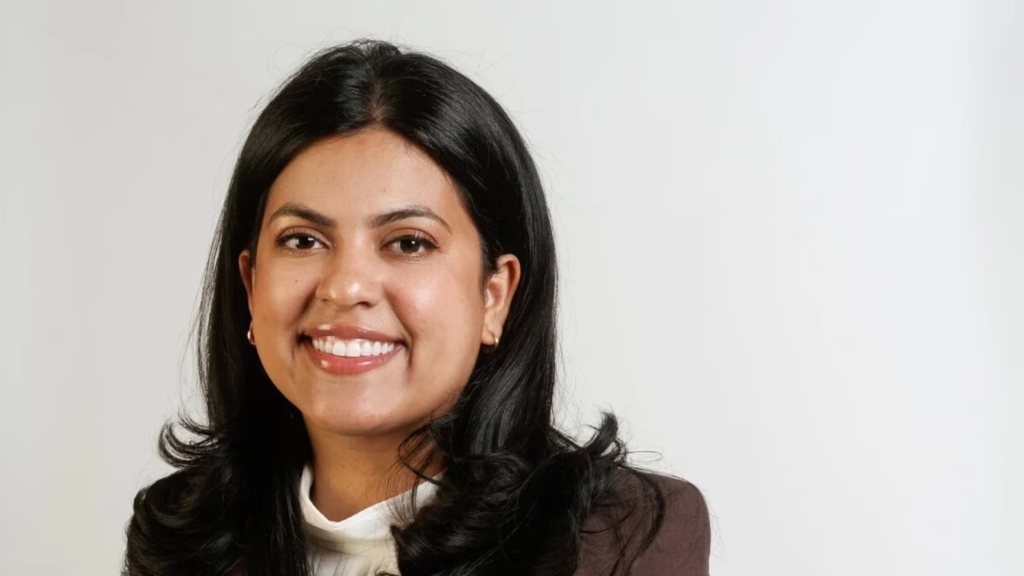
In a notable first for the U.S. capital, Rini Sampath has entered the Washington, D.C., mayoral race, becoming the first South Asian candidate to run for the city’s top elected office. The 31-year-old cybersecurity expert is campaigning on a sharply focused message: fix what residents deal with every day, from housing costs to broken sidewalks.
Her entry into the race is more than symbolic. It signals a shift in who sees themselves as viable contenders in American local politics, especially in a city where federal power often overshadows municipal concerns.
Who is Rini Sampath, and why is her candidacy significant?
Sampath’s story follows a familiar American arc, but with a distinctly modern twist. Born in Theni, Tamil Nadu, she moved to the United States at age seven and has spent over a decade living in Washington, D.C.. She currently works as a government contractor in cybersecurity, a background that brings a technical lens to civic management.
Representation meets real-world governance
Her candidacy stands out for two reasons:
- She is the first South Asian to run for mayor in Washington, D.C.
- She represents a growing cohort of professionals transitioning from tech and policy roles into elected office
In a city known for its diversity but limited representation at the top, this moment carries both symbolic and practical weight.
Responding to public scrutiny
Sampath has already faced online backlash, including comments questioning her place in the U.S. She responded directly, writing that she is a “proud immigrant” committed to making the American Dream accessible to all residents.
That response reflects a broader campaign tone: direct, unfiltered, and rooted in lived experience.
What is her “Fix the Basics” campaign about?
The core of the Rini Sampath Washington DC mayoral race is a platform built around everyday governance failures. Her slogan, “Fix the Basics,” is intentionally simple, but it targets issues that often define residents’ quality of life.
Key policy priorities
Sampath’s agenda focuses on:
- Affordable housing and rent stabilization
- Infrastructure repairs, including roads and pavements
- Faster emergency response times for 911 and 311 services
- Improved access to grocery stores and fresh food
- Safer, more walkable streets with better public transport integration
- Expansion of green public spaces
Why this approach resonates
In a city deeply engaged with federal politics, local governance can feel like an afterthought. Sampath is betting that voters want:
- Competence over grand promises
- Accountability over rhetoric
- Tangible improvements over long-term abstractions
How does she plan to address education and public services?
Beyond infrastructure, Sampath’s platform emphasizes schools and community well-being.
Education-focused commitments
Her proposals include:
- Maintaining safe and well-functioning school buildings
- Ensuring stable staffing levels
- Improving student attendance
- Expanding access to mental health support
These policies reflect a systems-level approach, treating education not as an isolated issue but as part of a broader civic ecosystem.
Public service delivery as a benchmark
Sampath has framed city performance around basic service delivery.
Her argument is straightforward: if emergency lines are slow, roads are broken, and food access is uneven, governance is failing at its most fundamental level.
What does the political landscape look like?
The Washington DC mayoral race is crowded, competitive, and historically tilted in one direction.
Key opponents in the race
Sampath faces several candidates, including:
- Janeese Lewis George
- Kenyan McDuffie
- Gary Goodweather
- Robert L Gross
- Rhonda Hamilton
A Democratic stronghold
Washington, D.C., has not elected a Republican mayor since 1975. That means:
- The Democratic primary is effectively decisive
- Candidates must differentiate within the same party rather than across party lines
Sampath has taken a fiscally grounded stance, pointing to a reported $1.1 billion budget shortfall and criticizing what she calls unrealistic promises from opponents.
Who is backing her campaign?
Support from community organizations is already shaping the narrative around her candidacy.
Early endorsements and outreach
Sampath has received backing from the American Hindu Coalition, which hosted a campaign-related gathering at an ISKCON temple in Washington, D.C.
This support highlights:
- Engagement with diaspora communities
- The growing political influence of South Asian Americans
- The role of cultural institutions in local elections
When are the elections, and what’s at stake?
The timeline for the race is already set, and it will move quickly.
Key dates
- Democratic primary: June 16
- General election: November 3
Why this election matters
This race is about more than leadership. It’s a test of:
- Whether voters prioritize local governance over national political identity
- How new candidates compete against established political figures
- The evolving face of political representation in U.S. cities
What makes this campaign different?
Sampath’s campaign is not built on sweeping ideological shifts. Instead, it focuses on operational competence.
A governance-first strategy
Her messaging emphasizes:
- Fixing existing systems rather than creating new ones
- Transparency about budget constraints
- Delivering measurable improvements within a single term
That approach could appeal to voters fatigued by political grandstanding and looking for practical results.
TL;DR
- Rini Sampath is the first South Asian candidate to run for mayor of Washington, D.C.
- Her campaign centers on “Fix the Basics,” targeting housing, infrastructure, and public services
- She faces a crowded Democratic field in a historically one-party city
- The primary on June 16 will likely determine the outcome
- Her candidacy reflects broader shifts in representation and voter priorities