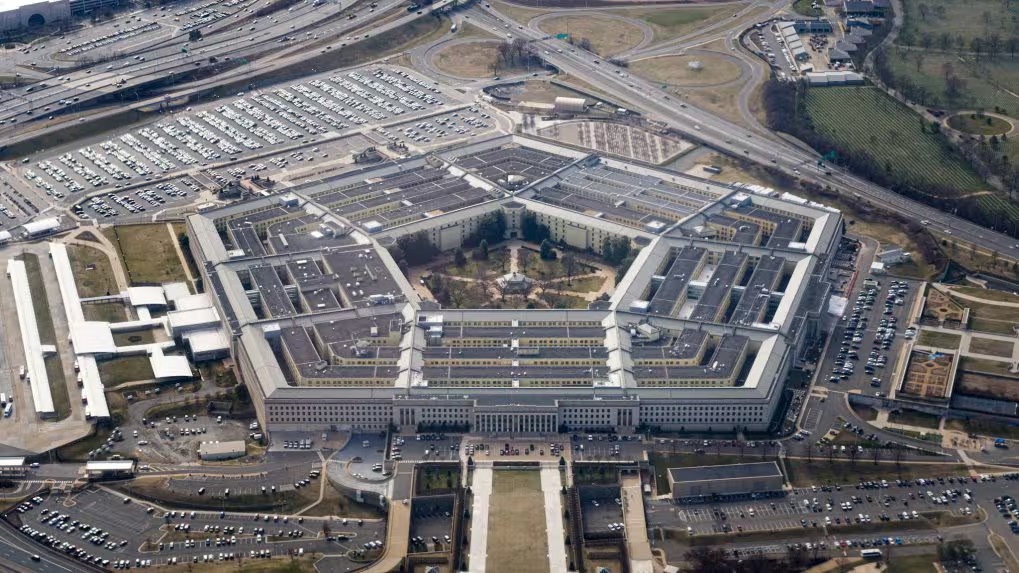
Within the first months of the escalating US-Iran war, a single number has begun to dominate the conversation in Pentagon: $200 billion. That figure, tied to ongoing and future military operations, is now at the center of a high-stakes debate over strategy, risk, and political feasibility.
Speaking to reporters, US Defense Secretary Pete Hegseth acknowledged the scale of the funding under consideration, while making clear it is far from final. “That number could move,” he said, framing the request as necessary to sustain both current combat operations and long-term readiness.
The remark, blunt in tone and expansive in implication, raises a deeper question: what exactly is the US buying with a potential $200 billion war budget?
What is the $200 billion Iran war funding request?
The proposed funding is not a finalized budget line but an emerging estimate tied to the widening scope of the Iran war. It reflects both immediate battlefield demands and preparation for prolonged engagement.
What the funding is expected to cover
At its core, the request is about replenishment and expansion:
- Ammunition stocks depleted by sustained operations
- Advanced weapons systems and missile defense
- Logistics, deployment, and troop support
- Intelligence and surveillance capabilities
- Cyber and information warfare tools
Hegseth emphasized that the Pentagon is not just looking to “refill” but to go “above and beyond,” signaling concerns about long-term readiness if the war stretches.
Why the number is still fluid
The $200 billion figure remains a moving target for several reasons:
- Operational uncertainty: The scale and duration of the war are unclear
- Political negotiation: Congress may push back on such a large request
- Strategic recalibration: Shifts in battlefield dynamics could alter funding needs
A senior administration official has already indicated skepticism within the White House about whether a request exceeding $200 billion would pass Congress in its current form.
Why does the Pentagon say such a large budget is necessary?
The justification offered by the Pentagon rests on a familiar but consequential argument: deterrence and dominance require sustained investment.
The cost of modern warfare
Modern conflicts are expensive not just because of troop deployment but because of technology:
- Precision-guided munitions can cost millions per unit
- Missile defense systems require constant replenishment
- Drones and UAVs, now central to warfare, need rapid production cycles
This is not a short-term operation with predictable costs. It resembles a rolling financial commitment, where each phase feeds into the next.
Preparing for escalation scenarios
Hegseth’s remarks suggest that the Pentagon is planning for worst-case outcomes:
- Expanded regional conflict
- Retaliatory strikes on US allies
- Reconstitution of Iran’s military capabilities
Budgeting, in this sense, is not just about today’s battlefield but tomorrow’s contingencies.
How does the Iran nuclear issue factor into the funding push?
A major driver behind the funding request is the perceived threat of Iran’s nuclear ambitions.
Conflicting intelligence assessments
There is no single agreed-upon view within the US government:
- Tulsi Gabbard recently stated that Iran’s nuclear enrichment program had been “obliterated.”
- Earlier intelligence reports suggested the program may still have residual capacity
This divergence matters. If the threat is diminished, the urgency for massive funding weakens. If not, the argument for sustained military pressure strengthens.
The administration’s stance
Hegseth reinforced the position of Donald Trump, arguing that allowing Iran to edge closer to nuclear capability is unacceptable.
The logic is straightforward:
- Even partial nuclear capability shifts regional power dynamics
- Deterrence becomes more complicated and riskier
- Preemptive or sustained action becomes more likely
In this framing, the funding is not just about fighting a war but preventing a strategic imbalance.
What role does information warfare play in the conflict?
Beyond missiles and troop movements, the US is also navigating a parallel battle in the digital space.
Iran’s internet blackout
Iran’s government has restricted internet access domestically, limiting communication and information flow. According to Hegseth, this is an attempt to control the narrative and suppress internal dissent.
US countermeasures
While details remain undisclosed, the Pentagon has confirmed efforts to bypass these restrictions and communicate with the Iranian population.
This introduces a new dimension to the conflict:
- Information dissemination becomes a strategic tool
- Digital infrastructure becomes a battleground
- Public perception inside Iran becomes a variable in the conflict
The AI complication
Hegseth also pointed to the growing role of AI-generated content, which is blurring the line between fact and fabrication.
This creates two immediate challenges:
- Verifying information in real time
- Preventing misinformation from shaping public opinion or policy decisions
Can Congress approve a $200 billion war budget?
Even if the Pentagon makes its case, the ultimate decision rests with Congress, and the path forward is far from certain.
Political hurdles
A funding request of this magnitude faces several obstacles:
- Fiscal conservatives wary of ballooning deficits
- Lawmakers are demanding clearer objectives and timelines
- Public opinion, which often shifts as wars extend
Historical context
For comparison:
- The Iraq and Afghanistan wars collectively cost trillions over time
- Initial funding requests in those conflicts were often smaller and grew incrementally
This raises a strategic question: is the Pentagon front-loading costs to avoid repeated requests or signaling a more expansive conflict from the outset?
Why this funding debate matters beyond the battlefield
The $200 billion figure is not just about military spending. It reflects broader implications for US policy and global stability.
Economic impact
Large-scale defense spending can:
- Increase federal deficits
- Shift budget priorities away from domestic programs
- Influence global markets, particularly the energy and defense sectors
Strategic signaling
A funding request of this scale sends a message:
- To allies: the US is committed to the long haul
- To adversaries: escalation will be met with sustained force
- To domestic audiences, the stakes are high and long-term
Risk of mission creep
One of the most persistent concerns in US military history is the gradual expansion of objectives.
Without clear limits, funding can:
- Extend timelines
- Broaden operational goals
- Increase both financial and human costs
TL;DR
- The Pentagon is considering a funding request exceeding $200 billion for the Iran war
- Pete Hegseth says the number is flexible and tied to evolving needs
- The funding would cover weapons, logistics, and long-term readiness
- Conflicting intelligence on Iran’s nuclear program complicates the urgency
- Information warfare and AI-driven misinformation are emerging as key factors
- Congressional approval remains uncertain amid political and fiscal concerns