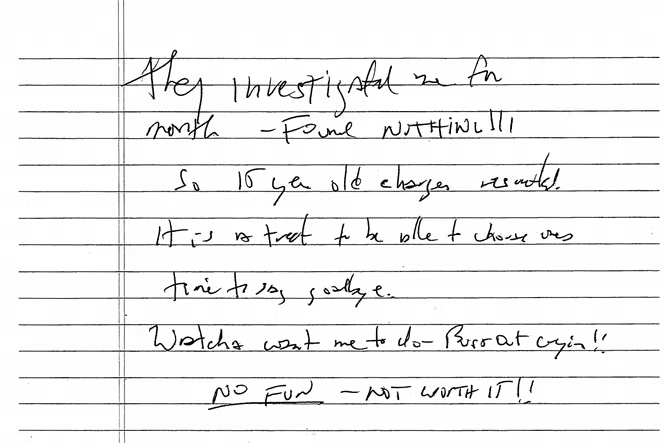
A handwritten note allegedly written by Jeffrey Epstein after a failed suicide attempt in 2019 has been made public following a court order in New York City.
The document, released after a petition from The New York Times, offers a rare glimpse into Epstein’s state of mind during the weeks between his arrest on federal sex trafficking charges and his death inside a Manhattan jail cell.
The note had remained sealed for years and is now drawing renewed attention to one of the most scrutinised inmate deaths in recent American history.
TL;DR
- A court order led to the public release of Jeffrey Epstein’s alleged suicide note from July 2019.
- The note was reportedly written after a failed suicide attempt in jail.
- Epstein referenced investigators and the criminal case against him.
- The release is renewing debate over the handling of Epstein’s detention and death.
- Questions about jail procedures, surveillance failures, and investigative inconsistencies continue to fuel public scrutiny.
What Did Jeffrey Epstein’s Alleged Suicide Note Say?
According to the newly released document, the handwritten note contained several fragmented and emotional statements.
Among the lines reportedly included:
- “They investigated for month — found nothing!!!”
- “So 16 year old charge results!”
- “It is a treat to be able to choose one’s time to say goodbye.”
The note was described in court filings and media reports as difficult to read and at times barely legible.
Because of the fragmented wording, legal analysts caution against drawing sweeping conclusions from isolated excerpts. However, the document appears to reflect Epstein’s frustration with the investigation and criminal charges he was facing at the time.
Why the Release of the Note Matters
The release matters because it adds another layer to the public record surrounding Epstein’s incarceration and death.
Jeffrey Epstein was arrested in July 2019 on federal sex trafficking charges involving underage girls. His case immediately became one of the most high-profile criminal investigations in the United States because of his connections to wealthy and politically influential individuals.
Weeks after his arrest, Epstein was found injured in his jail cell following what officials described as a suicide attempt.
He later died in August 2019 while being held at the Metropolitan Correctional Center in Manhattan. Authorities ruled the death a suicide by hanging, though the circumstances surrounding it sparked widespread skepticism and conspiracy theories.
The newly released note is significant because it offers direct evidence — if authentic — of Epstein’s mental state after the earlier jail incident.
How the Note Became Public
The note was reportedly unsealed after a legal effort by The New York Times seeking access to records connected to Epstein’s detention and death.
Court transparency advocates often argue that records tied to major criminal investigations should eventually become public unless there is a compelling reason to keep them sealed indefinitely.
In this case, the release reflects continuing public and media interest in:
- Epstein’s treatment while in custody
- Conditions inside the federal jail
- Whether warning signs were missed
- Broader accountability questions surrounding the case
The Questions That Still Surround Epstein’s Death
Even years later, Epstein’s death remains controversial.
Several factors fueled public suspicion and scrutiny, including:
- Malfunctioning or missing surveillance footage
- Guards allegedly failing to perform required checks
- Epstein is reportedly being removed from suicide watch
- Conflicting accounts about jail procedures
- Delays and irregularities in official reporting
Federal investigations later identified serious operational failures inside the jail, though authorities maintained the official ruling of suicide.
Breaking It Down: Why the note is drawing attention now
The note’s publication is reigniting debate because critics argue it may reveal warning signs that were not adequately addressed.
Some legal observers say the language appears emotionally distressed and fatalistic. Others caution that interpreting handwritten notes without broader context can be misleading.
Importantly, the note does not settle ongoing disputes about the circumstances surrounding Epstein’s death.
How Epstein’s Former Cellmate Became Relevant
Part of the renewed attention surrounding the note stems from testimony and records connected to Epstein’s former cellmate.
Following Epstein’s earlier jail incident in July 2019, questions emerged about:
- What happened inside the cell
- Whether the injuries were self-inflicted
- What warning signs may have existed beforehand
The involvement of former cellmates became significant because their accounts formed part of the investigative record reviewed by federal authorities and journalists.
While some records have since been released, important details remain disputed or incomplete.
Why the Epstein Case Still Resonates
The Epstein case continues to command public attention for reasons that go far beyond the note itself.
The scandal touched:
- Wealthy elites
- Political figures
- Business leaders
- Royalty
- Universities
- Financial institutions
It also became a broader story about:
- Power and accountability
- Failures within the criminal justice system
- Sex trafficking investigations
- Institutional transparency
For many Americans, unanswered questions about Epstein’s network and death became symbolic of deeper distrust in elite institutions.
That is one reason even years-old court records continue generating major headlines.
The Risk of Misinformation Around the Case
The Epstein case has also become fertile ground for misinformation and conspiracy theories online.
Because of that, readers should distinguish between:
- Official investigative findings
- Court documents
- Verified reporting
- Speculation circulating on social media
The release of the alleged suicide note is likely to intensify online speculation again, particularly because fragmented handwritten statements are easy to interpret selectively.
Responsible coverage requires careful sourcing and clear distinctions between allegation, evidence, and verified fact.
What Happens Next?
The release of the note could lead to:
- Additional legal motions seeking unsealed records
- Renewed public pressure for transparency
- Fresh media investigations into Epstein’s detention
- More scrutiny of federal jail procedures
However, it remains unclear whether any major new revelations connected to Epstein’s death investigation are forthcoming.
For now, the note adds another deeply unsettling piece to a case that continues to haunt American public life years after Epstein’s death.