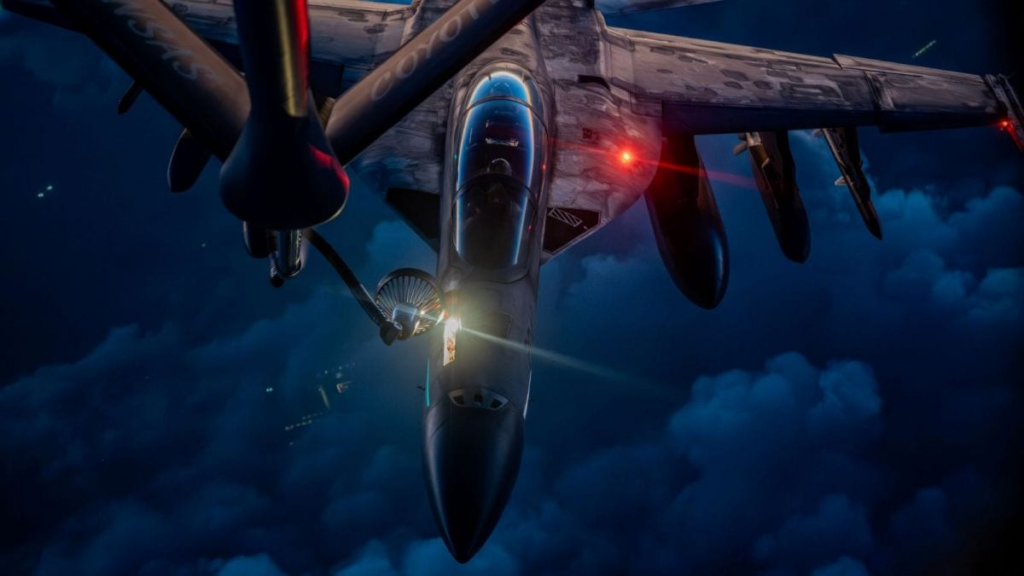
At least four crew members aboard a U.S. military refuelling aircraft have died after a KC-135 crash in Iraq, according to officials cited by the Associated Press. The incident occurred during ongoing American military operations linked to the escalating conflict with Iran.
The aircraft, a KC-135 aerial refuelling tanker, went down in western Iraq on Thursday while supporting operations in the region. U.S. officials said the crash was not caused by hostile fire or friendly fire, though the exact cause remains under investigation.
The tragedy comes as the U.S.–Israel military campaign against Iran enters its second week, raising concerns about rising casualties and operational risks in an already volatile region.
What Happened in the KC-135 Crash in Iraq?
U.S. officials confirmed that the aircraft involved was a KC-135 Stratotanker, a military refuelling plane used to extend the range of fighter jets and other aircraft.
According to U.S. Central Command, two aircraft were involved in the mission:
- One KC-135 tanker landed safely
- The second aircraft crashed in western Iraq
Officials said at least five crew members were on board the aircraft that went down.
Early reports indicate that at least four of the six crew members died, though authorities have not yet released the names of the victims pending notification of their families.
Central Command said more information will be provided once investigators gather additional details.
What Is the KC-135 Stratotanker?
The KC-135 Stratotanker is one of the U.S. military’s most important support aircraft.
Primary role
Its main function is aerial refuelling, allowing fighter jets, bombers, and reconnaissance aircraft to stay in the air much longer during combat missions.
Without tanker aircraft like the KC-135, many long-range operations would be impossible.
Key capabilities
The aircraft can:
- Transfer thousands of pounds of fuel mid-flight
- Refuel multiple aircraft during a single mission
- Support combat aircraft far from their home bases
- Operate during long-distance strike operations
Because of these capabilities, tanker aircraft are often critical to large military campaigns, particularly those involving long-range strikes.
A Military Aircraft With a Long History
The KC-135 tanker is based on the same airframe design as the Boeing 707 commercial airliner, one of the most recognisable jetliners of the 20th century.
The aircraft first entered U.S. military service more than 60 years ago, making it one of the longest-serving planes in the Air Force fleet.
Despite its age, the aircraft has undergone extensive upgrades, including:
- Modern avionics systems
- Structural reinforcement
- Engine replacements
- Updated refuelling equipment
According to the U.S. Congressional Research Service, the Air Force operates hundreds of KC-135 aircraft across active duty and reserve units.
Fleet breakdown
As of last year:
- 151 KC-135s in active service
- 163 aircraft in the Air National Guard
- 62 aircraft in the Air Force Reserve
This totals 376 aircraft still operating globally.
Why Was the Aircraft Operating Over Iraq?
The crash occurred as the U.S. and Israel continue a joint military campaign against Iran that began in late February.
The campaign involves:
- Airstrikes targeting Iranian military infrastructure
- Operations supporting regional allies
- Defensive actions against Iranian missile and drone attacks
Tanker aircraft, such as the KC-135, are essential during these operations because they allow fighter jets to:
- Remain on patrol longer
- Conduct extended bombing missions
- Operate far from their home bases
As a result, refuelling tankers often operate behind the front lines but still inside active operational zones.
How Many U.S. Casualties Have Occurred in the Iran Conflict?
The latest crash adds to the growing toll of the conflict.
According to the Pentagon:
- Seven U.S. troops have been killed in combat
- Around 140 service members have been injured
- Eight injuries are classified as severe
Six of the deaths occurred when an Iranian drone struck an operations center at a civilian port in Kuwait early in the conflict.
Those troops were members of the Army Reserve logistics units, responsible for maintaining supplies for U.S. forces in the region.
Another American service member later died after being wounded in a missile attack on Prince Sultan Air Base in Saudi Arabia.
Previous Aircraft Losses During the Operation
The tanker crash is now the fourth aircraft loss publicly acknowledged by the U.S. military during the campaign.
Last week, three F-15E Strike Eagle fighter jets were mistakenly shot down by friendly fire from Kuwaiti defences.
All six pilots aboard those aircraft successfully ejected and survived, according to the U.S. military.
While no fatalities occurred in that incident, it highlighted the complex risks involved in large multinational military operations.
Why Tanker Aircraft Are Critical in Modern Warfare
Modern air warfare relies heavily on aerial refuelling systems.
Without tanker aircraft, combat jets would be limited by fuel capacity and would need to return to base much sooner.
Aerial refuelling enables:
- Long-distance strike missions
- Continuous air patrols
- Rapid deployment across regions
- Strategic flexibility during combat
For example, a fighter jet that normally has a few hours of flight endurance can remain airborne for many additional hours when refuelled multiple times.
Because of this, tanker aircraft are considered force multipliers in military planning.
What Happens Next After the Crash?
Military investigators will now examine several possible causes of the crash, including:
- Mechanical failure
- Weather conditions
- Pilot error
- Mid-air operational complications
Officials emphasised that no evidence currently suggests enemy involvement.
U.S. Central Command has said further updates will be released once the investigation progresses.
In the meantime, the focus remains on supporting the families of the crew members who were aboard the aircraft.
TL;DR
- A KC-135 refuelling aircraft crashed in western Iraq during U.S. operations linked to the Iran conflict.
- At least four crew members have died, according to early reports.
- The crash was not caused by hostile or friendly fire, officials say.
- Tanker aircraft like the KC-135 are critical for mid-air refuelling during combat missions.
- The incident marks the fourth aircraft loss acknowledged during the current military campaign.