

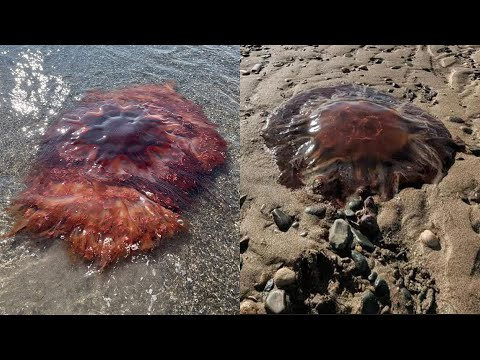
A massive, crimson-colored jellyfish with hundreds of stinging tentacles has been spotted on Maine beaches, sparking warnings from local officials.
Over the weekend, beachgoers in Maine encountered an unusual sight: a 5-foot-wide lion’s mane jellyfish washed ashore, its bell-shaped body oozing what some described as “bloody blobs of goo.” The striking—and potentially dangerous—sea creature prompted the City of Portland to issue a public warning: “Don’t touch it! They sting. Observe it. They’re so interesting to watch, and pretty too.”
While jellyfish sightings aren’t uncommon, the size and frequency of these appearances have raised eyebrows. Here’s what you need to know about these gelatinous giants and why experts are urging caution.
What Is a Lion’s Mane Jellyfish?
The lion’s mane jellyfish (Cyanea capillata) holds the title of the largest jellyfish species in the world. Key features include:
- Size: Up to 8 feet in diameter (though most are smaller).
- Tentacles: Can stretch over 100 feet long in the open ocean.
- Color: Ranges from deep red to golden-orange, resembling a lion’s mane.
- Sting: Delivers a painful, venomous sting that can cause irritation, rashes, or even respiratory distress in rare cases.
These jellyfish thrive in colder waters, making the New England coast a prime habitat.
Why Are They Washing Ashore Now?
Reports of lion’s mane jellyfish in Maine and Massachusetts have increased this summer, more than usual, according to local observers. Possible reasons include:
- Warmer Waters: Climate change may be shifting marine life patterns.
- Seasonal Blooms: Summer is peak season for jellyfish in the North Atlantic.
- Currents & Winds: Strong tides can push them toward shorelines.
The Ipswich Police Department in Massachusetts also issued a warning after multiple jellyfish sightings, advising swimmers to stay alert.
What Should You Do If You See One?
Authorities recommend:
✅ Keep Your Distance – Even dead jellyfish can sting.
✅ Report Sightings – Notify lifeguards or local wildlife officials.
✅ Do Not Handle – Their tentacles contain stinging cells (nematocysts) that remain active after death.
Myth Busting: Contrary to popular belief, urine does not effectively treat jellyfish stings. Instead, rinse the area with vinegar or saltwater and seek medical help if needed.
Why This Matters
While lion’s mane jellyfish are a natural part of marine ecosystems, their growing presence near shorelines poses risks to swimmers, fishermen, and beachgoers. Their stings, though rarely life-threatening, can be extremely painful—especially for children or those with allergies.
Marine biologists suggest that tracking these sightings helps researchers understand shifts in ocean habitats. If you encounter one, snap a photo (from a safe distance) and share it with local marine conservation groups.


