
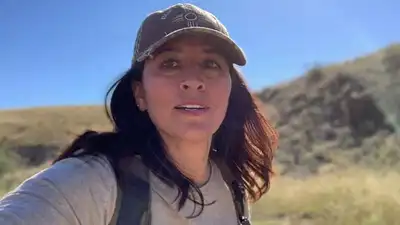
The discovery of Melissa Casias’ remains in a remote stretch of northern New Mexico has revived scrutiny around a string of disappearances involving scientists tied to sensitive government research programs.
Casias, a 54-year-old administrative employee at Los Alamos National Laboratory, vanished nearly a year ago after leaving behind her phones and wiping their data. Authorities now say a hiker discovered her remains in the Carson National Forest alongside a handgun, but many key questions remain unanswered—including how she died and how long she had been there.
The case is drawing renewed public attention not only because of where Casias worked, but because her disappearance came amid a growing list of missing or deceased researchers connected to nuclear, aerospace, and defense-related work in the United States.
What happened to Melissa Casias?
New Mexico State Police confirmed that human remains found in the McGaffey Ridge area of Carson National Forest belong to Melissa Casias, who disappeared in June 2025.
A hiker reportedly discovered the remains about six miles from Casias’ last known location. Investigators also found a handgun near the body and are now trying to determine whether the weapon belonged to Casias or another individual.
Officials have not yet released:
- A cause of death
- A timeline for when she died
- Whether foul play is suspected
- Details about forensic evidence recovered at the scene
The Office of the Medical Investigator in New Mexico is conducting the autopsy and forensic review.
Why the location matters
The McGaffey Ridge area is rugged terrain within Carson National Forest and part of a broader U.S. Forest Service restoration project. The isolated nature of the area may explain why the remains went undiscovered for months.
Still, investigators face difficult questions about how Casias reached the location and whether she was alone.
Who was Melissa Casias?
Melissa Casias worked as an administrative assistant at Los Alamos National Laboratory (LANL), one of the most secure and historically significant research facilities in the United States.
LANL is best known for its role in the Manhattan Project and today remains central to maintaining America’s nuclear weapons stockpile and national security research programs.
According to reports, Casias had access to:
- Internal scheduling information
- Employee logistics
- Campus access coordination
- Operational administrative systems
While she was not publicly identified as a scientist or engineer, her position reportedly placed her within the lab’s sensitive operational ecosystem.
Reports about her security clearance
Some reports claim Casias lost her security clearance shortly before she disappeared due to financial issues. Authorities have not publicly confirmed those claims.
That detail has nevertheless fueled speculation online, especially given the lab’s role in nuclear defense work.
This is an important point where editors should avoid overstating unverified claims. Any mention of security clearance issues should be carefully sourced and attributed.
The day Melissa Casias disappeared
Casias disappeared after what initially appeared to be a normal workday.
According to her husband, Mark Casias — who also worked at Los Alamos National Laboratory — she drove him to work on the morning she vanished.
He later told investigators that Casias returned home after realizing she had forgotten her security badge. But reports indicate she may already have had the badge with her because it was required to pass through security checkpoints.
That discrepancy became one of the earliest unanswered questions in the investigation.
Casias was last seen around 2:20 p.m. walking east on State Road 518, approximately three miles from her home in Ranchos de Taos.
Investigators later learned she had:
- Cleared data from her mobile phones
- Left the devices behind
- Walked away alone
Those actions suggested planning rather than a spontaneous disappearance, though authorities have never publicly identified a motive.
Why is the case attracting national attention?
On its own, the disappearance of a laboratory employee would likely remain a regional news story. But Casias’ case has become part of a broader narrative involving scientists, engineers, and defense-linked researchers who have recently gone missing or died under unusual circumstances.
Several names repeatedly appear in online discussions and media coverage.
Anthony Chavez
Anthony Chavez, 79, reportedly worked at the same laboratory and vanished in May 2025 after leaving his home.
Public information about his disappearance remains limited.
Steven Garcia
Another reported laboratory-linked disappearance involved Steven Garcia, who allegedly vanished in August 2025.
Authorities have released few details about the case.
William Neil McCasland
Retired Air Force General William Neil McCasland reportedly disappeared from his New Mexico home earlier in 2025 after leaving behind his phone and wallet while carrying only a handgun.
Some reports claim McCasland had involvement with classified aerospace or unidentified aerial phenomena programs during his military career. Those claims remain difficult to independently verify.
Monica Jacinto Reza
NASA aerospace engineer Monica Jacinto Reza also reportedly disappeared after alleged professional connections to a project called “Mondaloy,” described in reports as a high-performance superalloy tied to rocket engine technology.
No official agency has publicly confirmed links between Reza and McCasland.
Are these disappearances connected?
Right now, there is no verified evidence publicly linking these cases together.
That distinction matters.
The overlap between defense research, aerospace technology, and nuclear programs naturally attracts speculation online, particularly when disappearances involve individuals connected to government work.
But experts caution against drawing conclusions without evidence.
Several factors can contribute to the perception of a pattern:
- National security work often carries secrecy
- Many defense facilities are located in remote regions
- Missing-person cases involving government employees receive outsized attention online
- Social media accelerates conspiracy theories before investigations conclude
Still, the clustering of cases in New Mexico and among people tied to sensitive programs has kept public interest high.
The role of internet speculation
Online forums and social media users have increasingly framed these disappearances as part of a larger mystery involving classified research, aerospace projects, or national security operations.
So far, law enforcement agencies have not publicly supported those theories.
This is an important editorial line to maintain throughout coverage:
- Distinguish verified facts from speculation
- Attribute claims carefully
- Avoid implying connections without evidence
Why Los Alamos National Laboratory remains under scrutiny
Los Alamos has long occupied a unique place in American history.
Founded during World War II as part of the Manhattan Project, the laboratory remains deeply associated with nuclear weapons research and classified federal work.
That history means incidents involving employees often receive heightened attention.
Today, the lab works on:
- Nuclear stockpile stewardship
- National defense technologies
- Supercomputing
- Energy research
- Advanced materials science
The combination of secrecy, national security, and scientific research makes any unexplained disappearance involving employees particularly sensitive.
Suggested external links:
- U.S. Department of Energy
- Los Alamos National Laboratory official site
- FBI guidance on missing persons investigations
What investigators are focusing on now
With Casias’ remains recovered, investigators will likely focus on several key questions:
Was her death self-inflicted, accidental, or criminal?
The handgun found beside the body will likely become central to the investigation.
Ballistics testing, ownership tracing, and forensic evidence could help determine whether another person was involved.
Why were her phones wiped?
Investigators may attempt to recover deleted data or determine whether the devices were intentionally cleared to conceal communications or plans.
How did she travel to the forested area?
Authorities may revisit surveillance footage, vehicle records, or witness statements to reconstruct her movements after she was last seen on State Road 518.
Was her work connected in any way?
At present, there is no public evidence linking Casias’ employment to her disappearance or death.
Still, because she worked within a high-security federal environment, investigators will likely review workplace records and communications carefully.
The larger public fascination with missing scientists
Cases involving scientists or government researchers tend to generate intense public attention because they combine two powerful themes:
- Advanced or classified technology
- Unexplained disappearances
Historically, similar stories have fueled decades of speculation — especially during periods of geopolitical tension or rapid technological competition.
But experts in national security reporting often stress a simpler reality: unusual cases become more visible when they involve high-profile institutions.
That does not automatically mean the cases are connected.
TL;DR
- Melissa Casias, a Los Alamos National Laboratory employee who disappeared in June 2025, has been found dead in New Mexico.
- Her remains were discovered in Carson National Forest alongside a handgun.
- Authorities have not yet determined the cause or timing of death.
- Casias had reportedly wiped her phones before disappearing.
- Her case has drawn attention because several scientists and defense-linked researchers have recently gone missing or died under unusual circumstances.
- No verified evidence currently links those cases together.