
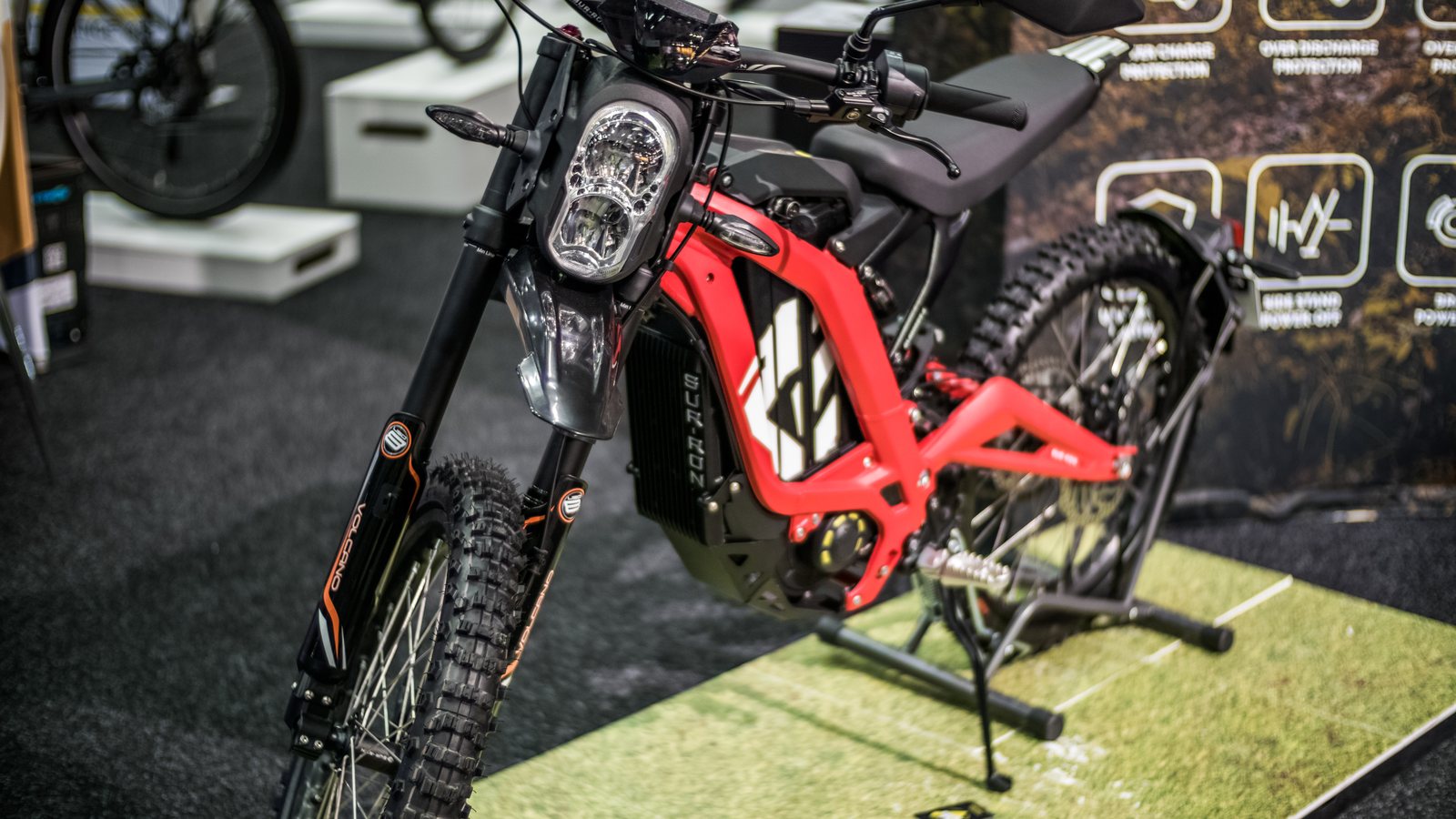

Orange County’s district attorney has charged 12 parents this year for letting their children ride e-motos. These electric motorcycles are illegal for anyone under 16 in California. For most families, the e-bike vs e-moto question comes down to three numbers: 750 watts, 20 mph on the motor alone, and working pedals.
That matters well beyond Orange County. E-motos look a lot like mountain bikes. California State Parks says retailers have often sold them as e-bikes. Under state law they are off-road motorcycles.
Orange County has charged 12 parents since January
In May, District Attorney Todd Spitzer’s office set up a unit called RIDE SAFELY to review e-bike and e-moto cases. On October 21 it announced charges against six more parents, bringing the total to 12.
The cases follow a pattern. One 11-year-old crashed into a pickup truck on an e-moto with a 1,200-watt motor, the release says. Another father claimed his 12-year-old’s Surron, which can reach 50 mph, was a Christmas present, the DA’s office said.
The day before, prosecutors charged the parents of 13-year-old Benson Nguyen with child endangerment. Police said he was going more than 40 mph in Garden Grove in May when he crashed into a light pole, CBS News reported. He died at a hospital.
His father faces up to six years in prison if convicted on all counts, CBS Los Angeles reported. His mother faces up to a year in county jail.
“I need to send a message to save other kids’ lives,” Spitzer told CBS News. “I’ve raised two kids,” he added, but “there has to be consequences.”
Three numbers decide whether it’s a bicycle
Federal law sets the baseline. A low-speed electric bicycle has working pedals, a motor under 750 watts, and a motor-only top speed under 20 mph. That definition drives federal product safety rules, while states decide who rides what, and where.
California uses three classes, set out in a May 2026 Highway Patrol bulletin. Class 1 assists only while you pedal. Class 2 adds a throttle. Class 3 is pedal-assist to 28 mph.
Every e-bike sold in the state must carry a permanent label showing its class, top assisted speed and wattage. We built this check from the statutes.
| Type | Motor | Motor-powered speed | Pedals, throttle | Who can ride on California streets |
|---|---|---|---|---|
| Class 1 e-bike | Up to 750 W | Assist ends at 20 mph | Pedals; no throttle | Any age; helmet under 18 |
| Class 2 e-bike | Up to 750 W | Throttle ends at 20 mph | Pedals plus throttle | Any age; helmet under 18 |
| Class 3 e-bike | Up to 750 W | Pedal assist to 28 mph | Pedals; speedometer | 16 and older; helmet for all |
| Off-highway e-moto | Often 5,000 W+ peak | Often 45 mph+ | Throttle; no factory pedals | No one. Private land or off-road areas |
| Street-legal motorcycle | Any | Any | Throttle | Motorcycle license, plates, insurance |
Sources: California Vehicle Code sections 312.5, 21212, 21213 and 436.1; State Parks e-moto chart.
Fail any one test and it isn’t an e-bike. Modifying a bike past those limits, or removing its pedals, also ends its e-bike status, the CHP says. Riders of true e-bikes need no license, registration or insurance.
Sur-Ron-style e-motos can never be made street-legal
On January 1, California added a legal definition of the off-highway electric motorcycle, through SB 586. It covers two-wheelers built mainly for off-road use, with a straddle seat and no factory pedals. State Parks names Sur-Ron, Talaria and E Ride Pro among the makers.
The numbers in that bulletin’s comparison chart explain the risk. A Sur-Ron Light Bee X tops out at 47 mph with a 6,000-watt peak motor, eight times the e-bike limit. State Parks lists it as built for adults.
Bolting on pedals doesn’t change that. The bulletin says these bikes can’t be made street-legal at all.
Selling or advertising one as an “electric bicycle” has been a crime since SB 1271, signed in September 2024. Since January, police can also tow an unlicensed rider’s electric two-wheeler if it tops 20 mph on the motor. The same law covers a Class 3 bike ridden by someone under 16.
So a Surron bought for a 12-year-old is a vehicle that child can’t legally ride on any public street. Several of the charged parents had been warned by police before, according to the DA’s releases.
E-bike injuries rose about ninefold in a few years
The Consumer Product Safety Commission’s April 2026 report estimates 59,200 emergency room visits involving e-bikes in 2024. From 2017 through 2021 the average was about 6,300 a year. By our calculation that is roughly nine times higher.
The agency knows of 310 e-bike deaths from 2017 through 2024, including 97 in 2024. Collisions with moving or parked motor vehicles caused 170 of them. That is well above the “more than 125” US deaths the Orange County DA cites. CPSC counts e-bikes by the federal definition and doesn’t report e-motos separately.
The Orange County figures are local but grim. The DA’s office says e-bike and e-moto injuries are now the top reason children there land in the emergency room. Children aged 11 to 14 account for 61.7% of e-moto crashes, it says, citing state crash records.
Families outside California face different rules. New Jersey scrapped the three-class system in a law signed in January. Riders under 15 now can’t use e-bikes there, News 12 reported. Those aged 15 and 16 need a special license.
Check the label before it goes under the tree
High-profile crashes, including Pax Jolie-Pitt’s e-bike accident in 2024, have kept the subject in the news. For a parent shopping now, the practical test is short.
Look for the class label with the wattage and top assisted speed printed on it. Foot pegs instead of pedals, an “off-road only” warning or a listed motor speed above 28 mph all mean a motorcycle in California. A Class 3 bike is off-limits to anyone under 16 there.
The RIDE SAFELY unit reviews every potential e-moto case in the county, the DA’s office says. Christmas is nine weeks away, and its latest case list already includes one holiday gift.