
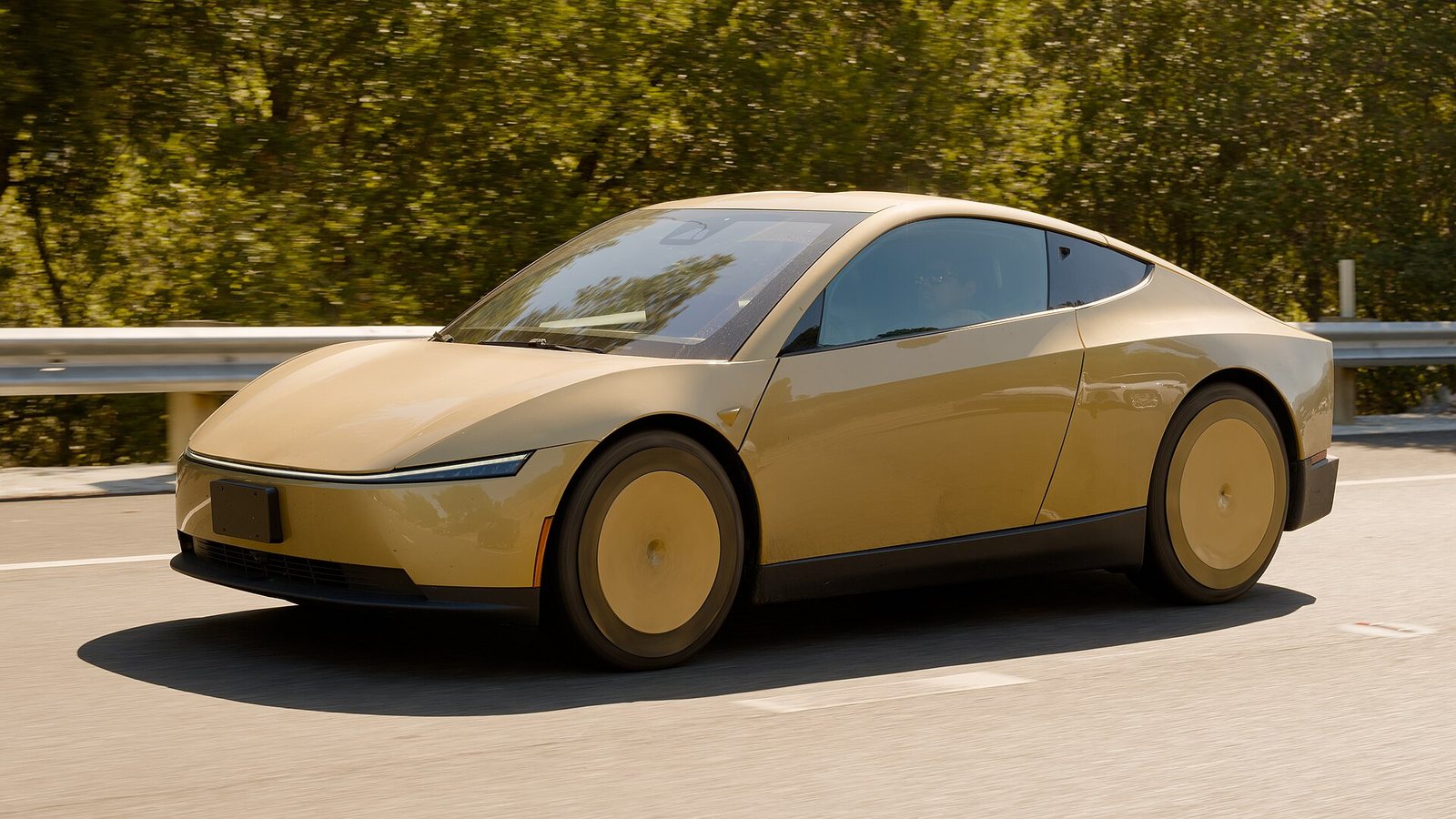

Tesla says the first privately owned cars could join its Robotaxi fleet around the second quarter of 2027. Ashok Elluswamy, who runs Tesla’s AI software, gave that date on the company’s third-quarter earnings call on Oct. 21.
He framed it as an estimate, not a launch date. “We suspect somewhere around Q2 next year is when we can turn on some of the first customer vehicles to be part of the Robotaxi fleet,” he said. He was answering a top shareholder question about unsupervised Full Self-Driving in owners’ cars.
The catch is where those cars could drive themselves. As Electrek’s Fred Lambert noted, a customer car would go unsupervised only inside Tesla’s existing Robotaxi zones, under Tesla’s management. That is a long way from a Tesla that drives its owner anywhere.
What Tesla actually said on the call
Elluswamy said the software in the Cybercab and in the Model Y is “the same.” Tesla plans to ship it to customers “pretty soon” as part of its FSD V15 release, he said.
The extra step, in his words, is making sure “the customer Model Ys can be part of the geo-fences and the fleet management that Tesla has for it to be fully autonomous.” Geofences are the mapped zones where Tesla lets its cars drive without a human. Fleet management is the dispatch and remote-support system behind the service.
Tesla’s written Q3 2026 update, filed with the SEC, does not mention the customer-car plan. It reports “nearly two million cumulative unsupervised miles” for Robotaxi by the end of September, eight times the previous quarter’s total.
Elluswamy said Tesla now operates in “six cities.” The Cybercab, which began carrying riders in Austin on Sept. 3, comes to Dallas next month, Tesla North reported.
The call left the owner’s side of the deal blank. Nobody said which cars qualify beyond “customer Model Ys,” how owners get paid, or who insures the car. Elluswamy did say limits could “pretty quickly become regulatory.”
A decade of robotaxi promises, and what happened
The idea is Musk’s own, and it is ten years old. Here is how the promise has moved:
- July 20, 2016: In his “Master Plan, Part Deux”, Musk wrote that owners would be able to “add your car to the Tesla shared fleet just by tapping a button” once regulators approved true self-driving. No owner has been able to do this.
- April 22, 2019: At Tesla’s Autonomy Day, Musk said “we’ll have over a million robotaxis on the road” within about a year, TechCrunch reported. Paid rides began on June 22, 2025, in 10 Model Ys in Austin, with a safety monitor on board.
- July 2024: Musk said he would be “surprised” if Tesla lacked unsupervised self-driving the next year, per Electrek. The first rides with nobody from Tesla on board came on Jan. 22, 2026, in a few Austin cars.
- July 2025: Musk promised owners FSD “for unsupervised personal use by the end of this year in certain geographies,” Electrek reported. It did not happen.
Tesla does tend to deliver eventually. The Semi reached customers in September, nearly nine years after its reveal. But Musk’s dates have rarely held, so treat Q2 2027 as a target, not a schedule.
Millions of older Teslas are already ruled out
The biggest eligibility question has a partial answer already. In April, Musk said “Hardware 3 simply does not have the capability to achieve unsupervised FSD,” TechCrunch reported. That covers cars sold from 2019 to 2023. Owners who paid for FSD will need a new computer and cameras.
So the realistic pool is newer cars with Tesla’s AI4 computer, though Tesla has not confirmed even that. Elluswamy only named the Model Y.
Interest in the software is rising. CFO Vaibhav Taneja said “over 75% of deliveries in North America” included a paid FSD sign-up at delivery. Every new car came with a free first month, so that counts sign-ups, not long-term payers. Active subscriptions reached 1.74 million, up from 1.10 million in Q2.
Who gets paid, and who answers to regulators
Tesla has given no revenue split for 2027. The only number on record is from 2019, when Musk said Tesla would keep 25% to 30% of fares from owners’ cars, per TechCrunch.
Regulation falls on the fleet operator. Since May 28, 2026, any company running automated vehicles commercially in Texas has needed an authorization from the state DMV under Senate Bill 2807. Owners’ cars would presumably run under Tesla’s authorization, though Tesla has not said so.
California is harder. Tesla’s Bay Area service still carries a safety driver in every car, Electrek reported. An owner’s car added to that service would presumably face the same rule. Tesla has been working toward a California service since 2025.
Safety data is self-reported so far. In July, Elluswamy claimed “zero notable incidents over 380,000 miles” of unsupervised driving, Fox Business reported. Nobody outside Tesla has published a check of those figures.
The Cybercab comes first
Tesla’s priorities put its purpose-built car ahead of yours. Musk said on the call that the “vast majority” of Cybercabs will be Tesla-owned. Vehicle engineering chief Lars Moravy said Tesla is “trying to get Cybercabs to customers by the end of this year.”
That is the steering-wheel-free two-seater Tesla unveiled in October 2024. Tesla plans to sell it before saying how Model Y owners can rent theirs out. Its latest reveal, the jumping Roadster, came with a 2028 production date.
The next checkpoint is FSD V15, the software Tesla says customer cars need before any can join the fleet. Elluswamy said it reaches customers “pretty soon.”