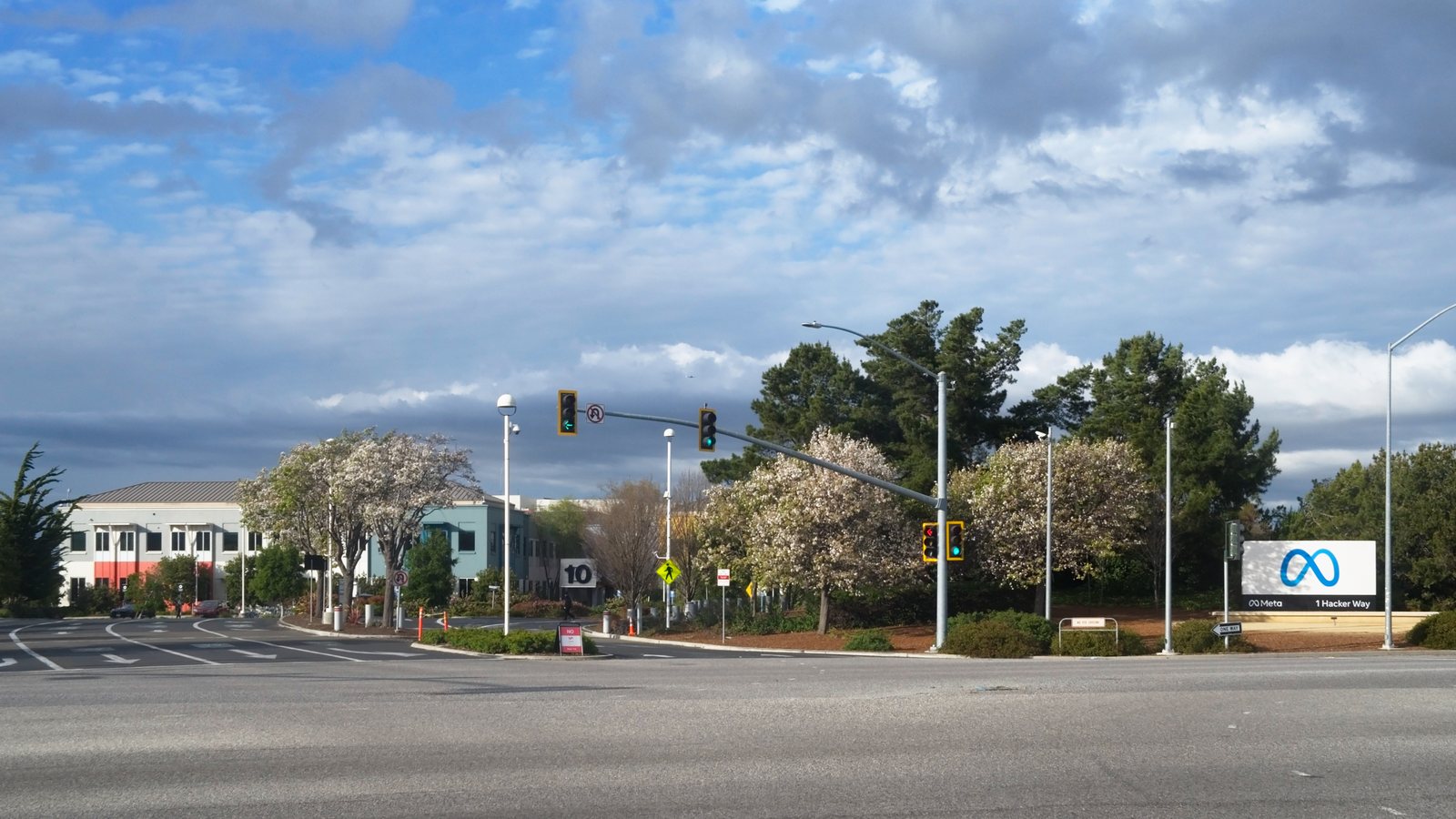
Facebook users won’t get a check. The $25 billion a New Mexico judge ordered Meta to pay on October 21 is a civil penalty owed to the state. It isn’t damages for Facebook users. The state constitution sends consumer-protection fines to education, and the money stays frozen while Meta appeals, according to the Associated Press.
That makes this the largest penalty ever imposed on Facebook’s owner, five times the Federal Trade Commission’s 2019 fine. It also rests on an unusual count. Every New Mexican who could have seen a misleading Facebook statement was a separate violation.
The money is earmarked for New Mexico schools, not users
Attorney General Raúl Torrez brought the case in 2021 under the state’s Unfair Practices Act. A Santa Fe jury found Meta liable in September, and Judge Francis J. Mathew set the penalty on Wednesday.
“We may have paid for the construction of schools for the next 100 years,” Torrez told reporters. He acknowledged that the appeal would hold the money up, AP reported.
For a state of about 2.1 million people, that is an enormous sum. New Mexico’s general fund budget is roughly $11 billion, KOB-TV reported. The award is more than twice that.
Facebook users did get money from Cambridge Analytica once, through a different route. A private class action settled for $725 million in 2022.
Claimants got an average of about $29.43 in September 2025, according to a court filing cited by CBS News. Claims closed in 2023, so there is no new payout to sign up for.
How 26 statements became 43.9 million violations
The case goes back to 2018. That year it emerged that a personality quiz had pulled data from roughly 87 million Facebook profiles. The data went to Cambridge Analytica, a political consulting firm whose clients included Donald Trump’s 2016 campaign.
New Mexico argued that Facebook then misled the public about how much control users had over their data.
The jury found 26 of Facebook’s public statements unlawful and willful, according to the written judgment PPC Land published in detail. They were made on earnings calls, in interviews and in newsroom posts, and the judgment names Mark Zuckerberg and Sheryl Sandberg. “Facebook promised users that they (the users) controlled their data. This was false,” the judge wrote, AP reported.
The violation count comes from a multiplication. For each unlawful statement, jurors decided who its expected audience was. It was either the state’s 1,386,648 monthly Facebook users in mid-2020 or its 2.1 million residents.
Each person in that audience counted as one violation, for a total of 43,899,720. That method is Meta’s main target. Meta lawyer Matt Nicholson told the court on October 1 that the jury never found any New Mexican “heard or saw these statements, or was harmed by them,” AP reported.
The judge cut a $219 billion maximum to $25 billion
State law caps the penalty at $5,000 per violation. At that rate, the judgment first awards New Mexico $219,498,600,000, then reduces it to $25 billion in the same sentence. According to PPC Land’s reading of the order, it doesn’t explain how the judge arrived at the lower figure.
The state had asked for $35 billion to $40 billion. It argued that only a sum big enough to move Meta’s stock would change its behavior. Meta proposed no more than $3.4 billion and called anything far higher unconstitutional.
By our calculation, $25 billion across 43,899,720 violations is about $569 per violation, or 11.4% of the legal maximum. The per-violation rate is modest. The total is huge because of the count, which is why Meta’s appeal goes after the count first.
No earlier Cambridge Analytica payout comes close
Meta has paid to settle Cambridge Analytica claims several times. New Mexico’s award is larger than all of the earlier ones combined:
| Case | Year | Amount | Who gets it |
|---|---|---|---|
| FTC privacy order | 2019 | $5 billion | Federal government |
| User class action | 2022 | $725 million | Users who filed claims (about $29 each) |
| 46 states and 2 territories | 2026 | $459.3 million | State governments |
| New Mexico judgment | 2026 | $25 billion | New Mexico education funds |
The state settlement figure is the least known. In August, Meta agreed to a deal with 52 attorneys general over harm to teenagers. Its earnings release puts that deal at up to about $18.59 billion.
Tech Policy Press found a separate $459,293,017.80 payment inside it. That money released Meta from other states’ Cambridge Analytica claims.
New Mexico and Florida didn’t sign that deal, AP reported. So one state that went to trial alone has won about 54 times what 48 jurisdictions accepted together.
This is also New Mexico’s second big win against Meta this year. In a separate child-safety case, a jury ordered $375 million in March. A judge added $567 million in August, KUNM reported. Questions about Meta and user data haven’t stopped with Facebook either, as its Muse AI agent’s address leak showed last month.
Meta’s appeal, and 15% interest, come next
Meta says it will appeal. Chief Legal Officer C.J. Mahoney said the ruling “makes it all but impossible to do business in the state of New Mexico,” in a statement reported by CBS News. He called the case an attempt “to impose a tax on speech.”
Waiting is expensive. The judgment sets interest at 15% a year until the penalty is paid. By our math, that is $3.75 billion a year, or about $10.3 million a day, before any compounding.
One year of interest alone would exceed the $3.4 billion Meta said the whole case was worth. The appeal could also shrink the award if a higher court throws out some of the violation count.
Meta shares rose about 2%, to $707.81, in Wednesday afternoon trading, CBS reported.
The company reported third-quarter results later that day. Revenue rose 26% to $64.6 billion, and the results included a $9.89 billion charge for the teen settlement. Meta also announced a new class of non-voting Class C shares, effective in January 2027.
The release didn’t mention New Mexico. The penalty is roughly what Zuckerberg’s paper fortune gained in a single-day rally in September.
The case isn’t finished in Santa Fe either. The state also wants an injunction forcing changes to Meta’s practices. Judge Mathew has held off on that until both sides file further briefs.