Quick Summary
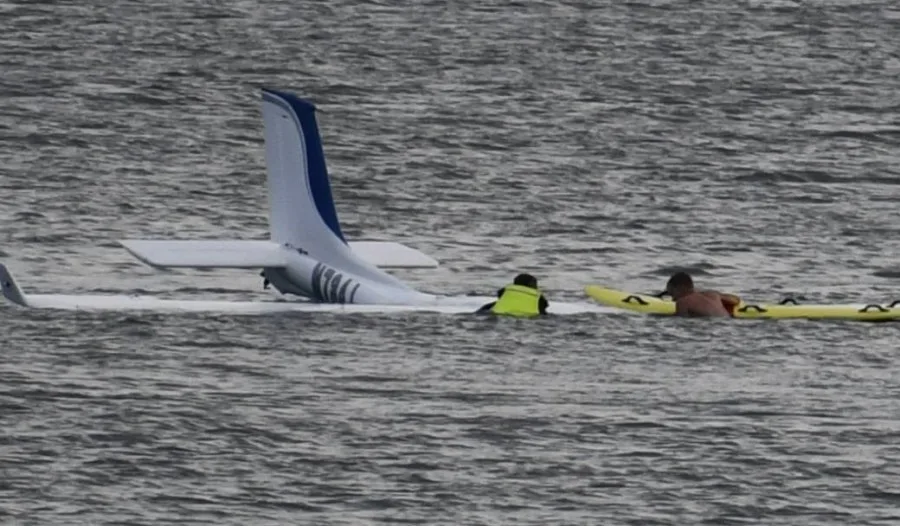
A single-engine aircraft crashed into the ocean near Oak Island, North Carolina, on Saturday night. The pilot, the only person onboard, survived and was treated for non-life-threatening injuries. A coordinated response by local emergency services and the US Coast Guard helped rescue the pilot and recover the plane. The FAA is investigating the cause.
What happened off the coast of Oak Island?
A single-engine aircraft made a dramatic emergency water landing off the coast of Oak Island, North Carolina, on Saturday evening, in a scene that stunned beachgoers and triggered a swift, multi-agency rescue effort. The crash occurred around 7:30 p.m. near 705 Ocean Drive, not far from the Oak Island Pier.
According to local officials, the pilot—who was the sole occupant of the aircraft—was rescued and treated for non-life-threatening injuries after being pulled from the water. A witness fishing nearby captured the moment on video, exclaiming: “Oh my God, a plane just crashed into the ocean, it’s going down!”
The video has since circulated widely on social media, showing the aircraft sinking into the surf as emergency teams scrambled into action.
Who responded to the crash?
Multiple emergency units collaborated to save the pilot and secure the crash site. Among the responding agencies:
- Oak Island Beach Safety Unit, which had rescue vessels already in the vicinity due to a prior water emergency.
- US Coast Guard
- Brunswick County EMS
- Oak Island Police and Fire Departments
- Southport Fire Department
- Caswell Beach Police Department
Their coordinated response enabled a rapid rescue and retrieval of the aircraft from the water. Officials later praised these mutual-aid partners for their effectiveness under pressure.
What caused the crash?
As of now, the cause remains unclear. The Federal Aviation Administration (FAA) has launched an investigation to determine what went wrong, whether it was:
- A mechanical failure,
- A pilot emergency, or
- An external factor like weather or bird strike.
The FAA is expected to release preliminary findings in the coming days. Until then, authorities have suspended further updates.
It’s not unusual for small aircraft to encounter technical issues—especially older or privately owned models. But the successful outcome in this case underscores how critical both pilot skill and coordinated emergency response are in such scenarios.
Are ocean crashes common in general aviation?
While most plane crashes occur on land, water landings do happen—and they tend to draw more attention due to their cinematic, high-stakes nature. Emergency water landings (also known as “ditching”) are often survivable when executed correctly, particularly at low altitude and speed.
Notable past incidents include:
- US Airways Flight 1549 (“Miracle on the Hudson”) in 2009, where Captain Sully Sullenberger famously landed an Airbus A320 in the Hudson River after a bird strike.
- Private pilot water ditchings in coastal regions of Florida, California, and the Carolinas, which are relatively more frequent due to the proximity of general aviation airfields to large bodies of water.
The FAA and NTSB typically use such incidents to reinforce training on emergency landings, pilot readiness, and equipment maintenance.
How was the pilot’s condition?
According to town officials, the pilot sustained non-life-threatening injuries and was treated on shore by emergency medical responders. His identity has not been released, and no passengers were aboard.
Importantly, no fuel spills or environmental hazards have been reported in connection with the crash, though cleanup crews remain vigilant as part of post-crash protocol.
Is this part of a larger aviation safety concern?
While dramatic, this incident appears to be isolated. However, it comes on the heels of several high-profile aviation safety events in 2025:
- January: A midair collision involving a US Army Black Hawk helicopter and an American Airlines regional jet near Reagan Washington National Airport.
- July: A Delta flight from Salt Lake City to Amsterdam suffered severe turbulence, injuring 25 and forcing an emergency landing in Minneapolis.
- August: Five unauthorized aircraft violated restricted airspace over Donald Trump’s Bedminster property, triggering NORAD fighter jet intercepts.
These cases have renewed public and regulatory focus on air safety, pilot training, and emergency response readiness—especially in general aviation, where oversight can vary more widely than in commercial operations.