
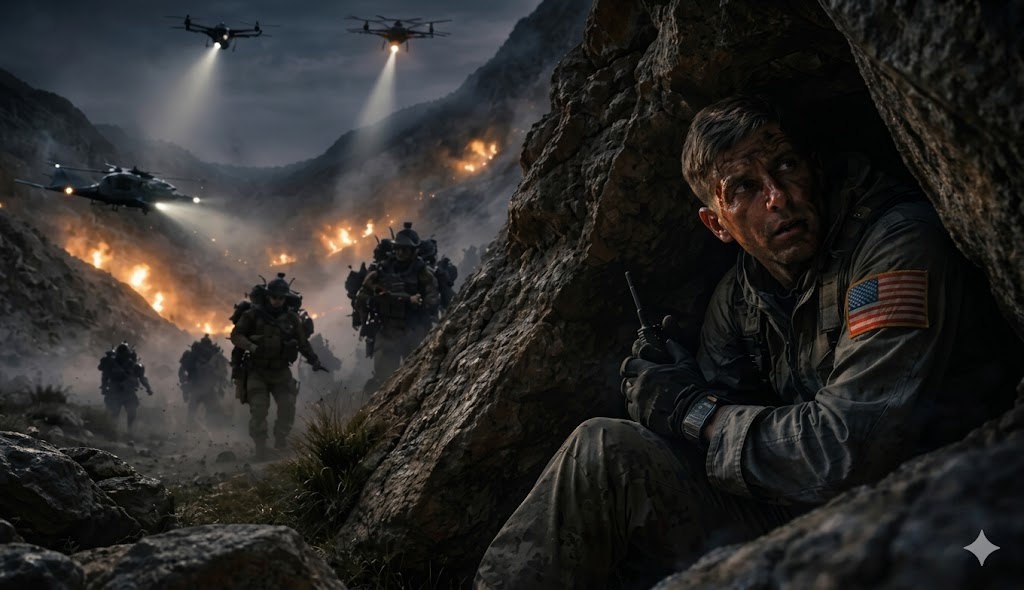
In modern warfare, speed is survival—but information is leverage. The recent rescue of a downed U.S. airman deep inside hostile territory shows how far that equation has evolved. This wasn’t just a search-and-rescue mission. It was a coordinated technological deception, powered by surveillance tools, artificial intelligence, and cutting-edge detection systems. At the center of the operation were two shadowy technologies: Pegasus and a little-known system reportedly called Ghost Murmur. Together, they helped U.S. forces locate and extract an injured airman before opposing forces could reach him.
What Was the Pegasus Decoy Operation?
The Pegasus decoy operation was designed to do one thing: mislead the enemy long enough to buy time.
How Pegasus Was Used
Pegasus—widely known as a sophisticated spyware tool—was reportedly used not just for surveillance, but for active deception. U.S. intelligence operatives allegedly infiltrated mobile devices linked to Iranian officials and military networks.
Once inside, they deployed a carefully crafted narrative:
- Messages suggested the downed airman had already been located
- False updates indicated he was being transported via convoy
- Communications appeared authentic, mimicking real-time military chatter
This tactic redirected attention and resources away from the airman’s actual location.
Why Deception Was Critical
The stakes were brutally simple:
- If Iranian forces found the airman first, he could be captured or killed
- The terrain—mountainous and remote—limited visibility and slowed response
- Time was working against the injured officer
By creating a false trail, the U.S. effectively “bought” a window of opportunity.
What Is Ghost Murmur and How Does It Work?
While Pegasus distracted, Ghost Murmur located.
A New Kind of Detection Technology
Ghost Murmur is described as a classified system capable of detecting human heartbeats from a distance using quantum magnetometry. That’s a technical way of saying it can sense the faint magnetic signals produced by a beating heart.
Unlike traditional tracking methods, it doesn’t rely on:
- Radio signals
- GPS beacons
- Visible movement
Instead, it isolates biological signals—even in noisy environments.
The Role of Artificial Intelligence
The system reportedly uses AI to filter out environmental interference:
- Wind, terrain vibrations, and animal movement
- Other human heartbeats in the area
- Background electromagnetic noise
The result is a highly refined signal that can pinpoint a specific individual.
Why This Matters in Combat
The airman reportedly avoided using standard distress signals to prevent detection. That created a paradox:
- Staying silent improved his safety
- But it made him nearly impossible to find
Ghost Murmur resolved that paradox.
How the Two Systems Worked Together
The success of the mission wasn’t about one technology. It was about coordination.
Step-by-Step Breakdown
- Aircraft goes down over hostile terrain
- Airman takes cover and avoids broadcasting signals
- Pegasus spreads false information to mislead opposing forces
- Ghost Murmur scans the region for biological signals
- AI isolates the airman’s heartbeat from surrounding noise
- Special forces deploy rapidly to the confirmed location
The combination of deception and detection created a narrow but decisive advantage.
The Final Extraction: Speed, Precision, and Firepower
Once the airman’s position was confirmed, the operation shifted from intelligence to execution.
Special Forces Deployment
Elite units—reportedly including Navy SEAL Team Six—were deployed using AH-6 Little Bird helicopters. These aircraft are designed for:
- Low-altitude flight
- High maneuverability in difficult terrain
- Rapid insertion and extraction
Commandos reportedly rode on external benches, ready for immediate engagement.
Air Cover and Coordination
The rescue wasn’t conducted in isolation. Airstrikes—reportedly involving allied forces—provided cover, suppressing potential threats in the area.
The Cost of Success
The mission reportedly cost over $500 million, reflecting:
- Advanced technology deployment
- Multi-layered intelligence operations
- Air and ground coordination
That figure underscores a broader truth: modern rescues are as much about capability as they are about commitment.
Why This Operation Signals a Shift in Modern Warfare
This mission offers a glimpse into how warfare is changing—not in theory, but in practice.
From Firepower to Information Dominance
Traditional warfare emphasized weapons and troop strength. Today, the edge often comes from:
- Data access
- Signal intelligence
- Psychological operations
Pegasus represents control over information. Ghost Murmur represents control over detection.
The Rise of Invisible Technologies
Neither system relies on visible force. Instead, they operate in domains that are harder to counter:
- Digital infiltration
- Quantum-level sensing
- AI-driven filtering
These tools are difficult to detect—and even harder to defend against.
Ethical and Strategic Questions
The use of spyware and advanced surveillance raises significant concerns:
- Where is the line between military necessity and privacy violation?
- How do nations regulate technologies that are inherently secretive?
- What happens when such tools proliferate globally?
These questions are not theoretical. They are already shaping policy debates.
What Comes Next?
If this operation is any indication, future search-and-rescue missions will look very different.
Expect to see:
- Increased reliance on AI-driven identification
- Greater use of deception in digital communication channels
- Continued investment in non-invasive detection technologies
The battlefield is no longer just physical—it’s informational, electromagnetic, and psychological.
TL;DR
- The U.S. used Pegasus spyware to spread false information and mislead enemy forces
- A classified system called Ghost Murmur detected the airman’s heartbeat using advanced sensing
- The combination allowed special forces to locate and rescue the airman within a narrow window
- The operation highlights a shift toward intelligence-driven, tech-powered warfare