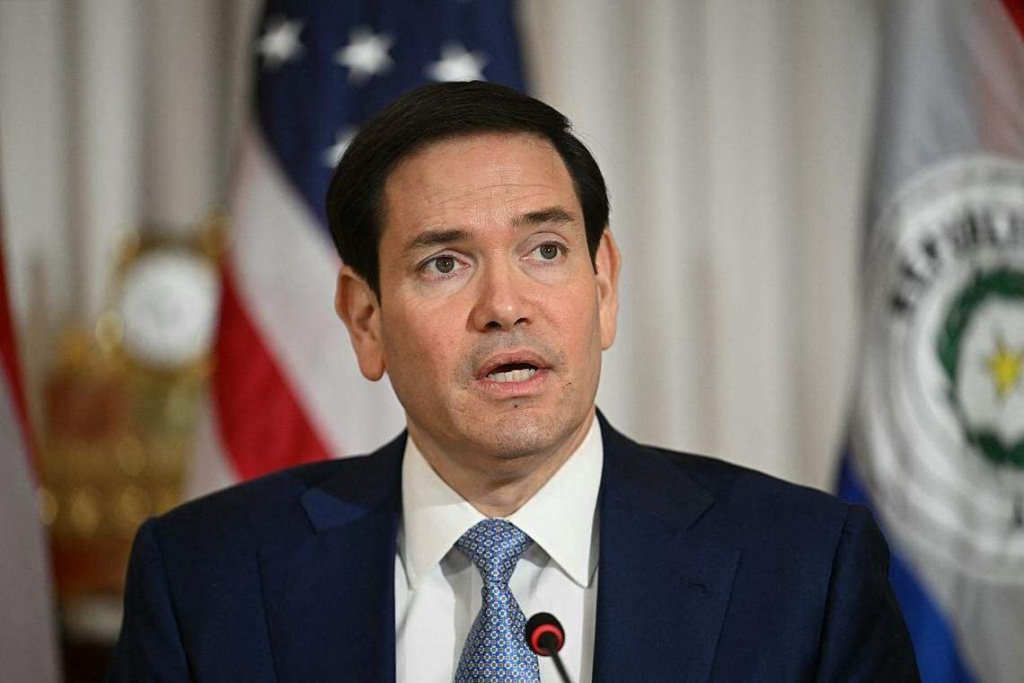
US Secretary of State Marco Rubio used Cuba’s Independence Day to deliver one of the Trump administration’s sharpest public attacks yet on the island’s communist leadership, accusing the ruling elite of corruption, economic failure, and repression while promising direct American support for ordinary Cubans. The speech, released in Spanish on May 20, immediately fueled debate over whether Washington is merely tightening pressure on Havana or actively encouraging political transformation in Cuba.
Rubio’s remarks were not framed as a traditional diplomatic statement. Instead, they sounded more like an appeal aimed directly at Cuban citizens, bypassing the government entirely.
That distinction matters.
What did Marco Rubio say about Cuba?
In the video address, Rubio blamed Cuba’s ongoing shortages of food, electricity, and fuel on what he described as decades of corruption and economic mismanagement by the country’s ruling structure.
“The real reason you don’t have electricity, fuel, or food is because those who control your country have plundered billions of dollars,” Rubio said.
The speech repeatedly focused on one organization: GAESA, Cuba’s military-controlled business conglomerate.
Rubio argued that the communist revolution no longer functions as a political ideology but as an economic power network controlled by military-linked elites.
“Cuba is not controlled by any revolution. Cuba is controlled by GAESA,” he said.
The message was politically loaded for several reasons:
- It framed Cuba’s crisis as a leadership problem, not simply a sanctions problem.
- It separated the Cuban people from the Cuban state.
- It offered direct US assistance to citizens instead of government institutions.
- It suggested Washington wants a fundamentally different relationship with Cuba.
What is GAESA and why is it central to the conflict?
Cuba’s military business empire
GAESA, or Grupo de Administración Empresarial S.A., is widely considered the economic backbone of the Cuban state.
The conglomerate operates across:
- Tourism
- Hotels and resorts
- Retail chains
- Construction
- Banking
- Shipping
- Remittance systems
Some analysts estimate it controls close to 70% of Cuba’s formal economy.
Rubio’s focus on GAESA reflects a long-standing strategy within Republican foreign policy circles: isolate the military-run sectors of Cuba’s economy while attempting to support private citizens and dissidents.
Why the Trump administration targets GAESA
President Donald Trump has revived a hardline Cuba policy during his return to office, expanding sanctions against individuals and entities linked to the Cuban government.
The administration argues that tourism dollars and foreign investment often flow through GAESA-controlled channels rather than reaching ordinary Cubans.
Critics, however, say sanctions worsen living conditions for civilians already facing severe shortages.
Is the US encouraging regime change in Cuba?
Rubio stopped short of directly calling for revolution
Rubio never explicitly urged Cubans to overthrow their government. But the structure and tone of the speech strongly implied that Washington sees political transformation as necessary for Cuba’s recovery.
That is why the speech is drawing attention beyond traditional US-Cuba policy circles.
Several elements stood out:
Direct appeal to citizens
Rubio repeatedly addressed “the Cuban people” instead of Cuban authorities.
That rhetorical strategy mirrors past US messaging toward authoritarian governments in places like Venezuela and Iran.
Promise of humanitarian aid
Rubio announced a proposed $100 million package in food and medicine aimed directly at Cuban citizens.
The administration framed the aid as a way to bypass state-controlled systems.
Delegitimizing the government
The speech portrayed Cuba’s leadership not as ideological revolutionaries but as corrupt economic gatekeepers enriching themselves while citizens struggle.
That framing can be politically significant because it attempts to weaken the government’s moral legitimacy.
Why Cuba’s economic crisis has become a global issue
Cuba is facing one of its worst downturns in decades
The island has experienced prolonged blackouts, inflation, fuel shortages, and food scarcity in recent years.
Some regions reportedly receive only a few hours of electricity daily.
Several factors contribute to the crisis:
- Declining tourism revenue
- Reduced oil support from Venezuela
- Pandemic-era economic damage
- Currency instability
- Aging infrastructure
- US sanctions and trade restrictions
The Cuban government consistently argues that the decades-long US embargo remains the primary cause of economic hardship.
Washington rejects that explanation, saying internal corruption and centralized economic control are more responsible.
The growing migration challenge
Cuba’s economic collapse has also become a regional migration issue.
Hundreds of thousands of Cubans have left the island in recent years, many traveling to the United States through Central America or maritime routes.
That migration wave has increased political pressure in Florida, where Cuban-American voters remain influential in US elections.
Rubio, himself the son of Cuban immigrants, has long positioned Cuba policy as both a human rights issue and a strategic political priority.
Why Rubio’s background matters in this debate
Rubio has deep political ties to the Cuban exile community
Rubio’s family history gives him credibility among hardline Cuban-American voters who favor maximum pressure on Havana.
For decades, US policy toward Cuba has often shifted depending on which political coalition controlled the White House.
- Democratic administrations have generally explored diplomatic engagement.
- Republican administrations have typically favored sanctions and isolation.
The Trump administration appears firmly aligned with the second approach.
Rubio’s speech suggests the White House wants to intensify pressure while presenting itself as supportive of ordinary Cubans rather than the Cuban government.
How Cuba is likely to respond
Havana has consistently rejected US criticism as interference in its internal affairs.
Cuban officials usually characterize American sanctions as economic warfare designed to destabilize the country.
The government is also likely to portray Rubio’s message as another example of Washington attempting to provoke unrest or undermine Cuban sovereignty.
That narrative has historically resonated with parts of the Cuban population, particularly during periods of heightened US pressure.
What happens next in US-Cuba relations?
Relations could become even more confrontational
Rubio’s speech signals that Washington is unlikely to pursue normalization talks anytime soon.
Instead, the administration appears focused on:
- Expanding sanctions
- Targeting military-linked businesses
- Increasing pressure on Cuba’s leadership
- Supporting dissident and humanitarian channels
- Strengthening ties with Cuban exile communities
Whether that strategy produces political change is another question entirely.
Past US pressure campaigns against Cuba have rarely produced rapid transformations, partly because Havana has long used external hostility to reinforce nationalist sentiment internally.
Still, Cuba’s current economic weakness makes this period different from many earlier confrontations.
That uncertainty is why Rubio’s speech matters beyond symbolic politics.
It was not just a criticism of Cuba’s government. It was a signal that Washington may be preparing for a more aggressive phase in its approach to the island.
TL;DR
- Marco Rubio accused Cuba’s leadership of corruption and economic failure.
- He claimed military-run conglomerate GAESA effectively controls the country.
- The Trump administration offered $100 million in aid aimed directly at Cuban citizens.
- Cuba blames US sanctions and the embargo for its economic crisis.
- Rubio’s speech has sparked debate over whether Washington is encouraging political change in Havana.