
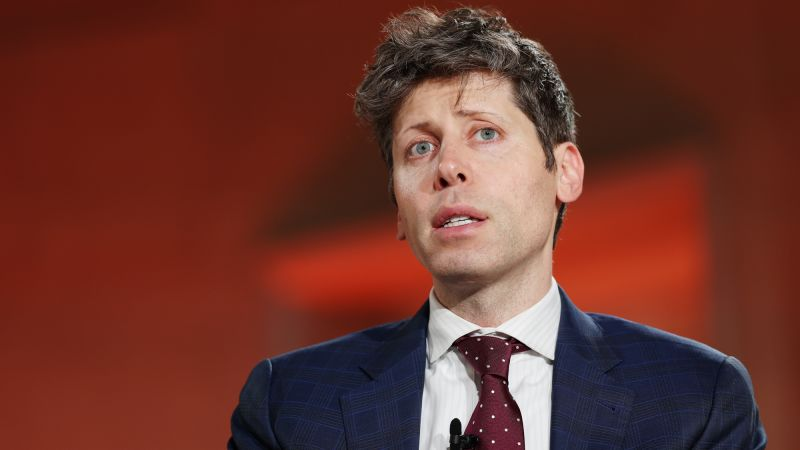
In the early hours of a quiet San Francisco morning, a violent act jolted one of the most prominent figures in artificial intelligence. A Molotov cocktail was thrown at the home of Sam Altman, chief executive of OpenAI. The device failed to ignite. No one was injured. But the implications are harder to dismiss.
Within hours, Altman posted a rare family photo on X, accompanied by a message that cut through the noise of the AI debate. He wasn’t talking about models or markets. He was talking about safety, rhetoric, and the real-world consequences of escalating tensions around artificial intelligence.
What happened in the Sam Altman Molotov attack?
According to authorities, the incident took place around 3:45 am at Altman’s residence. A Molotov cocktail struck the property but did not ignite after bouncing off the structure.
Roughly an hour later, police responded to a separate call at OpenAI’s headquarters, where a man allegedly threatened to set the building on fire. Law enforcement said the suspect matched the earlier description and was taken into custody.
The San Francisco Police Department later confirmed the arrest of a 20-year-old individual in connection with the attack.
Key facts at a glance
- Time of incident: Approximately 3:45 am
- Location: Altman’s private residence in San Francisco
- Outcome: No injuries, device failed to ignite
- Arrest: Suspect apprehended within hours
- Secondary incident: Threat made at OpenAI headquarters
Why did Sam Altman share a private family photo?
Altman’s response stood out as much as the incident itself. Known for keeping his personal life largely private, he shared an image of his husband and child, along with a candid reflection.
His reasoning was direct: humanization as deterrence.
He wrote that images have power and expressed hope that showing his family might dissuade future attackers. It was a calculated shift from corporate messaging to something more personal, almost disarming.
The strategy behind the post
Altman’s decision reflects a broader communication tactic increasingly used by public figures facing hostility:
- Humanize the target: Shift perception from abstract figure to real person
- De-escalate anger: Reduce the emotional distance that fuels extreme actions
- Reframe the narrative: Move focus from ideology to consequences
This approach is not guaranteed to work. But it signals a growing awareness among tech leaders that public discourse is no longer confined to screens.
Is AI backlash becoming dangerous?
The Sam Altman Molotov attack didn’t happen in isolation. It comes at a time when artificial intelligence is both celebrated and feared in equal measure.
Altman himself acknowledged this tension. In his post, he pointed to “great anxiety about AI” and suggested that narratives, including critical media coverage, can intensify emotions in unpredictable ways.
What’s driving the anxiety?
Concerns around AI are not fringe. They are widespread and often legitimate:
- Job displacement across industries
- Misinformation and deepfakes
- Concentration of power in a few tech companies
- Long-term existential risks
These concerns have fueled protests, regulatory debates, and increasingly sharp rhetoric.
When criticism crosses a line
Altman drew a distinction that matters:
- Good faith criticism: Necessary for accountability and progress
- Escalatory rhetoric: Can contribute to hostility and, in extreme cases, violence
His call to “have fewer explosions in fewer homes, figuratively and literally” wasn’t just rhetorical. It was a warning about how quickly discourse can spiral.
What does this mean for tech leaders’ safety?
For years, high-profile tech executives have faced criticism, protests, and online harassment. Physical attacks, however, have been relatively rare.
This incident may mark a shift.
Emerging risks
- Blurring of online and offline hostility
- Targeting of personal spaces, not just workplaces
- Faster escalation fueled by viral narratives
Security experts have long warned that as technology becomes more influential, its leaders become more visible and vulnerable.
How companies might respond
While no official changes have been announced, incidents like this typically trigger internal reviews:
- Enhanced residential security for executives
- Increased coordination with local law enforcement
- Monitoring of credible threats linked to public discourse
Why rhetoric around AI matters more than ever
The Sam Altman Molotov attack underscores a critical point: words don’t exist in a vacuum.
Public narratives shape perception. Perception shapes behavior.
Altman admitted he may have underestimated the power of narratives. That acknowledgment is notable coming from a leader whose company sits at the center of the AI revolution.
The responsibility of different stakeholders
- Media: Avoid sensationalism that amplifies fear without context
- Industry leaders: Communicate risks transparently without dismissing concerns
- Public figures: Engage in debate without dehumanizing opponents
This is not about limiting criticism. It’s about ensuring that criticism doesn’t morph into something destructive.
What happens next?
The investigation into the attack will continue, and legal proceedings will determine the consequences for the suspect.
But the broader impact is already unfolding.
This incident adds a new dimension to the AI conversation. It’s no longer just about policy, innovation, or competition. It’s also about safety, responsibility, and the human cost of polarized debate.
Altman’s response suggests he wants to steer the conversation back toward balance. Whether that message resonates remains to be seen.
TL;DR
- A Molotov cocktail was thrown at Sam Altman’s home but failed to ignite
- No injuries were reported; a suspect was arrested shortly after
- Altman shared a rare family photo to humanize himself and deter violence
- The incident highlights rising tensions around AI and their real-world consequences
- Experts warn this could signal increased safety risks for tech leaders