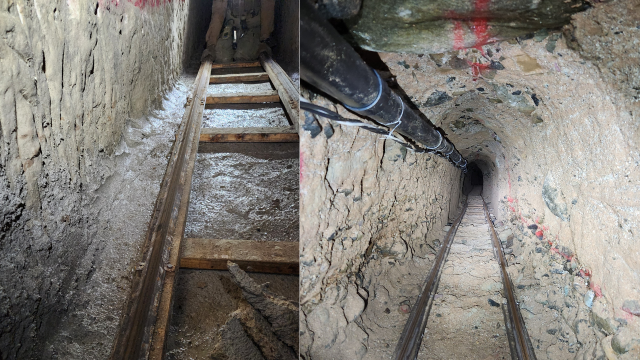
US Border Patrol agents have uncovered a sophisticated underground drug smuggling tunnel stretching nearly a mile from Tijuana, Mexico, into San Diego, California. The tunnel, discovered earlier this year, was equipped with lighting, ventilation, and even a rail system—clear signs that cartels intended to move large quantities of narcotics beneath the border.
Officials revealed Monday that the passage began at a house in Nueva Tijuana and reached depths of 50 feet below the surface. Though incomplete, its design suggests a highly organized operation.
How Was the Tunnel Discovered?
Border Patrol agents first detected the tunnel in April during routine surveillance. Key findings include:
- Entry Point: Concealed beneath a freshly tiled floor in a Tijuana home.
- Infrastructure: Lighting, electrical wiring, and a rail-like track for transporting drugs.
- Obstacles: Barriers inside likely meant to slow down law enforcement.
Mexican authorities later raided the property, confirming the tunnel’s origin. Meanwhile, US agents tracked its path toward a warehouse in San Diego—a common endpoint for smuggling operations.
Why This Tunnel Matters
This isn’t the first smuggling tunnel found in the region. Since 1993, over 95 similar passages have been uncovered near San Diego. However, this one stands out due to its advanced infrastructure.
Acting Chief Patrol Agent Jeffrey D. Stalnaker emphasized the broader threat:
“As we strengthen air and maritime security, criminal groups are turning to underground routes. Stopping these tunnels is critical to protecting American lives.”
To prevent future use, officials plan to fill the tunnel with thousands of gallons of concrete—a standard practice for disabling such passages.
The Bigger Picture: Cartels’ Evolving Tactics
Drug cartels continuously adapt to border security measures. While walls and surveillance drones monitor above-ground activity, underground tunnels remain a persistent challenge.
Key Trends in Smuggling Tunnels:
- Deeper & Longer: Modern tunnels extend farther and dive deeper to avoid detection.
- More Sophisticated: Many now include ventilation, electricity, and transport systems.
- Strategic Exits: Often linked to inconspicuous buildings (homes, warehouses) to avoid suspicion.
What’s Next for Border Security?
Border Patrol remains on high alert for similar tunnels, especially in high-traffic smuggling corridors like San Diego-Tijuana. Enhanced detection methods, including ground-penetrating radar and seismic sensors, are being deployed to spot hidden passages before they’re operational.