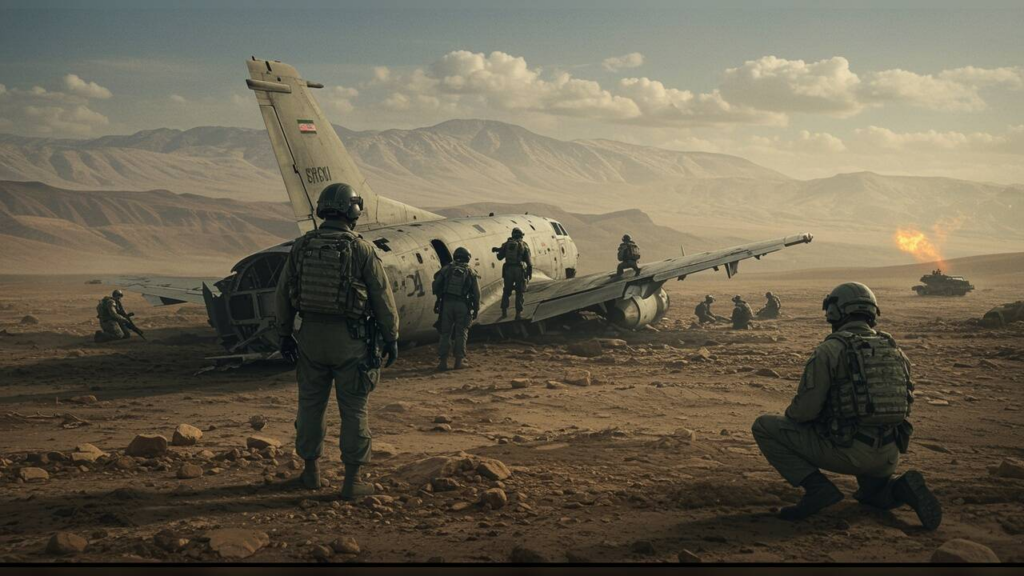
When a fighter jet goes down in hostile airspace, the story doesn’t end with the ejection. It begins there. The recent downing of U.S. aircraft over Iran has pulled back the curtain on one of the most dangerous scenarios in modern warfare: a pilot stranded behind enemy lines. In those moments, survival is no longer about firepower or technology. It’s about preparation, discipline, and a system known as SERE.
Short for Survival, Evasion, Resistance, and Escape, the SERE survival plan is the backbone of how U.S. military personnel endure, outlast, and return home from the worst situations imaginable.
What is the SERE survival plan?
The SERE survival plan is a specialized military training program designed to prepare personnel for isolation in hostile environments. Originally developed during the Cold War, it has evolved into a cornerstone of U.S. military readiness.
It focuses on four core phases:
- Survival: Staying alive in extreme conditions
- Evasion: Avoiding enemy detection
- Resistance: Withstanding capture and interrogation
- Escape: Finding a way back to friendly forces
Each phase is built on one assumption: rescue may not come quickly, or at all.
Why the SERE survival plan matters more today
For decades, U.S. air superiority meant pilots rarely faced the prospect of being shot down. That assumption is now being tested.
Recent incidents over Iran suggest that advanced air defense systems are closing the gap. Aircraft flying at lower altitudes to avoid radar are becoming more vulnerable to surface-to-air missiles. The battlefield is shifting, and the margin for error is shrinking.
This makes SERE survival plan training not just relevant, but essential.
It’s not just about staying alive. It’s about buying time, minimizing risk to rescue teams, and preventing sensitive information from falling into enemy hands.
Survival: The first minutes after ejection
What happens immediately after a pilot ejects?
The moment a pilot ejects, a chain reaction begins.
- An automatic distress signal is transmitted
- Search and rescue teams are alerted
- The pilot lands with a survival kit
These kits are compact but critical. They typically include:
- A radio or beacon for communication
- Water and emergency rations
- Navigation tools
- First aid supplies
But gear alone isn’t enough. The pilot must quickly assess injuries, terrain, and threats.
A desert demands water discipline. A forest demands concealment. A mountainous region demands mobility and altitude awareness.
The goal is simple: stay alive long enough for the next phase to matter.
Evasion: Staying invisible in plain sight
How do pilots avoid being captured?
Evasion is where SERE becomes a mental chess game.
Enemy forces often move quickly to locate downed pilots. They may intercept signals, deploy search units, or even spread false information to confuse rescue teams.
Pilots are trained to:
- Move unpredictably and avoid patterns
- Use terrain for concealment
- Limit radio transmissions to avoid detection
- Travel at night when visibility is low
Silence becomes a shield. Stillness becomes strategy.
Even communication is calculated. A single radio transmission can save a life or give away a position.
This phase can last hours or days, depending on the environment and the intensity of enemy search efforts.
Resistance: Preparing for the worst-case scenario
What happens if a pilot is captured?
If evasion fails, SERE training shifts to resistance.
This is the most classified and psychologically demanding part of the program. It prepares personnel to endure:
- Interrogation
- Psychological pressure
- Physical abuse
- Propaganda attempts
The objective is not to be a hero in the cinematic sense. It is to:
- Provide only required information under the Geneva Conventions
- Delay exploitation
- Maintain mental resilience
Training often includes simulated captivity environments designed to replicate stress conditions. These exercises are tightly controlled but intentionally intense.
The reason is clear: if captured, a pilot becomes both a prisoner and a potential intelligence source.
Escape: The final, high-risk move
How do rescue missions actually work?
Escape can mean two things: self-directed evasion back to safety or extraction by a rescue team.
Rescue operations are among the most complex missions in modern warfare.
A typical recovery effort may involve:
- A rescue helicopter such as the HH-60W
- Escort aircraft providing armed cover
- Electronic warfare systems to jam enemy radar
- Ground coordination teams
Timing is everything.
Night operations are often preferred to reduce visibility. But darkness adds its own risks. Terrain, weather, and enemy movement all factor into the decision.
If landing is too dangerous, specialized equipment like a hoist or force penetrator may be used to extract the pilot without touching down.
Each rescue is a calculated gamble. The longer it takes, the greater the risk to everyone involved.
The hidden challenge: coordination under pressure
Even with SERE training, success depends on coordination.
Rescue teams must:
- Verify the pilot’s location
- Avoid enemy traps or misinformation
- Synchronize multiple moving parts in real time
Meanwhile, the pilot must remain disciplined, conserving energy and avoiding unnecessary exposure.
It’s a delicate balance. Move too soon, and you risk detection. Wait too long, and conditions may worsen.
This is where training meets instinct.
How the SERE survival plan reflects modern warfare realities
The re-emergence of contested airspace signals a broader shift in global conflict.
Advanced missile systems, electronic warfare, and surveillance technologies are reshaping how wars are fought. Air dominance is no longer guaranteed.
In this environment, the SERE survival plan serves as a critical safety net.
It acknowledges a hard truth: even the most advanced military platforms are vulnerable.
And when they fail, survival depends on the individual.
TL;DR
- The SERE survival plan stands for Survival, Evasion, Resistance, and Escape
- It prepares pilots for being stranded in enemy territory
- Modern air defense systems are making such scenarios more likely
- Survival depends on training, discipline, and coordination with rescue teams
- Each phase of SERE is designed to increase the chances of returning home