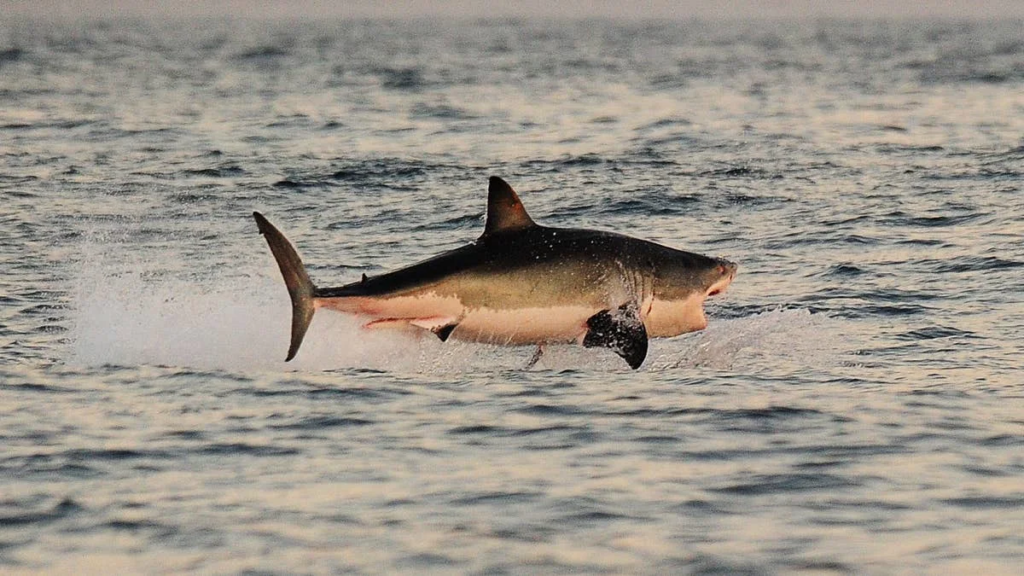
An unusually strong Super El Niño could drive more great white sharks toward California’s coastline this summer, increasing the chances of encounters with swimmers and surfers, according to a leading shark researcher.
The warning comes as warmer-than-normal ocean temperatures alter the migration patterns of marine life, prompting juvenile great white sharks to seek cooler coastal waters earlier than usual.
Why are great white sharks moving closer to shore?
Chris Lowe, director of the Shark Lab at California State University, Long Beach, says rising ocean temperatures linked to Super El Niño are changing where young great white sharks gather.
Speaking to The California Post, Lowe said his team has tagged and tracked around 350 great white sharks in Southern California since 2009. Their research indicates that warmer waters influence the sharks’ seasonal movements.
Typically, juvenile sharks begin appearing in Southern California around mid-April. This year, however, they started arriving as early as February, suggesting the warmer offshore waters may be pushing them toward cooler coastal habitats.
“They don’t like warm water,” Lowe explained, adding that researchers expect larger numbers of juvenile white sharks along Southern California’s coastline extending north toward Monterey.
Why Super El Niño is affecting the oceans
Super El Niño refers to an exceptionally strong El Niño event, during which unusually warm surface waters spread across the central and eastern Pacific Ocean.
The phenomenon has several consequences:
- Higher sea surface temperatures
- Shifting ocean currents
- Changes in marine ecosystems
- Altered migration patterns for fish and marine predators
NASA recently reported that its Sentinel-6 Michael Freilich satellite observed elevated global sea levels through the end of June, partly due to ocean water expanding as it warms.
Scientists say these warmer conditions can influence where prey species gather, indirectly affecting predators such as great white sharks.
Could California see more shark encounters?
Lowe believes conditions between July and September could bring more juvenile white sharks close to popular Southern California beaches.
He noted that the forecast for hotter summer weather is also expected to draw larger crowds to the coast.
“These are the same beaches people usually visit,” Lowe said, warning that increased beach attendance combined with higher shark numbers naturally raises the likelihood of encounters.
In addition to juvenile great white sharks, smooth hammerhead sharks are also expected to appear more frequently along the coast.
Do more sharks mean more attacks?
Not necessarily.
Marine experts consistently emphasise that shark attacks remain extremely rare, even in areas where sharks are common. Juvenile great white sharks primarily feed on fish and rays rather than humans, and most shark bites are believed to result from mistaken identity rather than deliberate predation.
However, when both shark populations and human beach activity increase in the same locations, the statistical likelihood of encounters rises.
The United States records the highest number of unprovoked shark bites worldwide each year, largely because of its extensive coastline and high levels of recreational ocean activity—not because its waters are considered unusually dangerous.
What beachgoers can do to reduce risk
Experts recommend several common-sense precautions:
- Avoid swimming at dawn, dusk, or at night when sharks are most active.
- Stay in groups instead of swimming alone.
- Avoid areas where seals, sea lions, or schools of fish are present.
- Stay out of murky water where visibility is poor.
- Follow local beach advisories and lifeguard warnings.
The bigger picture
Scientists are continuing to study how climate-driven ocean warming is reshaping marine ecosystems. While Super El Niño may temporarily alter the distribution of sharks along the California coast, researchers stress that these shifts are part of broader environmental changes affecting countless marine species.
For beachgoers, the message is one of awareness rather than alarm: more sharks near shore do not automatically translate into a surge in attacks, but understanding changing ocean conditions can help people make safer decisions during the busy summer season.