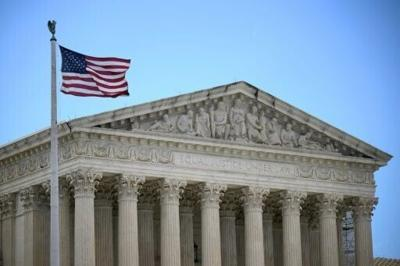
What did the Supreme Court decide?
In a significant ruling for digital regulation and First Amendment law, the U.S. Supreme Court on Friday upheld a Texas law requiring pornography websites to verify users’ ages before granting access. The 6-3 decision, split along ideological lines, affirms that states may mandate age checks to shield minors from explicit material, without violating the constitutional rights of adults.
Justice Clarence Thomas wrote the majority opinion, emphasizing that the law “does not ban adults from accessing this material; it simply requires them to verify their age.” The ruling concludes that the Texas law, H.B. 1181, withstands constitutional scrutiny and is a permissible effort to protect children from harmful online content.
What does the Texas law require?
Enacted in 2023, Texas House Bill 1181 mandates that websites verify a user’s age before allowing access to content that is “harmful to minors.” Specifically, the law applies to sites where over one-third of the material meets the legal definition of being:
- Prurient,
- Patently offensive to prevailing adult standards, and
- Lacking serious value for minors.
Website operators must verify users’ ages using either government-issued IDs or digital identification tools. Non-compliant companies face steep civil penalties — up to $10,000 per day and $250,000 per violation involving a minor. However, platforms like social media companies, search engines, and ISPs are largely exempt.
Why did the court uphold it?
The Supreme Court ruled that the law passes constitutional muster even under a more exacting legal standard — intermediate scrutiny — not the more lenient “rational basis” standard initially applied by the 5th Circuit. While plaintiffs, including the Free Speech Coalition, had argued that the law burdened adult access to protected speech and should be judged under strict scrutiny, the Court disagreed.
Thomas wrote that “the power to require age verification is within a State’s authority to prevent children from accessing sexually explicit content,” and emphasized that the law “does not facially target the speech’s content but instead regulates access based on age.”
In short: the state’s interest in protecting children was deemed compelling enough to justify the regulation, and the age-verification requirement was considered narrowly tailored enough to meet that interest without outright restricting adult access.
What were the dissenting views?
Justice Elena Kagan, joined by Justices Sonia Sotomayor and Ketanji Brown Jackson, dissented. While agreeing that protecting children is a compelling interest, Kagan argued that the law effectively burdens adults’ access to constitutionally protected speech and thus should be subjected to strict scrutiny, the highest level of constitutional review.
“That is what foundational First Amendment principles demand,” Kagan wrote. She warned that the ruling risks eroding free speech rights by allowing states to impose intrusive access controls on legal content simply by citing a legitimate public concern.
Her dissent echoes long-standing concerns that even well-intentioned laws can chill adult access to lawful expression when the government imposes restrictive measures to regulate content.
Why does this ruling matter beyond Texas?
Texas is not alone. At least 18 other states — including Louisiana, Utah, Arkansas, and Virginia — have enacted or are considering similar age-verification laws for pornographic content online. Friday’s ruling effectively gives those states a green light to move forward, setting a major legal precedent for how courts may view content-based regulations in the digital age.
This could also reshape how adult websites operate nationally. Since many websites serve users across state lines, platforms may need to apply age-verification protocols universally, rather than just for users in individual states.
What are the concerns about enforcement and privacy?
Critics argue that age-verification measures raise serious privacy concerns. Requiring users to upload government IDs or use digital identification services could expose sensitive data, especially if companies are not held to high cybersecurity standards.
The Free Speech Coalition and other opponents warn that such systems could be exploited, mishandled, or used to track viewing habits, which may deter adults from accessing lawful content — a “chilling effect” on free expression.
Civil liberties groups, including the ACLU, have also argued that these laws may disproportionately impact marginalized communities and adult content creators, especially those who operate independently and lack the resources to build or purchase secure verification systems.
What’s next?
With the Supreme Court affirming Texas’ approach, more legal challenges are likely — especially in states with stricter or more sweeping versions of similar laws. Some legal experts believe the next battleground could center on how user data is stored and whether states can compel platforms to build verification infrastructure without federal guidance.
Congress has yet to pass a nationwide framework on age verification or digital content standards, leaving states to experiment. That patchwork approach could cause further legal clashes, especially around the Commerce Clause and the potential burden on interstate business.
In the meantime, adult content sites face a difficult choice: implement age verification or risk costly legal action in states enforcing these new laws.